
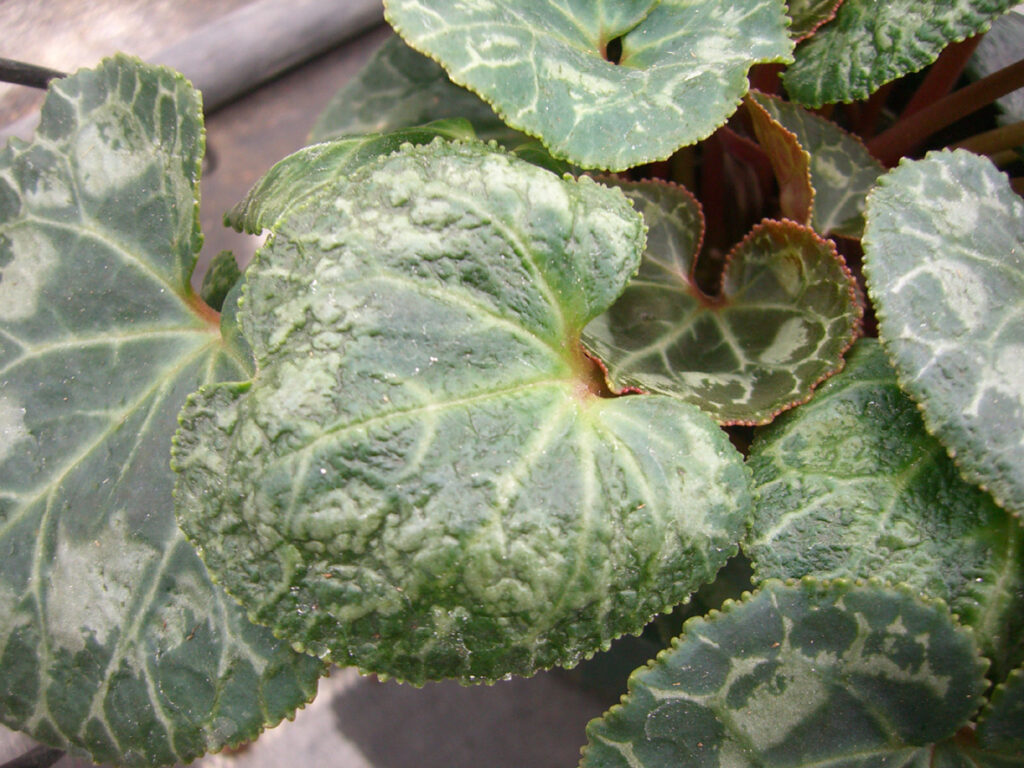
When it comes to caring for cyclamen, dealing with fungal diseases and other pests can be a significant challenge. The name “cyclamen” comes from the Greek word “cyclos,” meaning “circle,” which refers to the rounded tuber of this plant. However, when we talk about curing cyclamen, we have to face up to bacterial infections or viral outbreaks. Cyclamen is more prone to fungal diseases because fungi are a constant threat to these plants.
In this article, we’ll explore various symptoms of cyclamen diseases and analyze each type of treatment accordingly. We’ll also discuss the causes of these problems and provide tips on how to prevent them in the future.
Diseases of Cyclamen Caused by Poor Care
In our previous articles about growing cyclamen indoors and outdoors, we analyzed all common symptoms related to nutrient deficiencies. Many cyclamen diseases are indeed linked to improper care practices when the plant is grown in a pot. Especially when grown indoors or on a balcony, the cyclamen may have to deal with:
- Excess water
- Dehydration
- High temperatures
- Low temperatures
- Irrigation using tap water
- Too much light
- Not enough light
- Waterlogging
To treat these diseases related to poor care practices, it’s essential to quickly restore the ideal conditions for the cyclamen. For example, if the plant has long and curved stems, it’s crucial to immediately correct the temperature conditions since the plant is exposed to temperatures that are too high.
Diseases of Cyclamen
Among the enemies most threatening to cyclamen, we must mention fungi. Fungal diseases are among the most common and include fungal infections such as gray mold, macules on leaves, radical decay, and root rot.
Gray Mold of Cyclamen: Symptoms and Treatment
Gray mold symptoms appear on the leaves with areas of brown decay, which have a soft consistency and become more pronounced in humid environments. The affected tissues tend to rot and fall off while severe cases lead to rapid plant death. Mini cyclamen or small cyclamen are more susceptible to gray mold.
The reason for gray mold development is poor air circulation and excessive humidity around the plant. We must point out that our previous article also discussed improper care practices, such as over-irrigation and inadequate lighting, which can contribute to this disease.
To eliminate gray mold from cyclamen, you don’t need harsh chemicals; instead, focus on improving the plant’s environment. Reduce water intake, move the plants to a well-ventilated area with more light. To prevent the disease, avoid frequent irrigations and stagnant water conditions.
Manually remove affected parts of the plant. For gray mold affecting cyclamen, treat the infected leaves with a fungicide based on copper. Place the infected plant in quarantine for treatment purposes.
Macules on Cyclamen Leaves
If the leaves of your cyclamen display long and rounded macules (spots) ranging from 1-2 cm in diameter and have a mottled brown-yellow or gray color, it’s likely that the plant is infected with a fungal disease.
To treat this infection, manually remove the affected leaves and apply a fungicide based on copper to the remaining healthy parts of the leaf. Quarantine the entire plant to prevent further spread.
Radical Decay of Cyclamen: Symptoms and Treatment
Radical decay in cyclamen is caused by fungi that thrive in moist soil environments. The plant may display wilted, yellowing leaves, reduced flowering, and fallen flowers. In severe cases, only one option remains – isolating the infected plant and applying a fungicide based on Proclorax.
Prevention is key here; using well-draining soil will help reduce the risk of this disease.
Root Rot of Cyclamen: Symptoms and Treatment
Cyclamen root rot symptoms appear as wilting or yellowing leaves, reduced flowering, and fallen flowers. To treat this infection, manually remove any affected roots. Treat the entire plant with a fungicide based on Proclorax to ensure complete recovery.
Conclusion
When it comes to caring for cyclamen, dealing with fungal diseases and other pests can be challenging. By understanding the causes of these problems and taking preventative measures, you’ll be able to keep your cyclamen healthy and thriving.
However, there are many symptoms related to poor care practices that can also damage our cyclamen crops, such as excessive watering or placement in inappropriate positions. In this article, we’ve explored various symptoms of cyclamen diseases and analyzed each type of treatment accordingly.
To treat these diseases related to poor care practices, it’s essential to quickly restore the ideal conditions for the cyclamen. By improving air circulation, reducing water intake, and providing adequate lighting, you can prevent many common fungal diseases from affecting your cyclamen crops.
Finally, be sure to manually remove affected parts of the plant and apply fungicides when necessary. By taking these steps, you’ll be able to keep your cyclamen healthy and thriving for years to come.
Frequently Asked Questions
- What is the best way to prevent fungal diseases in cyclamen?
To prevent fungal diseases, it’s crucial to maintain good air circulation around the plant, reduce water intake, and provide adequate lighting. - Can I treat fungal diseases on my cyclamen with chemicals?
While some fungicides can be used to treat fungal diseases on your cyclamen, it’s essential to note that harsh chemicals should always be avoided. Instead, focus on improving the environment and using gentle treatments. - How do I prevent pests from affecting my cyclamen crops?
To prevent pests from affecting your cyclamen crops, make sure to inspect the plants regularly for signs of infestation and use integrated pest management techniques when necessary. - Can I grow cyclamen indoors without fungal diseases?
While it can be challenging to completely eliminate the risk of fungal diseases in cyclamen grown indoors, there are steps you can take to reduce this risk. Improve air circulation, reduce water intake, and provide adequate lighting to help prevent common fungal diseases from affecting your plant. - How long does it take for cyclamen to recover from fungal diseases?
The time it takes for cyclamen to recover from fungal diseases can vary depending on the severity of the infection and the effectiveness of treatment. With proper care and attention, however, many cycamen crops can recover fully in a short period of time.
By understanding the causes of these problems and taking preventative measures, you’ll be able to keep your cyclamen healthy and thriving for years to come.


