
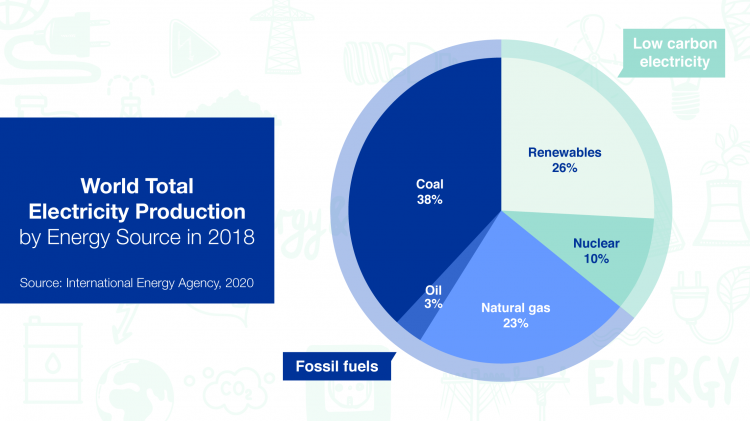
As we strive to reduce our carbon footprint and combat climate change, the question remains: can carbon be a clean energy source? Can we harness the power of coal without harming the environment? In this article, we’ll explore the possibilities of capturing CO2 from coal combustion and producing clean energy from carbon.
The Dirty Truth About Coal
Coal is one of the world’s largest sources of greenhouse gas emissions. Burning coal releases massive amounts of carbon dioxide into the atmosphere, contributing to climate change. The World Health Organization estimates that coal-fired power plants are responsible for approximately 5 million premature deaths annually. However, researchers have been working on a solution that could make coal a cleaner source of energy.
The Carbon Capture Solution
Carbon capture technology involves capturing the CO2 emitted by coal combustion in a process called post-combustion capture. This is done by injecting a gas, such as ammonia or potassium carbonate, into the flue gas stream, which reacts with the CO2 to form a stable compound that can be easily separated from the air.
One of the most promising carbon capture technologies is the oxyfuel combustion system. In this process, oxygen is introduced into the furnace instead of air, reducing the amount of nitrogen dioxide emitted. The resulting flue gas contains only about 8% nitrogen and 92% CO2, making it easier to separate and store.
The “White Chimney” Solution
Imagine a chimney that doesn’t emit CO2. Sounds like science fiction, but researchers have developed a concept called the “white chimney.” This innovative technology captures CO2 before it’s released into the atmosphere, making coal-fired power plants cleaner and more sustainable.
In this system, the flue gas is passed through a reactor where the CO2 is captured and converted into a stable solid. The resulting material is stored safely without harming the environment. The “white chimney” solution has several benefits, including reduced greenhouse gas emissions, improved air quality, and increased energy efficiency.
New Breakthroughs in Carbon Utilization
Recent breakthroughs in carbon utilization could make clean energy from carbon a reality. Scientists at the American Chemical Society (ACS) have developed a new technology that harnesses the power of coal without burning it. This system uses two different methods to utilize carbon, known as Syngas Chemical Looping (SCL) and Coal-Direct Chemical Looping (CDCL).
The Science Behind Carbon Capture
The ACS team has worked on this project for over 10 years, focusing on two key mechanisms: SCL and CDCL. These methods allow the carbon to be utilized without releasing CO2 into the atmosphere. The technology has shown promising results in laboratory tests.
In SCL, a metal oxide is used to react with the CO2 and form a stable compound that can be easily separated from the air. In CDCL, a chemical reaction is used to convert the carbon into a usable form, such as syngas.
How It Works
Here’s how it works:
- Carbon is burned in a special chamber, producing a flue gas.
- The flue gas is then passed through a system that captures the CO2 using a chemical reaction.
- The captured CO2 is stored safely without harming the environment.
- The remaining gases are reused to produce electricity or heat.
The Benefits
This technology has several benefits:
- Reduced greenhouse gas emissions
- Increased energy efficiency
- Lower operating costs
- Improved air quality
Applications of Carbon Capture Technology
Carbon capture technology can be applied to a variety of industries, including oil refineries and natural gas processing plants. The potential for carbon capture is vast, with many opportunities for innovation and growth.
Some of the most promising applications of carbon capture include:
- Coal-fired power plants
- Oil refineries
- Natural gas processing plants
- Industrial processes
Challenges and Limitations
While carbon capture technology has made significant progress in recent years, there are still several challenges and limitations to overcome. These include:
- Cost: Carbon capture technology is currently more expensive than traditional methods of reducing greenhouse gas emissions.
- Scalability: Carbon capture technology must be scaled up to meet the demands of industrial processes.
- Public perception: There may be public concerns about the safety and environmental impact of carbon capture technology.
Conclusion
Can carbon be a clean energy source? The answer is yes. With innovative technologies like carbon capture and utilization, we can harness the power of coal without harming the environment. While there’s still work to be done, this breakthrough has given us hope for a more sustainable future.
FAQs
- What is carbon capture technology?
Carbon capture technology involves capturing CO2 emissions from industrial sources, such as coal-fired power plants. - How does it work?
Carbon capture technology uses chemicals or other methods to react with the CO2 and separate it from the air. - Will this technology reduce greenhouse gas emissions?
Yes, carbon capture technology has the potential to significantly reduce greenhouse gas emissions from industrial sources. - Is this technology still in development?
While the technology is still in its early stages, researchers are making rapid progress in developing and improving it. - Can this technology be applied to other industries?
Yes, carbon capture technology can be applied to a variety of industries, including oil refineries and natural gas processing plants. - How much will this technology cost?
The cost of carbon capture technology is still relatively high, but researchers are working to reduce it as the technology improves. - Will this technology create jobs?
Yes, the development and deployment of carbon capture technology could create new job opportunities in industries related to clean energy and sustainability. - Is this technology safe for human health?
Carbon capture technology is designed to be safe for human health and the environment, with minimal risks associated with its use.
The Future of Carbon Capture
As research continues to advance, we can expect to see significant improvements in carbon capture technology. Some of the most promising developments on the horizon include:
- Improved efficiency: Researchers are working to develop more efficient methods for capturing CO2.
- Reduced costs: The cost of carbon capture technology is expected to decrease as the technology improves.
- Increased scalability: Carbon capture technology must be scaled up to meet the demands of industrial processes.
In conclusion, can carbon be a clean energy source? The answer is yes. With innovative technologies like carbon capture and utilization, we can harness the power of coal without harming the environment. As research continues to advance, we can expect to see significant improvements in this technology, leading to a more sustainable future for all.


