
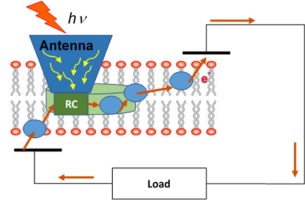
As we strive to reduce our carbon footprint and transition towards a more sustainable future, the quest for innovative solar energy solutions continues to drive scientific advancements. One promising area of research is biohybrid technology, which harnesses the power of biological molecules to enhance photovoltaic efficiency.
Imagine taking spinach and increasing its potency – not Braccio di Ferro, but pannelli solari, and a groundbreaking discovery made by researchers at Vanderbilt University. A protein found in spinach may unlock new possibilities in the field of solar energy.
What is BioHybrid Technology?
Biohybrid technology involves combining biological molecules with conventional materials to create more efficient solar panels. Researchers have identified a protein involved in photosynthesis, known as Photosystem 1 (PSI), which has the potential to convert sunlight into electricity with near-total efficiency.
The PSI protein was first observed approximately 40 years ago, but recent studies have highlighted its remarkable ability to convert light energy into electrical energy with an efficiency of nearly 100%. This is in stark contrast to current photovoltaic panels, which only harness a fraction of the available light intensity.
How Does BioHybrid Technology Work?
The biohybrid technology uses the PSI protein to create a more efficient solar panel. The resulting device can produce up to 850 microamperes of electricity per square centimeter at a voltage of 0.3 volts. In practical terms, this translates to a small solar panel (approximately 60 cm in size) generating at least 100 milliamps at one volt.
This breakthrough has significant implications for the production of clean energy. A single 60 cm solar panel can power a wide range of small electronic devices, making it an attractive solution for off-grid applications or renewable energy systems.
What are the Benefits of BioHybrid Technology?
Two key advantages of biohybrid technology make it an exciting development in the field of solar energy:
- Affordability: The use of spinach and other biological molecules reduces material costs, making the production of biohybrid solar panels more accessible.
- Scalability: With current materials costing much more than spinach, the cost-effectiveness of biohybrid technology increases as larger-scale production becomes possible.
While there are still significant challenges to overcome before biohybrid technology can be widely adopted, researchers at Vanderbilt University estimate that it may take approximately three years to achieve optimal results.
Challenges and Limitations
Despite its potential benefits, biohybrid technology is not without its challenges. Some of the key limitations include:
- Stability: The PSI protein is sensitive to temperature fluctuations, which can affect its efficiency.
- Scalability: While the cost-effectiveness of biohybrid technology increases with larger-scale production, scaling up the production process while maintaining efficiency remains a challenge.
- Interfacing: Integrating the PSI protein with conventional materials and electronics is a complex task that requires further research.
Future Directions
To overcome these challenges, researchers are exploring new approaches to enhance the performance of biohybrid technology. Some potential directions include:
- Optimizing the PSI protein: Researchers are working to optimize the structure and function of the PSI protein to improve its efficiency.
- Developing new materials: The development of new materials with improved electrical conductivity and stability is crucial for scaling up biohybrid technology.
- Integrating with conventional systems: Integrating biohybrid technology with existing solar panel systems and renewable energy infrastructure will be essential for widespread adoption.
Conclusion
The potential for biohybrid technology to revolutionize the solar energy industry is undeniable. As we continue to explore innovative solutions to reduce our carbon footprint and transition towards a more sustainable future, advancements like this will be crucial in driving progress.
Frequently Asked Questions
- What is Photosystem 1 (PSI)?
PSI is a protein involved in photosynthesis that has the potential to convert sunlight into electricity with near-total efficiency. - How does biohybrid technology work?
Biohybrid technology uses the PSI protein to create a more efficient solar panel, resulting in higher energy output. - What are the benefits of using spinach in biohybrid technology?
The use of spinach and other biological molecules reduces material costs, making the production of biohybrid solar panels more accessible and cost-effective. - How long will it take to achieve optimal results with biohybrid technology?
Researchers estimate that it may take approximately three years to achieve optimal results with biohybrid technology. - Can biohybrid technology be used for large-scale power generation?
While there are currently challenges associated with scaling up biohybrid technology, researchers believe that it has the potential to become a viable option for larger-scale power generation in the future.


