
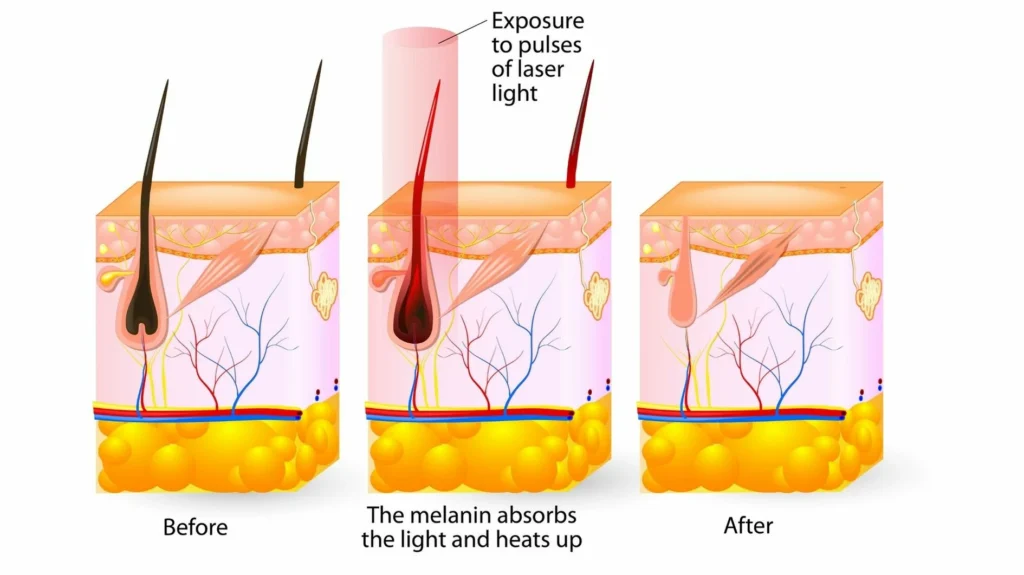
Laser hair removal is a popular cosmetic procedure that uses high-intensity light to target and destroy hair follicles in the body. In this article, we’ll delve into how laser hair removal works, its benefits, risks, and what you need to know before undergoing the treatment.
Understanding Laser Hair Removal
Laser hair removal is a non-invasive, long-lasting solution for unwanted body hair. This technology has been around for several decades, but advancements in technology have made it more efficient and effective than ever. With laser hair removal, you can say goodbye to waxing, shaving, and tweezing forever.
How Does Laser Hair Removal Work?
Laser hair removal works by using a specific wavelength of light that targets the pigment in hair follicles. This technology is based on the principle of phototermolysis, which uses heat to damage the hair follicle and prevent future growth.
When the laser emits light onto the skin, it selectively targets the darker pigment (melanin) present in the hair follicle, causing damage to the follicle’s root system. This leads to a permanent reduction in hair growth over time.
What Makes Laser Hair Removal Effective?
Laser hair removal is effective because it:
- Targets both dark and light hair: Unlike other hair removal methods that only target one specific color of hair, laser hair removal can target multiple colors.
- Can be used on various areas of the body: From underarms to bikini lines, laser hair removal can be used on almost any area of the body.
- Offers long-term results with minimal maintenance: Unlike waxing and shaving, which require frequent treatments, laser hair removal provides long-lasting results that require only occasional touch-ups.
However, the effectiveness of laser hair removal also depends on factors such as:
- Skin type and tone: People with fair skin may be more prone to side effects than those with darker skin tones.
- Hair color and texture: Laser hair removal works best for those with coarse or thick hair.
- The quality of the laser equipment used by the practitioner: Older lasers may not be as effective as newer models.
The Science Behind Laser Hair Removal
To understand how laser hair removal works, let’s break down the science behind it.
Laser light is emitted onto the skin, where it interacts with the melanin pigment present in the hair follicle. This interaction causes the melanin to absorb the light energy, leading to an increase in temperature within the follicle.
As the follicle heats up, the hair shaft breaks and the root system becomes damaged, ultimately preventing future hair growth.
The Risks and Side Effects of Laser Hair Removal
While laser hair removal is generally considered safe, there are some risks and side effects to be aware of.
- Skin irritation: Mild redness, itching, or swelling may occur after treatment.
- Folliculitis: In rare cases, infection can occur in the treated area.
- Hyperpigmentation: Changes in skin color can occur due to prolonged exposure to UV radiation.
To minimize these risks, it’s essential to:
- Follow pre- and post-treatment instructions carefully
- Choose a qualified practitioner with experience in laser hair removal
The Cost of Laser Hair Removal
The cost of laser hair removal varies depending on factors such as:
- The area being treated: Larger areas like the back require more treatment than smaller areas like the underarms.
- The number of sessions required: Typically, 3-6 sessions are necessary for optimal results.
- The quality of the equipment used by the practitioner: Older lasers may not be as effective as newer models.
On average, each session can range from $100 to $250.
While it may seem expensive upfront, consider the long-term benefits and cost savings compared to traditional hair removal methods like waxing or shaving.
FAQs
Q: How many sessions are needed for laser hair removal?
A: The number of sessions required depends on individual factors such as skin type, hair color, and body area being treated. Typically, 3-6 sessions are necessary for optimal results.
Q: Can I do laser hair removal at home?
A: It’s not recommended to perform laser hair removal at home due to the risk of infection and improper technique.
Q: Is laser hair removal suitable for everyone?
A: Laser hair removal is generally safe for most skin types and hair colors. However, certain individuals may be contraindicated, such as those with pacemakers or implants.
Q: Can I use other methods of hair removal alongside laser hair removal?
A: While it’s possible to combine different hair removal methods, laser hair removal should be the primary method used for optimal results.
Q: Are there any long-term side effects from laser hair removal?
A: Rarely, some individuals may experience changes in skin color or texture after repeated treatments.


