
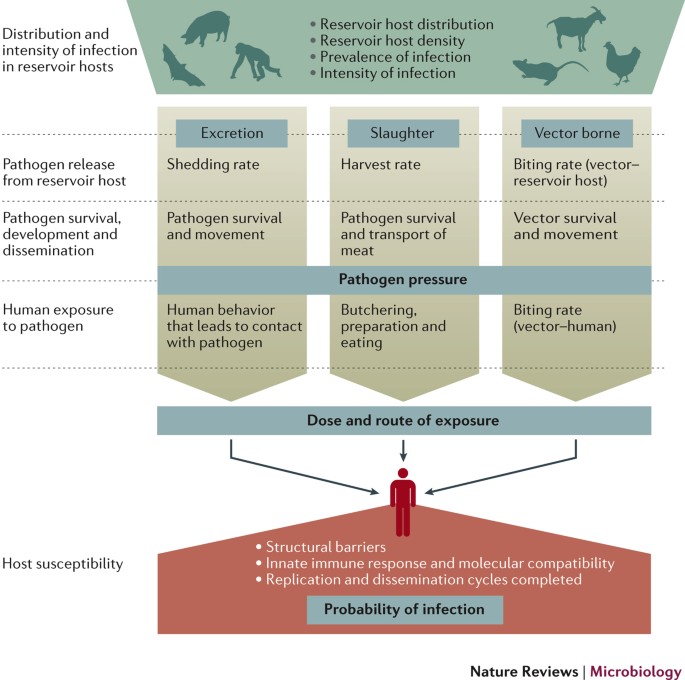
Spillover is a term used in ecology and epidemiology to describe the moment when an infectious agent, or pathogen, successfully jumps from one species to another. This can lead to infections that are transmitted between humans and animals, often with significant consequences for public health.
What Is Spillover?
In simple terms, spillover occurs when a pathogen that normally lives in an animal host can infect a new population of hosts, including humans. This can happen through various routes, such as direct contact, vectors like insects, or contaminated food and water sources.
There are over 200 known zoonotic diseases, which are infections caused by animals, and this number is constantly growing. These diseases can be caused by viruses, bacteria, fungi, or other organisms. Some examples of zoonotic diseases include rabies, leptospirosis, anthrax, SARS, MERS, influenza, dengue, HIV, Ebola, Chikungunya, and COVID-19.
Factors Contributing to Spillover
Several factors can contribute to the likelihood of spillover:
- Globalization: As people travel and trade goods across borders, they carry diseases with them, increasing the risk of transmission.
- Environmental changes: Deforestation, habitat destruction, and climate change can lead to increased contact between humans and animals, facilitating disease transmission.
- Animal-human interfaces: Areas where human and animal habitats overlap, such as farms and wildlife reserves, can increase the risk of disease transmission.
Examples of Spillover
Some notable examples of spillover include:
- Rabies: Originated from bats and transmitted to humans through direct contact.
- SARS: Emerged in China in 2002 after an outbreak of a mysterious respiratory illness linked to the trade of live animals.
- COVID-19: Caused by a coronavirus that is believed to have originated in bats before jumping to humans.
Impact of Spillover on Human Populations
Spillover can have significant consequences for human populations:
- Human mortality: Many zoonotic diseases are deadly, and spillover events can lead to outbreaks with devastating impact.
- Economic burden: Spillover events can result in significant economic losses due to the interruption of trade, tourism, and other industries.
Prevention and Preparedness
To mitigate the risk of spillover:
- Vaccination programs: Develop and implement vaccination programs for high-risk diseases.
- Surveillance systems: Establish and maintain robust surveillance systems to detect early warning signs of disease outbreaks.
- Public education: Educate the public on the risks associated with zoonotic diseases and how to prevent transmission.
Conclusion
Spillover is a significant threat to human health, particularly in the context of globalization and environmental changes. Understanding the factors that contribute to spillover and taking proactive measures to prevent and prepare for these events are crucial to protecting human populations from infectious disease outbreaks.
Frequently Asked Questions (FAQs)
-
What is the most common zoonotic disease?
- Rabies
-
How can spillover be prevented?
-
Vaccination programs, surveillance systems, and public education are key strategies for preventing spillover.
-
What are some examples of diseases that have emerged from animal hosts?
-
SARS, MERS, COVID-19
-
How can globalization contribute to the risk of spillover?
-
Globalization increases the movement of people and goods across borders, facilitating the spread of infectious diseases.
-
What role do environmental changes play in increasing the risk of spillover?
-
Deforestation, habitat destruction, and climate change can lead to increased contact between humans and animals, facilitating disease transmission.
Spillover in the Future: Challenges and Opportunities
As we continue to navigate the complexities of global health, it is essential to address the challenges posed by spillover. This includes:
- Investing in research: Developing new treatments, vaccines, and diagnostic tools to combat zoonotic diseases.
- Improving surveillance systems: Enhancing our ability to detect early warning signs of disease outbreaks and respond quickly to emerging threats.
- Promoting public awareness: Educating the public on the risks associated with zoonotic diseases and how to prevent transmission.
Conclusion
Spillover is a pressing issue in global health, requiring a multifaceted approach to prevention and preparedness. By understanding the factors that contribute to spillover and taking proactive measures to address these challenges, we can reduce the risk of infectious disease outbreaks and protect human populations from harm.
References:
- World Health Organization (2022). Zoonotic diseases.
- Centers for Disease Control and Prevention (2022). Zoonotic Diseases.
- National Institute of Allergy and Infectious Diseases (2022). Emerging and Re-emerging Infectious Diseases.


