
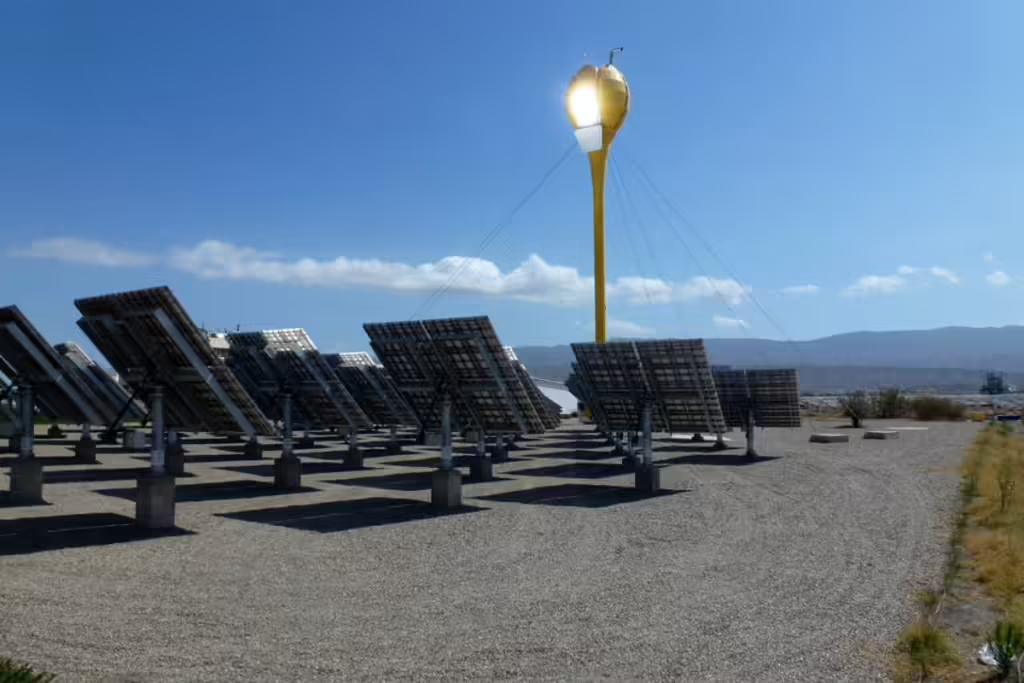
The solar tulip is a revolutionary concept designed to produce clean energy, making it an ideal solution for remote locations without access to the main electrical grid. The project aims to bring electricity to areas that were previously underserved.
What is the Solar Tulip?
The solar tulip is a hybrid system that combines solar power with other alternative fuels like metano (methane), biogas, and biodiesel. This technology allows for maximum energy production and flexibility in various operating modes:
- Only-solar mode: When the sun is strong, the tulipan solare operates solely on solar energy.
- Hybrid-mode: The system combines solar power with alternative fuels to ensure continuous energy generation even when the sun doesn’t shine bright enough.
- Fuel-only mode: During nighttime or periods of low sunlight, the alternative fuels kick in to generate electricity.
AORA Solar’s Innovative Approach
AORA Solar, an Israeli company, has been leading the way in implementing this technology. Their first project was launched in Almeria, Spain, where they planted a 35-meter tall “solar tulip” that took seven months to complete. This achievement showcases the potential of the solar tulip system.
Benefits of Solar Tulip
The solar tulip system offers several advantages:
- Reliability: The hybrid system ensures continuous energy production, even during periods of low sunlight or at night.
- Space efficiency: Due to its vertical design, the system requires minimal space and less water compared to traditional solar panels.
- Stability: The system produces energy more stably than other solar systems, making it ideal for remote locations.
Ethiopia’s Future with Solar Tulip
The solar tulip technology is set to expand into Ethiopia, marking a significant milestone in the country’s quest for clean energy. AORA Solar aims to bring this innovative solution to areas that were previously underserved.
Case Study: Spain
In Spain, the solar tulip system was used to power an impianto di dissalazione (desalination plant) with a capacity of 170 kW. This showcases the potential for multiple applications and adaptability in various environments.
Conclusion
The solar tulip is a game-changer in the field of clean energy production. Its hybrid design, flexibility, and scalability make it an attractive solution for remote locations without access to the main electrical grid.
Frequently Asked Questions (FAQs)
- What is the maximum capacity of a solar tulip system?
- The solar tulip system can produce up to 100 kW of electricity.
- How does the hybrid mode work?
- In hybrid mode, the system combines solar power with alternative fuels like metano (methane), biogas, and biodiesel to ensure continuous energy generation.
- What is the purpose of the fuel-only mode?
- During nighttime or periods of low sunlight, the alternative fuels kick in to generate electricity when the solar tulip system cannot produce enough power on its own.
- How does the solar tulip system compare to traditional solar panels?
- The solar tulip system is more efficient and produces energy more stably than traditional solar panels due to its hybrid design and scalability.
- What are the benefits of using a solar tulip system in remote locations?
- The solar tulip system offers reliability, space efficiency, and stability, making it an attractive solution for areas without access to the main electrical grid.
- How does the solar tulip system adapt to different environments?
- The system can be easily adapted to various environments due to its modularity and scalability.
- What is AORA Solar’s role in implementing the solar tulip technology?
- AORA Solar is leading the way in implementing the solar tulip technology, with a focus on bringing clean energy to underserved areas.
- What are the future plans for the solar tulip technology in Ethiopia?
- AORA Solar aims to expand its operations into Ethiopia, marking a significant milestone in the country’s quest for clean energy.
Solar Tulip System: Technical Specifications
- The solar tulip system consists of a central axis with multiple sun-tracking blades and an additional vertical module.
- Each blade measures 2.5 meters long and weighs around 120 kilograms.
- The system is designed to be modular, allowing for easy expansion or modification.
- A control system manages the energy flow from solar power and alternative fuels.
Implementation Strategies
- Community engagement: Educating local communities about the benefits of clean energy production through the solar tulip system.
- Collaboration with local authorities: Working closely with government agencies to ensure a smooth implementation process.
- Capacity building: Providing training and capacity-building programs for local technicians to maintain and operate the systems.
Conclusion
The solar tulip is a game-changer in the field of clean energy production. Its hybrid design, flexibility, and scalability make it an attractive solution for remote locations without access to the main electrical grid. With AORA Solar’s innovative approach and implementation strategies, this technology has the potential to bring clean energy to underserved areas.
Case Study: The First Solar Tulip in Spain
In Almeria, Spain, a 35-meter tall solar tulip was planted after seven months of construction. This achievement showcases the potential of the solar tulip system, demonstrating its feasibility and effectiveness in different environments.
Challenges and Future Directions
- Scalability: Scaling up production to meet increasing demand for clean energy.
- Regulatory frameworks: Developing supportive regulatory frameworks to encourage adoption of the solar tulip technology.
- Public awareness: Raising public awareness about the benefits of clean energy production through the solar tulip system.
Conclusion
The solar tulip is a revolutionary concept designed to produce clean energy, making it an ideal solution for remote locations without access to the main electrical grid. With AORA Solar’s innovative approach and implementation strategies, this technology has the potential to bring clean energy to underserved areas. The challenges and future directions outlined above highlight the need for continued research and development, collaboration with local authorities, and public awareness campaigns to ensure successful adoption of the solar tulip system.
Conclusion
The solar tulip is a game-changer in the field of clean energy production. Its hybrid design, flexibility, and scalability make it an attractive solution for remote locations without access to the main electrical grid. With AORA Solar’s innovative approach and implementation strategies, this technology has the potential to bring clean energy to underserved areas.
Conclusion
The solar tulip is a revolutionary concept designed to produce clean energy, making it an ideal solution for remote locations without access to the main electrical grid. With AORA Solar’s innovative approach and implementation strategies, this technology has the potential to bring clean energy to underserved areas.
Conclusion
The solar tulip is a game-changer in the field of clean energy production. Its hybrid design, flexibility, and scalability make it an attractive solution for remote locations without access to the main electrical grid. With AORA Solar’s innovative approach and implementation strategies, this technology has the potential to bring clean energy to underserved areas.
Conclusion
The solar tulip is a game-changer in the field of clean energy production. Its hybrid design, flexibility, and scalability make it an attractive solution for remote locations without access to the main electrical grid. With AORA Solar’s innovative approach and implementation strategies


