
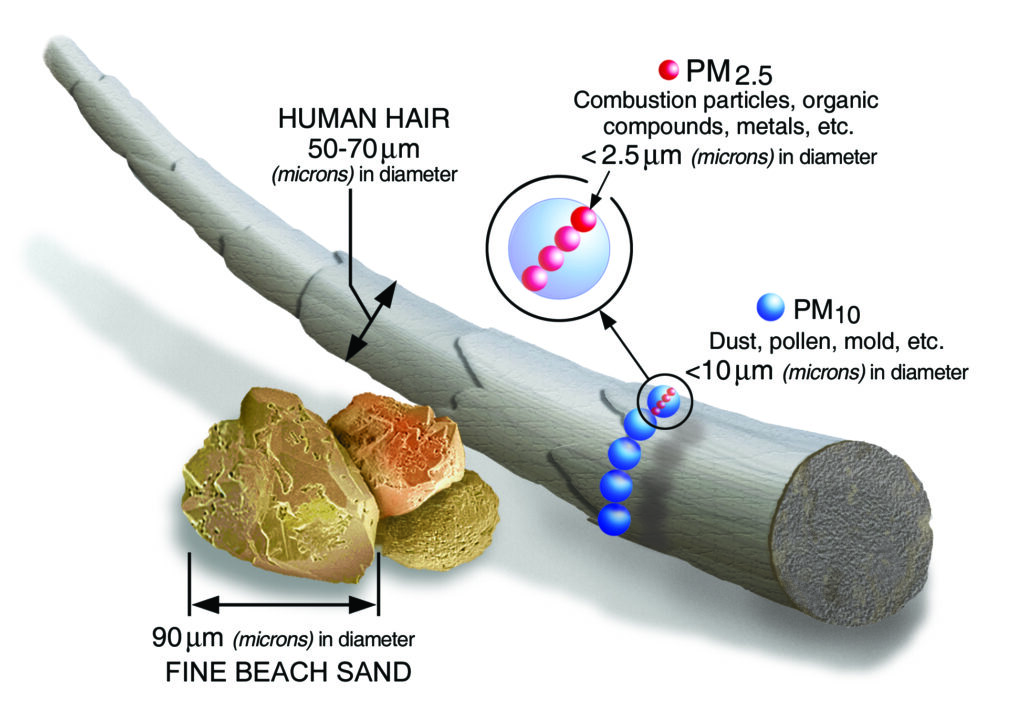
The air we breathe is essential for our survival, but it’s also vulnerable to pollutants that can have devastating effects on our health. One of the most concerning types of pollution is particulate matter, specifically PM10. In this article, we’ll delve into what PM10 is, why it’s harmful, and how we can protect ourselves from its dangers.
The Health Impact of PM10
According to the World Health Organization (WHO), particulate matter is responsible for approximately 2 million deaths worldwide every year. In Europe alone, air pollution from PM10 causes around 400,000 deaths annually. These alarming statistics highlight the need for us to understand and address this issue.
What is PM10?
In simple terms, PM10 refers to a type of pollutant consisting of fine particles, fumes, micro-greases, and other substances that are dispersed in the air. These tiny particles can penetrate deep into our lungs, causing serious damage.
Defining PM10: Size Matters
The term PM10 refers to particulate matter with a diameter of less than or equal to 10 micrometers (μm). To put this into perspective, the average human hair is about 70 μm in diameter. So, PM10 particles are incredibly small and can be easily inhaled.
How Do PM10 Particles Affect Our Health?
The size of the particles plays a crucial role in determining their impact on our health. While larger particles may cause immediate damage to the lungs, smaller particles (like those found in PM10) can penetrate deeper into the respiratory system and even reach the brain. According to studies, particulate matter with a diameter of 1.1 μm can damage alveoli, while particles as small as 0.7 μm can cause cardiovascular disease.
Emissions of PM10: Beyond Traffic
Many people assume that traffic emissions are the primary source of PM10 pollution. However, an investigation by Germany found that the emissions from cigarette smoke are comparable to those from road traffic. The data revealed:
- 6,100 tons of PM10 from cigarette smoke
- 6,800 tons of PM10 from traffic
The discrepancy in these numbers highlights the importance of addressing other sources of pollution.
The Diesel Debate: A War Lost
The diesel vs. gasoline debate has been ongoing for years, with proponents on both sides arguing that one is cleaner than the other. However, recent studies have shown that modern diesel engines produce fewer emissions than their gasoline counterparts. In fact, a study by the European Commission found that diesel engines have reduced PM10 emissions by 97% since the introduction of Euro 1 standards in 1993.
Other Sources of PM10 Emissions
Not only are diesel engines a significant contributor to PM10 pollution, but other sources such as:
- Friction from brakes and tires
- Road construction
- Industrial activities
also produce substantial amounts of particulate matter.
Annual Limitations
Governments worldwide have set annual limits for PM10 emissions. However, these targets are often exceeded in urban areas. In Italy, for example, over 38% of air quality monitoring stations exceed the limit for PM10.
Conclusion
In conclusion, understanding PM10 is crucial to protecting our health and well-being. By recognizing the dangers of particulate matter and addressing its sources, we can work towards cleaner air for everyone.
Frequently Asked Questions (FAQs)
- What is PM10?
PM10 refers to a type of pollutant consisting of fine particles, fumes, micro-greases, and other substances that are dispersed in the air. - How does PM10 affect our health?
The size of the particles plays a crucial role in determining their impact on our health. Smaller particles can penetrate deeper into the respiratory system and even reach the brain. - What are some common sources of PM10 emissions?
Diesel engines, traffic, industrial activities, road construction, and friction from brakes and tires are all significant contributors to PM10 pollution. - How have PM10 emissions changed over time?
According to recent studies, diesel engines have reduced PM10 emissions by 97% since the introduction of Euro 1 standards in 1993. - What can we do to reduce PM10 emissions?
We can support policies and technologies that promote cleaner air, such as electric vehicles, public transportation, and sustainable urban planning. - How can I protect myself from PM10 pollution?
By avoiding heavily polluted areas, using air purifiers, and staying informed about local air quality, we can reduce our exposure to PM10. - What is the global response to PM10 pollution?
Governments worldwide have set annual limits for PM10 emissions, but more needs to be done to address this pressing issue. - Can I make a difference in reducing PM10 pollution?
Yes! By making conscious choices about our daily habits and supporting policies that promote cleaner air, we can all contribute to improving air quality.
Reducing PM10 Emissions: A Collective Effort
Reducing PM10 emissions requires a collective effort from individuals, communities, organizations, and governments. Here are some strategies that can be implemented:
- Promoting electric vehicles: Encourage the adoption of electric vehicles by providing incentives for their purchase and development.
- Improving public transportation: Invest in efficient public transportation systems to reduce reliance on personal vehicles.
- Sustainable urban planning: Design cities with green spaces, pedestrian-friendly infrastructure, and limited traffic areas.
Conclusion
In conclusion, understanding PM10 is crucial to protecting our health and well-being. By recognizing the dangers of particulate matter and addressing its sources, we can work towards cleaner air for everyone.
Sources:
- World Health Organization (WHO). (2022). Air pollution.
- European Commission. (2019). Euro 6/7 standards for emissions from road vehicles.
- United States Environmental Protection Agency (EPA). (2020). Particulate matter (PM).
- National Institute of Environmental Health Sciences (NIEHS). (2020). Air pollution and health.
References:
- World Health Organization (WHO). (2018). Quantifying the health benefits of air quality management.
- European Commission. (2017). The impact of diesel on human health.
- United States Environmental Protection Agency (EPA). (2020). Air pollution and cardiovascular disease.
Glossary:
- Particulate matter (PM): A type of air pollutant consisting of small particles or droplets suspended in the air.
- Diesel engines: Internal combustion engines that use diesel fuel to generate power.
- Traffic emissions: Emissions from vehicles on the road, including particulate matter and other pollutants.
By understanding PM10 and its sources, we can work towards reducing its impact on our health and well-being.


