
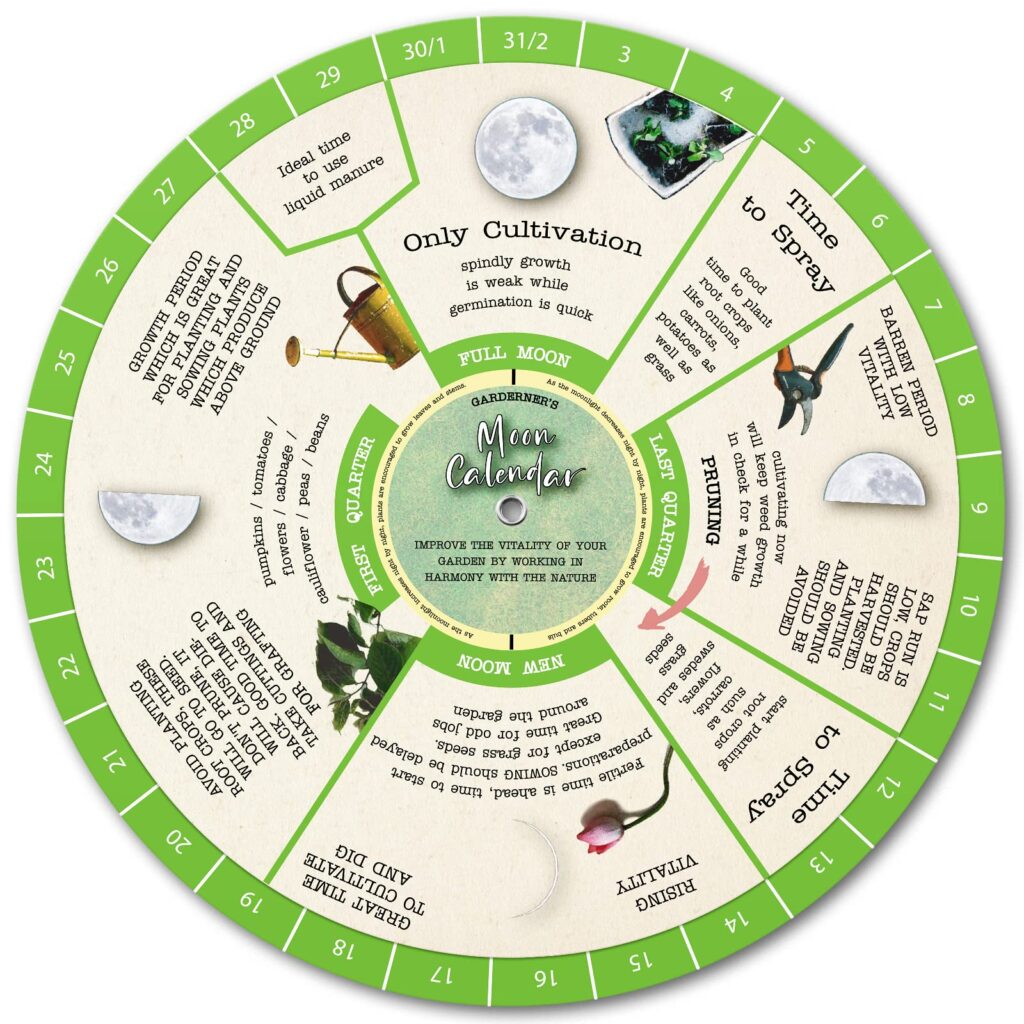
As a popular belief, many farmers and gardeners prefer to organize their planting, and all agricultural activities, following the lunar cycle; according to them, these phases would seriously affect plant growth. This ancient practice has been passed down for centuries, with varying degrees of success. While some swear by its effectiveness, others dismiss it as mere superstition. In this article, we will delve into the world of lunar gardening, exploring the different phases and their supposed impact on plant growth.
Understanding Lunar Phases for Gardening
The lunar cycle consists of eight distinct phases: new moon, waxing crescent, first quarter, waxing gibbous, full moon, waning gibbous, last quarter, and waning crescent. Each phase is believed to have a specific influence on plant growth, with some practices favoring certain periods over others.
New Moon (The Black Moon)
When the moon is in its new moon phase, sap flows back to the surface of the plant, promoting new growth and development. This makes it an ideal time for planting chicory, grafting on prunes and apples, and other crops that require a boost of energy. The calmness of this phase also allows for gentle transplanting and pruning.
Waxing Crescent (The Half-Moon with a Westward Curvature)
As the moon begins to grow in size, sap starts to flow more vigorously, and plant growth accelerates. This is an excellent time for transplanting lettuce, onions, potatoes, strawberries, tomatoes, Brussels sprouts, kale, and cauliflower. It’s also suitable for planting new seeds and seedlings.
First Quarter (The Moon with a Small Fraction Illuminated)
During this phase, the moon is one-quarter illuminated from the east. This period marks the beginning of growth, and it’s ideal for planting tubers and bulbs like tulips, daffodils, and narcissus. Experts recommend planting at this time to allow the roots to establish themselves before the full moon.
Waxing Gibbous (The Moon with a Large Fraction Illuminated)
As the moon continues to grow in size, sap flows even more vigorously, promoting rapid growth and development. This is an excellent time for harvesting crops that have reached maturity, such as lettuce, herbs, and vegetables.
Full Moon (The Completely Illuminated Moon)
When the moon is fully illuminated, it’s believed to reach its peak energy level. This phase is ideal for planting garlic, white onion, red onion, carrots, summer lettuce, radicchio, peas, and asparagus. It’s also an excellent time for pruning and harvesting crops that require maximum attention.
Waning Gibbous (The Moon with a Small Fraction Unilluminated)
As the moon begins to decrease in size, sap starts to flow more slowly, allowing plants to focus their energy on storage and preparation for the next phase. This is an excellent time for planting vining crops like peas, basil, mint, and herbs.
Last Quarter (The Moon with a Small Fraction Unilluminated from the West)
During this phase, the moon is one-quarter illuminated from the west. It’s believed to be a time of transition, when plants are preparing for rest and rejuvenation. Experts recommend planting lawn, annual flowers, and biennials, as well as climbing plants.
Waning Crescent (The Half-Moon with an Eastward Curvature)
As the moon reaches its final phase before new moon, sap flows even more slowly, allowing plants to conserve energy. This is an excellent time for planting undergrowth crops like potatoes, apples, and grapes.
Does Wine Follow the Moon?
Even winemaking is believed to be influenced by lunar phases. For example, sparkling wine is best prepared during the growing crescent phase, when sap flows more vigorously. Bottling should occur during the waning phase, allowing for maximum aging potential. Aged wines are typically produced during this period.
Lunar Gardening Phases
While the lunar cycle has been passed down for centuries, its effects on plant growth remain a topic of debate among scientists and gardeners alike. According to experts, seeds have enough time to adapt to their new location before undergoing maximum energetic impact (full moon), followed by 14 days of calmness (waning moon) for preparation.
Useful Tips for Lunar Gardening
- Perform transplanting a tree during the growing crescent to ensure rooting. Planting during the waning moon might impede recovery, taking much longer to flourish at its best.
- Graft and prune plants in the growing crescent, at some days away from the full moon, when sap is most active and roots will develop faster.
- Perform winter pruning in the waning crescent, when sap flows less, just as for summer greenery pruning, which is done in spring and late September. This allows for minimal sap loss during recutting.
Additional Reading
For further exploration of lunar gardening and its effects on plant growth, we recommend checking out:
- “Moon and Sowing: The Rules”
- Eclipses Solar 2017
- Lunar Eclipses 2017
Gardening Tools are essential for any lunar gardener, allowing for precise control over planting and pruning schedules. By incorporating these tools into your gardening routine, you can unlock the secrets of lunar gardening and cultivate the most vibrant, healthy crops.
Conclusion
The lunar gardening cycle offers a unique approach to organizing planting and agricultural activities. While its effects on plant growth remain debated among scientists, many gardeners swear by its effectiveness. By understanding the different phases and their supposed impact on plant growth, you can unlock the secrets of lunar gardening and cultivate the most thriving crops. Whether or not you choose to follow this ancient practice, incorporating lunar cycles into your gardening routine can add a new layer of depth and meaning to your gardening experience.
Bonus Materials
- Lunar Gardening Calendar: Download our free calendar template to plan your planting schedule according to the lunar cycle.
- Lunar Gardening Tips: Get expert advice on how to incorporate lunar phases into your daily gardening routine.
- Lunar Gardening Books: Explore a range of books and resources dedicated to lunar gardening and its effects on plant growth.


