
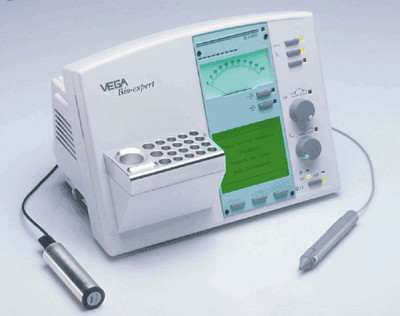
The Vega test is a “test” developed by Reinhold Voll in 1958 that claims to detect over 3,000 food allergies in just three minutes. While it has gained popularity among some proponents, its validity and effectiveness have been questioned by medical professionals. In this article, we will delve into the world of the Vega test, exploring what it is, how it works, and examining the concerns surrounding its use.
What is the Vega Test?
Also known as the Elettro Agopuntura or Electrodermography test, the Vega test was initially called “Elettro Agopuntura” but later renamed by Voll’s student Helmut Schimmel in 1976. The test relies on a galvanometer to measure differences in electrical potential between two electrodes: one with a silver needle held by the patient and the other applied to a specific point on their hand or foot.
The Vega test is based on the theory that the human body responds differently to various substances, including food, through changes in electrical activity. The idea behind the test is that certain foods will cause an imbalance in the body’s energy, leading to measurable changes in electrical potential.
How Does the Vega Test Work?
After calibrating the galvanometer, the patient is presented with a series of solutions containing extracts from various foods. These extracts can be made from fresh or dried ingredients, and the patient may be asked to identify specific foods that they have consumed recently. The test is typically conducted using specialized equipment such as Dermatron, BEST, Quantum, LISTEN, Accupath 1000, Biotron, OmegaVision, and Orion System.
During the test, the galvanometer measures changes in electrical potential between the two electrodes. A decrease of at least 15 units on the galvanometer is considered positive, indicating a response to the specific food extract. The results are then interpreted by a trained practitioner or healthcare professional, who may use various techniques to identify patterns and correlations.
Important Note: Medical Authority’s Stance
The medical community has not recognized any scientific validity for the Vega test. Organizations like the American Academy of Allergy, Asthma, and Immunology (AAAAI) and the National Institute for Health and Clinical Excellence (UK) have expressed concerns about its use for detecting food allergies.
These organizations point out that the Vega test lacks rigorous scientific testing and has not been proven to accurately detect food allergies. Furthermore, the results of the Vega test are subjective and may be influenced by various factors, including the patient’s emotional state and expectations.
Limitations of the Vega Test
Even if the Vega test were to be effective, it would not provide insights into the underlying causes of specific food intolerances. This omission is critical in developing an appropriate treatment plan. Additionally, the Vega test may not account for individual variations in response to different foods, making it difficult to develop personalized treatment plans.
Furthermore, there is limited information available on the safety and efficacy of the Vega test. Medical professionals may have concerns about using unproven methods, particularly when it comes to diagnosing life-threatening conditions like food allergies.
Conclusion: Separating Fact from Fiction
While the Vega test may have some theoretical basis, its lack of scientific recognition and limitations make it a questionable tool for detecting food allergies. It is essential to approach any diagnostic method with a critical eye and to consider multiple perspectives before making any conclusions.
Instead of relying on unproven methods like the Vega test, medical professionals typically rely on blood tests or elimination diets to diagnose food allergies. These approaches have been extensively studied and proven to be effective in identifying specific allergens and developing personalized treatment plans.
Frequently Asked Questions (FAQs)
- Is the Vega test scientifically valid?
The medical community has not recognized any scientific validity for the Vega test. There is limited research supporting its effectiveness, and it should not be relied upon as a diagnostic tool.
- How does the Vega test work?
The test relies on a galvanometer to measure differences in electrical potential between two electrodes: one with a silver needle held by the patient and the other applied to a specific point on their hand or foot.
- What are the limitations of the Vega test?
It would not provide insights into the underlying causes of specific food intolerances, making it difficult to develop personalized treatment plans. Additionally, there is limited information available on its safety and efficacy.
- Is it safe to use the Vega test?
There is limited information available on its safety, and medical professionals may have concerns about using unproven methods.
- Can the Vega test be used for diagnosing other conditions besides food allergies?
No conclusive evidence supports its use for any other condition.
- How accurate is the Vega test in detecting food allergies?
There is no reliable data on its accuracy, and it should not be relied upon as a diagnostic tool.
- What alternative methods are available for diagnosing food allergies?
Medical professionals typically rely on blood tests or elimination diets to diagnose food allergies.
- Should I consider using the Vega test if I have concerns about food allergies?
Consult with a qualified healthcare professional before pursuing any unproven diagnostic method.
Additional Considerations
Before considering the Vega test, it is essential to weigh the potential benefits against the limitations and uncertainties surrounding its use. Medical professionals should carefully evaluate any new diagnostic methods before recommending them to patients.
Additionally, individuals concerned about food allergies should seek out evidence-based recommendations from qualified healthcare professionals. This may involve discussing their symptoms with a doctor or registered dietitian, who can provide guidance on testing, treatment, and management strategies.
By understanding the Vega test’s limitations and lack of scientific recognition, you can make informed decisions about your health and well-being. Remember that any diagnostic method should be approached with caution and carefully evaluated in conjunction with other evidence-based approaches.
The Importance of Evidence-Based Medicine
In today’s healthcare landscape, it is more important than ever to prioritize evidence-based medicine. This means relying on rigorous scientific research and evaluating the effectiveness of various treatments before recommending them to patients.
By embracing a critical approach to medical research and diagnosis, we can ensure that our patients receive the best possible care. This may involve exploring alternative diagnostic methods, such as the Vega test, while also considering established approaches like blood tests or elimination diets.
Ultimately, the goal of healthcare is to provide compassionate, effective care that addresses the unique needs of each patient. By staying informed about emerging trends and technologies in medicine, we can work together to improve health outcomes and promote better well-being for all.
Conclusion
In conclusion, while the Vega test may have some theoretical basis, its lack of scientific recognition and limitations make it a questionable tool for detecting food allergies. Medical professionals should approach this diagnostic method with caution and carefully evaluate its potential benefits against its limitations.
By prioritizing evidence-based medicine and considering multiple perspectives before making any conclusions, we can provide our patients with the best possible care. This may involve exploring alternative diagnostic methods while also relying on established approaches like blood tests or elimination diets.
Ultimately, by staying informed about emerging trends and technologies in medicine, we can work together to improve health outcomes and promote better well-being for all.


