
As a gardener, you’re likely familiar with the importance of fertilizing your soil to provide your plants with essential nutrients. However, traditional fertilizers can be harsh on the environment and may not provide the most natural solution. Fortunately, creating your own natural fertilizer using composting is a simple and effective way to nourish your plants while reducing waste.
In this article, we’ll explore the benefits of composting and show you how to create your own natural fertilizer fai-da-te using everyday materials. By the end of this guide, you’ll be equipped with the knowledge and skills necessary to start making your own compost and creating a nutrient-rich fertilizer for your garden.
Why Composting is Important
Composting is an essential process that breaks down organic matter into a rich, humus-like substance that’s perfect for fertilizing plants. By composting, you’re reducing the amount of waste sent to landfills, conserving natural resources, and creating a nutrient-rich fertilizer that’s better for your garden and the environment.
When we throw away food scraps, yard trimmings, and other organic materials, they end up in landfills where they decompose very slowly. This process takes hundreds of years, releasing methane gas into the atmosphere and contributing to climate change. By composting, you’re diverting these materials from landfills and creating a valuable resource that can be used to fertilize your plants.
The Benefits of Composting
Composting has numerous benefits for gardeners, including:
- Reduced waste: Composting helps reduce the amount of organic waste sent to landfills.
- Increased soil fertility: Compost is rich in nutrients that can help improve soil structure and fertility.
- Improved plant health: Compost can help plants grow stronger and healthier by providing essential micronutrients.
- Environmental benefits: Composting reduces greenhouse gas emissions and conserves natural resources.
Getting Started with Composting
To begin composting, you’ll need a few basic materials:
- A container or bin: This can be an old composer, a plastic tub, or even a hole in your backyard.
- “Green” materials: These include food scraps, grass clippings, and other organic waste that’s high in nitrogen.
- “Brown” materials: These include dried leaves, straw, and other carbon-rich materials.
Choosing the Right Materials
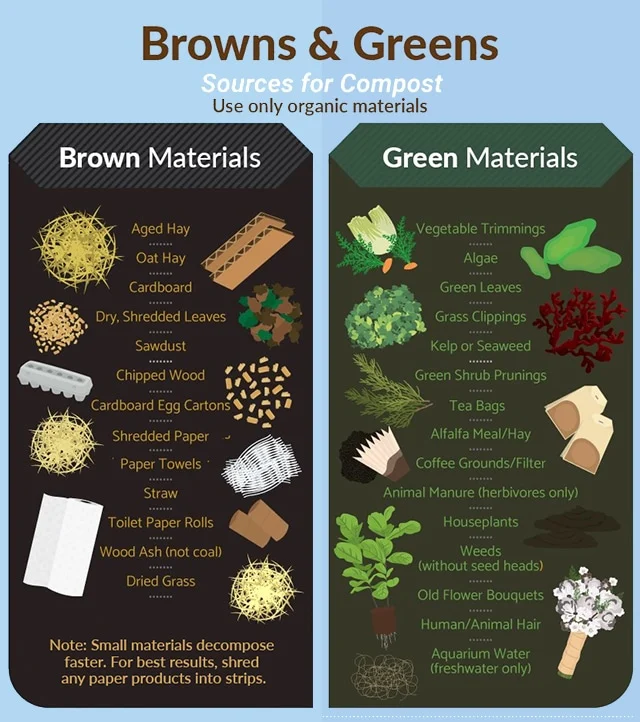
When selecting materials for composting, it’s essential to choose a mix of “green” and “brown” materials. “Green” materials are high in nitrogen and can provide nutrients to your plants, while “brown” materials are high in carbon and help balance out the pH level of your compost.
Here are some examples of “green” and “brown” materials:
- Green materials:
- Food scraps (fruit and vegetable peels, cores, and rinds)
- Grass clippings
- Manure from herbivores (like horses or cows)
- Coffee grounds and tea bags
- Brown materials:
- Dried leaves
- Straw or hay
- Shredded newspaper or cardboard
- Wood chips or sawdust
Creating the Perfect Compost
When it comes to composting, there are a few key things to keep in mind:
- Aeration is crucial: Add some rough-turfed branches or woody sticks to your compost pile to provide oxygen for microorganisms to thrive.
- Balance is key: Make sure you have an equal mix of “green” and “brown” materials to create a balanced compost.
- Moisture is essential: Keep your compost pile moist, but not soggy – aim for a consistency like damp sand.
Tips for Creating the Perfect Compost
Here are some additional tips to keep in mind when creating your own natural fertilizer:
- Use a mix of food scraps, grass clippings, and other organic waste to create a balanced compost.
- Avoid adding meat, dairy, or oils, as these can attract pests and create unpleasant odors.
- Keep your compost pile away from direct sunlight and heat sources, as this can cause the materials to break down too quickly.
Maintaining Your Compost Pile
To keep your compost pile healthy and thriving, follow these tips:
- Add new materials regularly: Continue to add “green” and “brown” materials to your compost pile to maintain a balanced mix.
- Turn the pile regularly: Use a pitchfork or shovel to turn the compost pile every week or two to ensure oxygen flow and prevent matting.
- Monitor moisture levels: Keep an eye on the moisture level of your compost pile, adding more water as needed to keep it damp but not soggy.
Making Your Own Natural Fertilizer
After 6-9 months of steady composting, you’ll have a rich, humus-like substance that’s perfect for fertilizing your plants. To use it, simply set it aside to age for a few weeks before using it in your garden.
Here are some additional tips for using your homemade natural fertilizer:
- Mix it with soil or water to create a customized fertilizer solution.
- Use it as a top dressing for your plants, mixing it into the soil around their roots.
- Experiment with different ratios of compost to other fertilizers to find the perfect balance for your plants.
Frequently Asked Questions
Q: How long does it take to make my own natural fertilizer?
A: It can take anywhere from 6-9 months to create a rich, humus-like substance that’s ready to use in your garden.
Q: What kind of materials should I use for composting?
A: Use a mix of “green” and “brown” materials, including food scraps, grass clippings, and other organic waste. Avoid adding meat, dairy, or oils.
Q: How do I maintain the perfect compost-to-microorganism ratio?
A: Aim for an equal mix of “green” and “brown” materials to create a balanced compost.
Q: Can I use my homemade natural fertilizer on all types of plants?
A: Yes! Your homemade natural fertilizer can be used on a wide range of plants, from vegetables to flowers to trees. Experiment with different ratios and applications to find what works best for your specific needs.
Q: How do I avoid pests and odors when composting?
A: Keep your compost pile away from direct sunlight and heat sources, and use a mix of “green” and “brown” materials to create a balanced compost.
Q: Can I use my homemade natural fertilizer in conjunction with other fertilizers?
A: Yes! Experiment with different ratios of compost to other fertilizers to find the perfect balance for your plants.
Q: How do I store my homemade natural fertilizer when not in use?
A: Store it in an airtight container or bag, keeping it dry and protected from pests.
Q: Can I compost food scraps and grass clippings at the same time?
A: Yes! Mix “green” materials like food scraps with “brown” materials like dried leaves to create a balanced compost.


