
The Future of Cities: How Cement Can Save the Environment
As cities continue to grow and expand, it’s becoming increasingly clear that traditional building materials can have a significant impact on our environment. One innovative solution that’s gaining attention is the use of “cement that eats smog” – a special type of cement that can absorb pollutants from the air.
What is Cement That Eats Smog?
Cement that eats smog is a type of cement that contains a unique ingredient: biossido di titanio. When exposed to sunlight, this ingredient reacts with UV rays to accelerate the decomposition of pollutants on its surface. This means that buildings and structures coated with this special cement can actually help purify the air around them.
The Benefits of Cement That Eats Smog
So why is cement that eats smog so important? For one, it has the potential to neutralize a significant amount of pollutants in urban areas. In fact, studies have shown that if used on a large scale, this type of cement could help reduce air pollution by up to 70%.
Real-World Applications
But what does this mean in practice? Well, for one example, there’s the West Cermak Street in Chicago, which has become known as “the greenest street in America” thanks to its innovative use of cement that eats smog. The entire street is lined with solar panels, energy-efficient lighting, and even a special type of cement that absorbs pollutants from the air.
The Story Behind Palazzo Italia
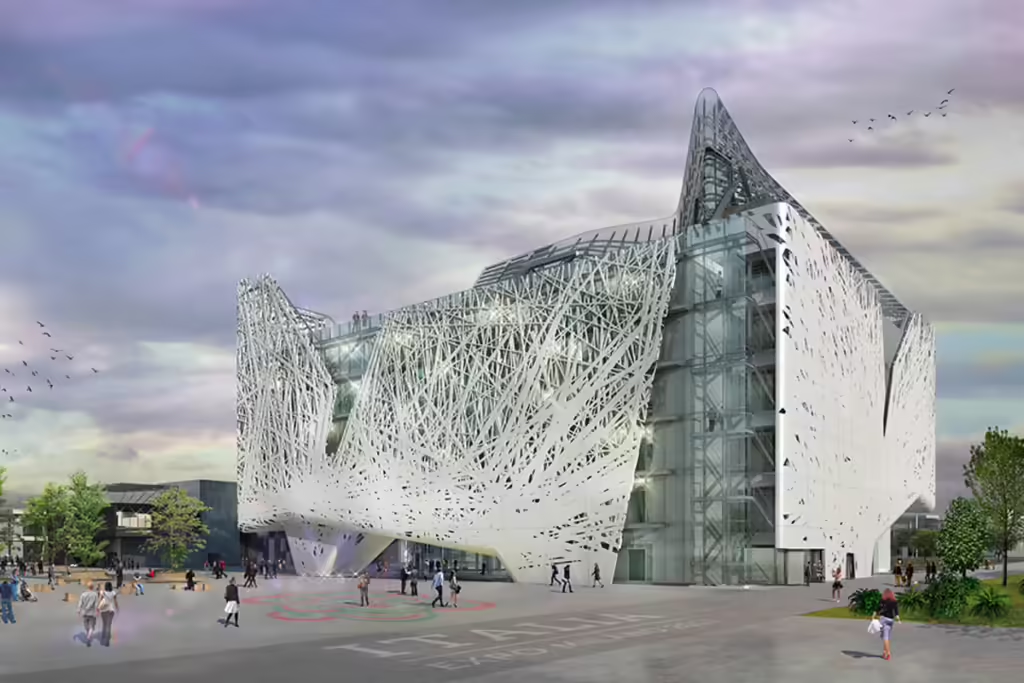
One notable example of this technology in action is Palazzo Italia at Expo 2015 in Milan. This futuristic building was designed to be entirely self-sufficient and features a revolutionary new material: cement that eats smog. The idea behind the project was to create a “forest” of buildings that could work together to clean the air and provide energy.
How It Works
So how does it all work? When sunlight hits the cement, it triggers a reaction that breaks down pollutants on its surface into harmless compounds that can be easily removed from the air. This process is powered by the sun’s UV rays, making it a sustainable and eco-friendly solution.
The Future of Urban Development
As cities continue to grow and expand, it’s clear that we need innovative solutions like cement that eats smog to help reduce our environmental impact. By using this technology, we can create buildings and structures that not only provide energy and shelter but also help purify the air around them.
Conclusion
In conclusion, cement that eats smog is an exciting new development in the world of urban planning and building materials. With its potential to neutralize pollutants and provide energy, it’s an innovation that could have a significant impact on our environment. As we move forward into the future, let’s explore this technology further and see how we can harness its power to create a more sustainable and livable city.
Frequently Asked Questions
- Q: What is cement that eats smog?
A: Cement that eats smog is a type of special cement that contains biossido di titanio. When exposed to sunlight, this ingredient reacts with UV rays to accelerate the decomposition of pollutants on its surface. - Q: How does it work?
A: When sunlight hits the cement, it triggers a reaction that breaks down pollutants on its surface into harmless compounds that can be easily removed from the air. - Q: Is this technology widely available yet?
A: While not yet widespread, cement that eats smog is being used in various pilot projects around the world to test its effectiveness and scalability. - Q: What are some real-world applications of this technology?
A: There are several examples, including the West Cermak Street in Chicago and Palazzo Italia at Expo 2015 in Milan. - Q: How can I learn more about cement that eats smog?
A: You can find more information online through organizations and researchers working on this technology.
Challenges and Limitations
While cement that eats smog is an exciting new development, there are still challenges and limitations to consider. For one, the cost of production is currently higher than traditional cement, making it less accessible to many builders and architects. Additionally, there may be concerns about the long-term durability of the material.
Potential for Widespread Adoption
Despite these challenges, many experts believe that cement that eats smog has the potential for widespread adoption in urban development projects. As research and production costs continue to decrease, this technology could become a standard component of building materials.
The Role of Government and Industry
Government agencies and industry leaders are already taking notice of cement that eats smog and its potential to transform urban planning. By providing incentives and funding for pilot projects, governments can help bring this technology to the forefront and make it more accessible to builders and architects.
Conclusion
In conclusion, cement that eats smog is an innovative solution with the potential to revolutionize urban development. While there are still challenges and limitations to consider, many experts believe that this technology could have a significant impact on our environment. By working together to overcome these challenges and promote widespread adoption, we can create a more sustainable and livable city.
Future Research Directions
As researchers continue to study cement that eats smog, several future research directions are likely to emerge. These may include:
- Improving production costs: To make this technology more accessible to builders and architects, researchers will need to focus on reducing production costs.
- Enhancing durability: To ensure the long-term effectiveness of this material, researchers will need to develop methods for improving its durability in different environmental conditions.
- Exploring new applications: Researchers may also explore new ways to use cement that eats smog, such as incorporating it into other building materials or using it to create new types of infrastructure.
Conclusion
In conclusion, cement that eats smog is an exciting new development with the potential to transform urban planning. By continuing to research and develop this technology, we can create a more sustainable and livable city for future generations.


