
Growing Roses: From Planting to Care
Are you ready to cultivate roses? With the right techniques and care, you can create a beautiful and thriving rose garden. In this article, we’ll guide you through the process of planting and caring for your roses, as well as common diseases and pests that may affect them.
Choosing the Right Roses
There are many varieties of roses available, each with its own unique characteristics and benefits. When selecting roses, consider factors such as climate, soil type, and desired level of fragrance. Some popular rose varieties include floribundas, hybrid teas, and climbing roses.
Floribundas are a great choice for beginners because they are compact, easy to care for, and produce an abundance of blooms. Hybrid teas are ideal for those who want to create a dramatic display of flowers, while climbing roses offer the perfect solution for adding beauty to fences, trellises, or arbors.
In addition to their aesthetic appeal, roses also offer numerous health benefits. They are rich in antioxidants, vitamins, and minerals, making them an excellent addition to your garden.
Planting Roses in Vases or Gardens
Roses can thrive in both vases and gardens. When planting roses in vases, choose floribundas or other compact varieties that won’t exceed a height of 3 feet. In gardens, choose a location with full sun to partial shade and well-draining soil.
Planting roses in vases requires some special care. Make sure the vase is large enough to accommodate the rose’s roots, and use a well-draining potting mix to prevent waterlogged soil. Water your rose regularly, but avoid overwatering, which can lead to root rot.
Planting roses in gardens is similar to planting them in vases. Choose a location with good drainage, and plant the rose at the same depth as it was in its container. Add organic matter such as compost or manure to improve soil fertility, and water your rose regularly during hot weather.
Preparing the Planting Site
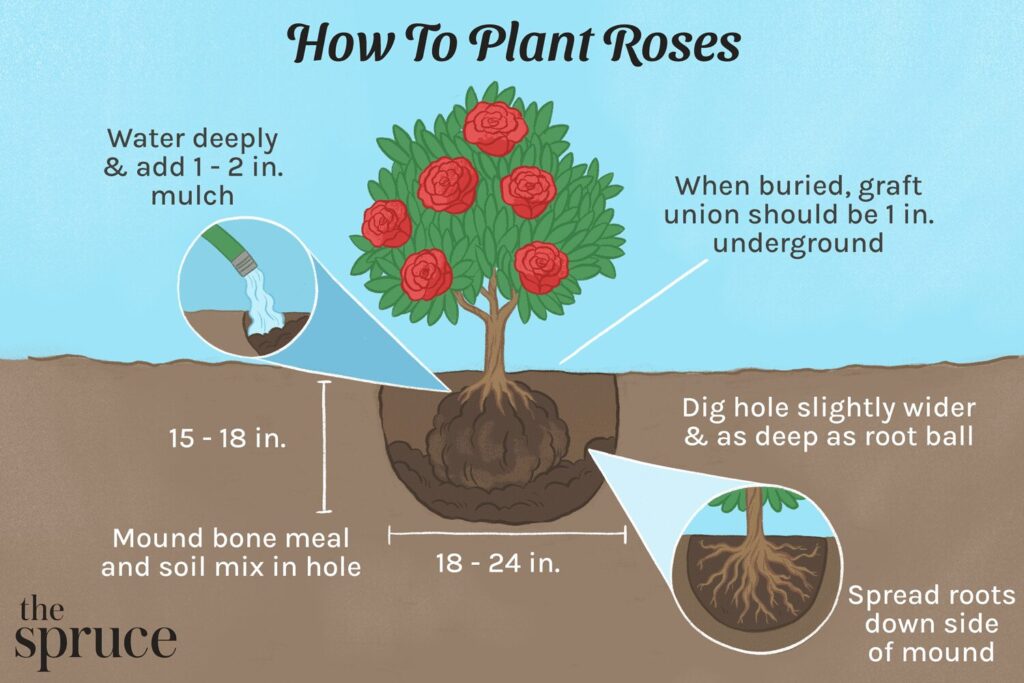
Before planting your rose, prepare the site by digging a hole that is twice as wide and just as deep as the root ball. Add a layer of organic matter such as compost or manure to improve soil fertility.
When preparing the planting site, consider the following factors:
- Soil type: Roses prefer well-draining soil with a pH between 6.0 and 7.0.
- Sunlight: Most roses require full sun to partial shade.
- Water availability: Roses need consistent moisture, especially during hot weather.
Planting Roses from Bare Root Stock
To plant roses from bare root stock, follow these steps:
- Prepare the Plant: Remove any leaves or twigs from the lower half of the stem, and trim the roots back by about one-third.
- Dig a Hole: Dig a hole that is twice as wide and just as deep as the root ball.
- Add Organic Matter: Add a layer of organic matter such as compost or manure to improve soil fertility.
- Plant the Rose: Place the rose in the center of the hole, making sure the graft union (if applicable) is at least 2 inches above the soil level. Fill the hole with soil, tamping it down gently as you go.
Caring for Roses
To keep your roses healthy and thriving, follow these care tips:
- Watering: Water your roses regularly during hot weather, but avoid overwatering.
- Fertilization: Fertilize your roses in early spring with a balanced fertilizer.
- Pruning: Prune your roses in late winter or early spring to maintain shape and encourage blooming.
- Pest Control: Keep an eye out for pests like aphids, whiteflies, and spider mites, and treat any infestations promptly.
Common Diseases and Pests
Roses are susceptible to several diseases and pests. Here are some common ones to watch out for:
- Powdery Mildew: A fungal disease that causes a white, powdery coating on leaves and stems.
- Black Spot: A fungal disease that causes black spots on leaves.
- Aphids: Small, soft-bodied insects that feed on sap and transmit diseases.
- Spider Mites: Tiny, spider-like insects that feed on sap and cause yellowing or bronzing of leaves.
Preventing Diseases and Pests
To prevent diseases and pests from affecting your roses, follow these tips:
- Inspect your plants regularly for signs of disease or pest infestation.
- Use organic or integrated pest management methods to control any infestations you find.
- Prune your roses regularly to promote air circulation and reduce humidity around the plant.
Conclusion
Growing roses can be a rewarding and enjoyable hobby. By choosing the right varieties, preparing the planting site, and following proper care tips, you can create a beautiful and thriving rose garden. Remember to keep an eye out for diseases and pests, and take action promptly if you notice any issues.
Frequently Asked Questions (FAQs)
- Q: How often should I water my roses?
- A: Water your roses regularly during hot weather, but avoid overwatering.
- Q: How do I fertilize my roses?
- A: Fertilize your roses in early spring with a balanced fertilizer.
- Q: How often should I prune my roses?
- A: Prune your roses in late winter or early spring to maintain shape and encourage blooming.
- Q: What are some common diseases that affect roses?
- A: Some common diseases that affect roses include powdery mildew, black spot, and downy mildew.
- Q: How do I treat pests on my roses?
- A: Treat any infestations promptly with insecticidal soap or neem oil.


