
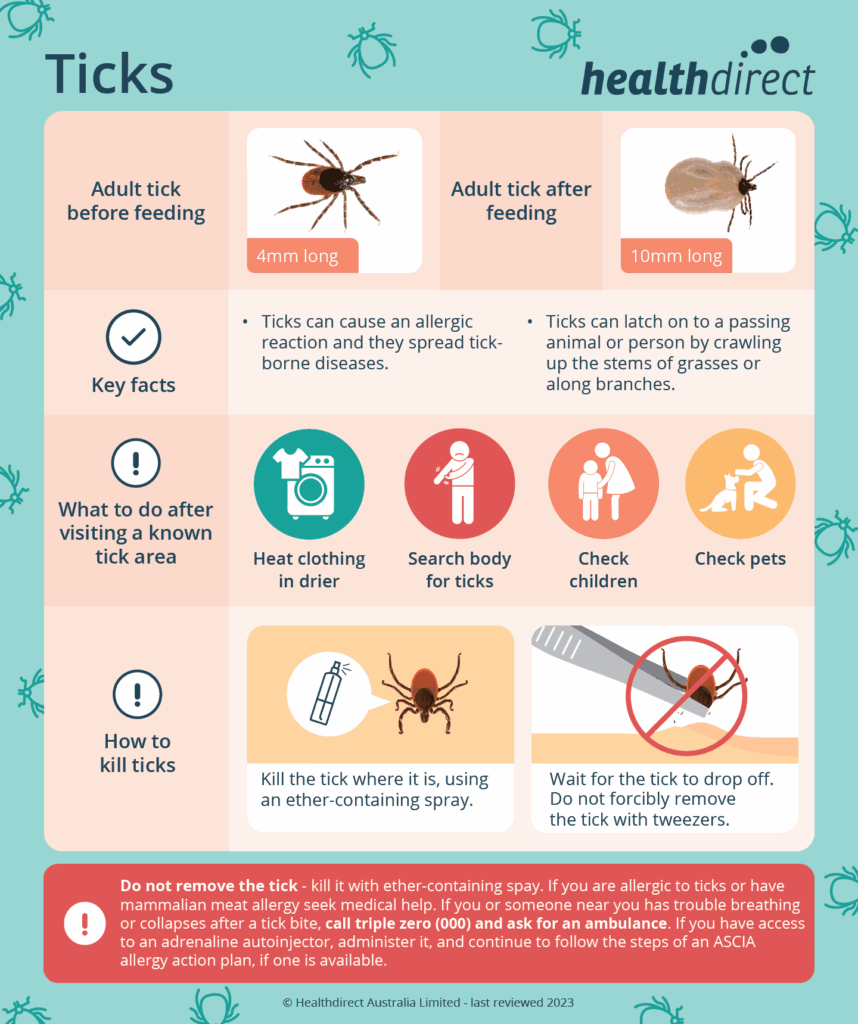
As a country, we encounter various types of ticks that can transmit serious infections. The risk of developing these infections depends on the geographical location, time of year, tick type, and for Lyme disease, also on how long the tick has been attached to the skin.
However, it’s essential not to give in to false alarms. Although many people are concerned after being bitten by a tick, the risk of getting a severe infection from a tick bite is relatively low. Ticks transmit the infection only after they’ve attached to an organism and consumed blood from their new host. A tick that hasn’t attached itself (and therefore hasn’t eaten enough blood) can’t have transmitted the infection.
It’s also worth noting that the time it takes for a tick to become engorged is quite long. Some ticks, for example, need to remain attached for at least 2 days before transmitting the spirochete. Therefore, the risk of contracting diseases like Lyme disease from a tick bite is lower than one might think.
What to Do in Case of a Tick Bite?
If someone has been bitten by a tick that can transmit Lyme disease, a medical professional will advise observing for signs or symptoms of infection and then proceed with immediate treatment with an antibiotic preventative if necessary.
There’s no benefit to conducting a blood test for Lyme disease at the time of the tick bite. People who get infected won’t have positive test results until 2-6 weeks after the infection develops.
Removing a Tick
The correct way to remove a tick is by using a set of fine-tipped tweezers and grasping the tick as close to the skin as possible. Avoid using matches, lighters, nail polish remover, petroleum jelly, or soap, as these can irritate the tick and cause it to behave like a syringe, injecting bodily fluids into the wound.
The correct method for removing ticks involves using fine-tipped tweezers to grasp the tick as close to the skin as possible and gently but firmly pulling back towards the surface of the skin. Avoid snapping or twisting the tweezers, nor pressing or crushing the tick’s body, as this can lead to infection from any bodily fluids it may contain.
After removing a tick, thoroughly clean the affected area and hands with water and soap. If some parts of the tick remain in the skin, they should be left there; attempting to remove these parts can cause significant trauma to the skin.
What to Do After Removing a Tick
It’s crucial to provide medical professionals with information about the tick, including its size and color, as well as whether it was attached to the body, had ingested blood, or when it was detached. While dark-colored ticks (roughly the size of a poppy seed or a pencil point) are common, their size can change based on nutrition.
Remember that only ticks that have eaten enough blood for at least 36-48 hours can transmit Lyme disease. Therefore, even if a tick is attached, it must have consumed blood to spread the disease.
Tick Identification
It’s essential to identify the type of tick you’ve encountered, as this will help determine whether or not treatment is necessary. There are many different types of ticks that can be found in various regions, and some are more likely to transmit diseases than others. For example:
- Blacklegged ticks (Ixodes scapularis): Common in Europe and North America, these ticks are responsible for transmitting Lyme disease.
- Lone star ticks (Amblyomma americanum): Found throughout much of the United States, these ticks can also transmit Lyme disease.
- American dog ticks (Dermacentor variabilis): These ticks are found throughout much of the United States and can transmit Rocky Mountain spotted fever.
Treating Tick Bites
To understand which treatment will be most effective, a doctor will listen to a description of the tick, along with any physical symptoms, to determine the best course of action.
Preventive antibiotic treatment is generally recommended for people who have been bitten by a tick that has been attached to their body for at least 36 hours (based on how engorged it appears). Antibiotics can be administered within 72 hours of removing the tick.
When it comes to antibiotics, some suggest taking doxycycline, with a single dose of 200 mg for adults and 4 mg/kg, up to a maximum of 200 mg, in children over 8 years old. However, if someone doesn’t need to take doxycycline, they are often advised against preventative antibiotic treatment, as there is no evidence supporting the effectiveness of short or long-term antibiotic cycles, nor the potential for side effects.
Unfortunately, many people have incorrect information about Lyme disease. For example, some believe that the disease can be “cured” if antibiotics aren’t taken before symptoms appear (this is not true; even later on, with proper treatment, Lyme disease’s characteristics can be effectively treated).
For more information, please consult your doctor.
Frequently Asked Questions
Q: What are the most common types of ticks that can transmit diseases?
A: There are several types of ticks, including blacklegged ticks (Ixodes scapularis), which are common in Europe and North America. Lone star ticks (Amblyomma americanum) and American dog ticks (Dermacentor variabilis) can also transmit diseases.
Q: How long does it take for a tick to become engorged with blood?
A: Some ticks need to be attached for at least 2 days before transmitting the spirochete that causes Lyme disease. However, other factors like the size and color of the tick, as well as the temperature and humidity of the environment can also affect how quickly it becomes engorged.
Q: Is it necessary to remove a tick immediately after being bitten?
A: While it’s best to remove a tick as soon as possible, there is no evidence suggesting doing so will prevent infection. In fact, attempting to remove a tick too early or using the wrong method can cause more harm than good.
Q: Can I treat myself with antibiotics if I’ve been bitten by a tick?
A: No; only medical professionals should diagnose and treat infections from ticks. Antibiotic treatment is generally recommended for people who have been bitten by a tick that has been attached to their body for at least 36 hours, but it’s essential to consult with a doctor before taking any medication.
Prevention
While treating tick bites is crucial, prevention is also key in avoiding these bites altogether. Here are some tips:
- Wear protective clothing: Long-sleeved shirts, long pants, and closed-toe shoes can help prevent ticks from crawling onto your skin.
- Use insect repellent: Applying insect repellent containing DEET or picaridin to exposed skin and clothing can help deter ticks.
- Create a tick-free zone: Clearing your yard of leaves, grass, and other debris can make it harder for ticks to live and breed.
Conclusion
Dealing with tick bites requires knowledge, preparation, and caution. While the risk of getting infected from a tick bite is relatively low, it’s essential to be aware of the risks and take steps to prevent them. By understanding how ticks work, identifying the types of ticks that can transmit diseases, removing ticks correctly, treating tick bites effectively, and taking preventative measures, you can reduce your chances of contracting tick-borne illnesses.
Remember to consult with a doctor if you’ve been bitten by a tick or have concerns about tick-borne illnesses. With proper treatment and care, it’s possible to manage and prevent the spread of diseases like Lyme disease.
Additional Resources
If you’re interested in learning more about ticks, prevention, and treatment, here are some additional resources:
- Centers for Disease Control and Prevention (CDC): The CDC provides up-to-date information on tick-borne illnesses, including Lyme disease.
- American Academy of Pediatrics: The AAP offers guidance on tick bites and prevention.
- National Institute of Health (NIH): The NIH conducts research on tick-borne illnesses and publishes studies on the latest treatments and prevention methods.
By staying informed and taking proactive steps to prevent tick bites, you can enjoy the outdoors while minimizing your risk of contracting diseases like Lyme disease.


