
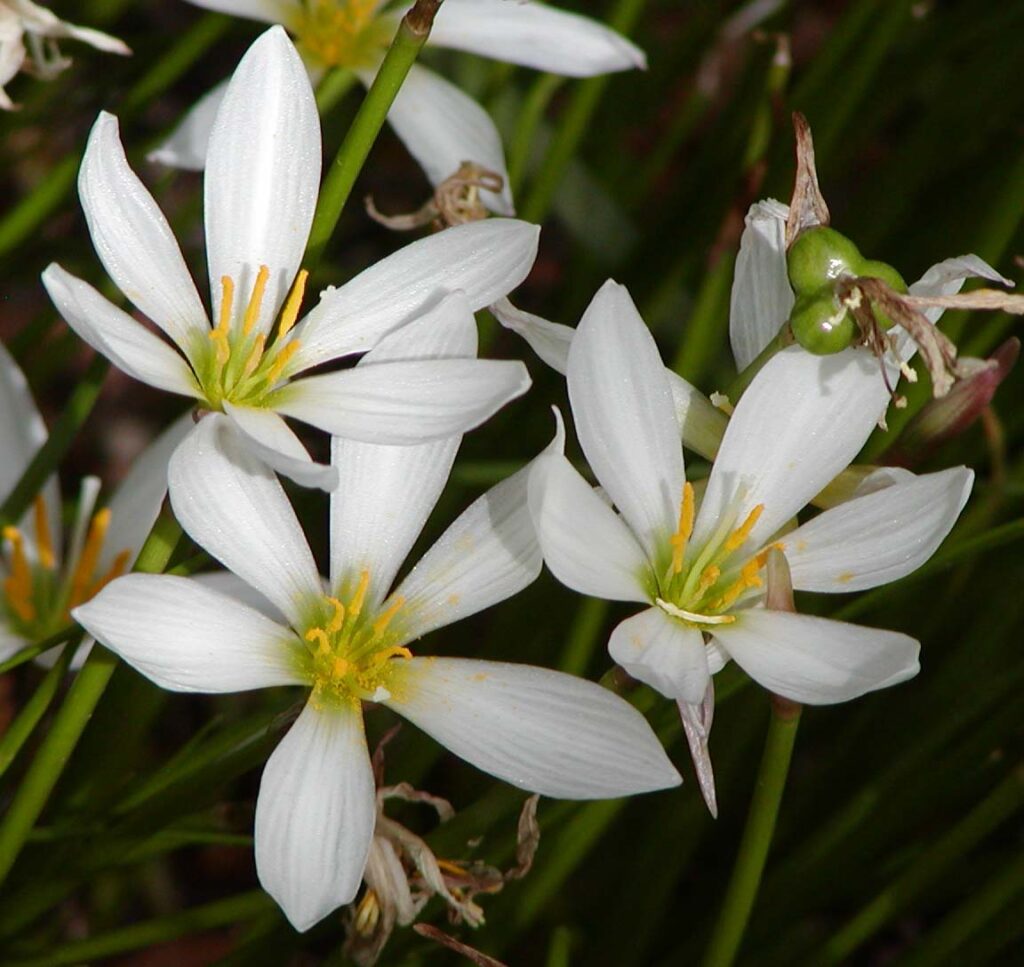
As we explore the world of bulbs, few plants capture our attention like the zephyranthes, also known as “giglio della pioggia” (rain lily). Native to Central and South America, this member of the Amarillydaceae family boasts around 70 species of herbaceous plants that thrive in prairies. In this article, we’ll delve into the primary characteristics of zephyranthes and provide practical tips on how to cultivate it successfully.
Characteristics of Zephyranthes
Zephyranthes is a perennial bulbous plant characterized by its long, linear, and rust-colored leaves. The flowers are solitary, erect, and tubular, often featuring white, purple, yellow, or pink petals depending on the species. These blooms usually last only a few days but can be repeated if properly cared for.
In their natural habitat, zephyranthes plants thrive in areas with high humidity and frequent rain showers, which stimulate flowering. The plants are rustically adapted to temperate climates, allowing them to survive extended periods without water.
How to Cultivate Zephyranthes
To successfully grow this plant indoors or outdoors, follow these simple yet practical guidelines:
Exposure and Climate Considerations
Zephyranthes prefers full sun but can be sensitive to extreme temperatures. Be cautious not to expose it to frost or intense heat. In regions with mild climates, the plant can thrive outdoors year-round.
For areas with cold winters, consider relocating the bulbs underground during the winter months and covering them with a layer of peat moss in a cool, dark place.
Ideal Soil Conditions
Zephyranthes plants prefer well-draining soil composed of a mix of universal potting soil and sand. Avoid using heavy or poorly draining soils, as they can lead to root rot and bulb decay. When planting the bulbs, bury them 3 times their height in soft, permeable soil.
Watering and Irrigation
Regular watering is essential for zephyranthes plants. Overwatering should be avoided, as this can cause root decay. Water the plant deeply but infrequently to promote healthy growth.
Fertilization and Concimazione
Feed your zephyranthes plant with a balanced fertilizer (NPK) once a month during its growing season. Microelements such as iron, manganese, copper, zinc, boron, and molybdenum are also crucial for optimal growth.
Propagation through Bulbs
Zephyranthes can be multiplied by producing smaller bulbs around the parent bulb. These new bulbs can then be separated and planted in well-draining soil to create new plants.
Common Pests and Diseases
While zephyranthes is relatively pest- and disease-free, it may occasionally fall victim to fungal infections or parasitic infestations. Regular monitoring and prompt treatment with a bordelese-like mixture can help prevent these issues.
Curiosities about Zephyranthes
This fascinating plant has a rich history. In Argentina, the Rio de la Plata was named “Fiume d’Argento” (Silver River) due to the intense brightness of its golden stamens. The name zephyranthes is derived from the Greek words for west wind and water, symbolizing the arrival of rain-bearing winds.
This beautiful plant can serve as a thoughtful gift to someone who has gone through a challenging period, representing hope, renewal, and abundance after a dry spell.
Care and Maintenance Tips
To keep your zephyranthes plant thriving, follow these additional care and maintenance tips:
- Repotting: Zephyranthes bulbs typically need repotted every 3-4 years. Choose a pot with good drainage holes to prevent waterlogged soil.
- Soil pH: Zephyranthes plants prefer slightly acidic soil pH between 6.0 and 7.0.
- Pruning: Trim off the old flowers after blooming to promote new growth and encourage repeat flowering.
- Humidity: Maintain a moderate humidity level of around 50-60% for optimal growth.
- Division: Every few years, divide and replant the bulbs in well-draining soil to maintain their vitality.
Zephyranthes Varieties
There are several zephyranthes varieties that are popular among gardeners and flower enthusiasts:
- Zephyranthes candida: This variety features white flowers with yellow tips.
- Zephyranthes atropurpurea: This plant produces purple flowers with a golden center.
- Zephyranthes gigas: The largest zephyranthes species, featuring large, showy flowers.
Interesting Facts
Here are some interesting facts about the zephyranthes:
- Cultivation history: Zephyranthes has been cultivated for centuries in South America, particularly in Argentina and Brazil.
- Medicinal properties: The plant has been used in traditional medicine to treat a variety of ailments, including respiratory issues and skin conditions.
- Ornamental value: Zephyranthes plants add a unique touch to gardens, adding texture and color with their rust-colored leaves and vibrant blooms.
Frequently Asked Questions
- How do I care for zephyranthes plants in indoor conditions?
- Ensure bright, indirect light and maintain consistent temperatures between 60-70°F (15-21°C).
- Keep the soil moist but not waterlogged, using a well-draining potting mix.
- Can I grow zephyranthes outdoors year-round?
- Yes, in mild climates with full sun protection from extreme temperatures.
- How often should I fertilize my zephyranthes plant?
- Feed your zephyranthes plant once a month during its growing season using a balanced fertilizer (NPK).
- Can I propagate zephyranthes through division?
- Yes, after the plants have finished blooming, separate and replant the bulbs in well-draining soil to create new plants.
- What are some common pests or diseases affecting zephyranthes?
- Regular monitoring and prompt treatment with a bordelese-like mixture can prevent fungal infections and parasitic infestations.
By following these guidelines and gaining insight into the unique characteristics of zephyranthes, you’ll be well on your way to cultivating this beautiful bulbous perennial in your garden or indoors.


