
Introduction
The Jacaranda is a plant native to the southern and central regions of America, known for its small blue flowers that can be used to decorate city streets or gardens. In this article, we will delve into the world of Jacaranda, exploring its description, cultivation, care, and uses.
What is a Jacaranda?
The Jacaranda belongs to the Bignoniaceae family, which comprises 49 species of tropical and subtropical plants from South America, Central America, Africa, and the Caribbean. This plant can grow quite rapidly, reaching heights of up to 20 meters and diameters of 30 centimeters. Its large green leaves are composed of smaller, pointed, and pinnate foliage.
Jacaranda Description
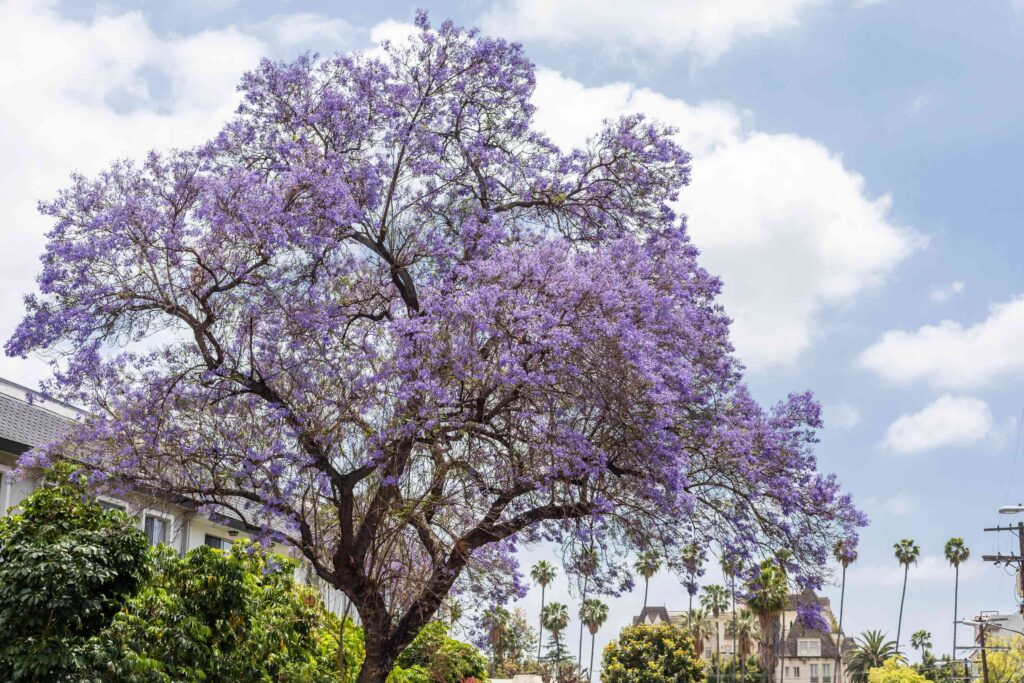
In the spring, Jacaranda trees burst into bloom, producing small, tubular flowers that range in color from blue to purple. These flowers are hermaphroditic and aggregate in terminal clusters. Each flower has five lobes that converge into a long tube, with a corolla of varying shades of blue and purple. Some species produce white flowers.
The Jacaranda’s Fruit
After the flowers have faded, the Jacaranda produces brown, oval-shaped capsules that contain seeds. These seeds are an important feature of the plant, as they provide food for various animals.
Jacaranda: The Name
The name “Jacaranda” is often used to refer to a specific species, Jacaranda mimosifolia, which is commonly known as the Blue Jacaranda. However, it’s essential to note that the Italian word for the plant is actually “Iacaranda.” One reason we hear about this plant in Italy is due to its valuable wood, used for making furniture.
Cultivating a Jacaranda
Despite not being native to our region, cultivating a Jacaranda is relatively easy. This plant can tolerate Mediterranean climates with varying temperatures and humidity levels. However, it’s crucial to be cautious during sudden drops in temperature below zero degrees Celsius, which may cause damage to the plant.
Watering a Jacaranda
As an adaptable species, Jacarandas prefer moist environments. To ensure proper growth, regular watering is essential, particularly during spring and summer months. In autumn and winter, however, water should be applied with moderation to avoid overwatering.
Pruning a Jacaranda
Pruning is not typically necessary for Jacaranda trees, as they can grow naturally without intervention. However, if the plant needs additional support or air circulation, pruning may be required.
Fertilizing a Jacaranda
The best time to fertilize a Jacaranda is during the spring, after it has begun growing anew. Regularly applying compost-rich fertilizer every two weeks will help promote healthy growth. Avoid fertilizing during other periods of the year, as this can lead to an overabundance of nutrients.
Potting a Jacaranda
During the early stages of growth, it’s essential to provide your Jacaranda with a larger pot (up to 30 centimeters in diameter). Replace the top layer of soil with fresh, fertile soil and mix it with sand for optimal drainage during watering.
Using Jacaranda Wood
The wood from the Jacaranda tree is highly valued for furniture-making. However, its use can also pose potential problems, such as clogging storm drains, especially when concentrated in specific areas.
Propagation of Jacaranda Trees
Jacaranda trees can be propagated through seeds or by layering branches. Seeds should be planted after they have been allowed to dry completely and then covered with soil at a depth of 1-2 centimeters. Germination typically occurs within a few weeks, but it may take several months for the seedlings to mature.
Pest Control in Jacaranda
Regularly inspect your Jacaranda tree for signs of pests or diseases. Common pests include aphids, scales, and spider mites, which can cause damage to the leaves and flowers. Treat any infestations promptly with insecticides or other control methods to prevent further damage.
Common Diseases in Jacaranda
Jacaranda trees are susceptible to several common diseases, including powdery mildew, root rot, and leaf spot disease. These conditions can be managed by providing good air circulation, watering carefully, and using fungicides as necessary.
Conclusion
In conclusion, the Jacaranda is a versatile plant that thrives in various environments. By understanding its description, cultivation, and care, you can successfully grow this beautiful tree in your garden or urban landscape.
Frequently Asked Questions (FAQs)
- What is the best time to plant a Jacaranda?
-
The ideal season for planting Jacaranda is during spring.
-
How often should I water my Jacaranda?
-
Regular watering is necessary, but it’s crucial not to overwater your Jacaranda.
-
Can I prune my Jacaranda tree?
-
Pruning might be required if the plant needs additional support or air circulation.
-
What type of soil does a Jacaranda prefer?
-
A well-draining, fertile mix with some sand is ideal for your Jacaranda’s growth.
-
How big can a Jacaranda tree grow?
-
The height of a fully grown Jacaranda tree can reach up to 20 meters (66 feet).
-
Can I use Jacaranda wood in building construction?
-
While the wood is valuable, its use must be done responsibly and with consideration for storm drain capacity.
-
Are Jacarandas toxic to animals?
-
Some reports indicate that Jacaranda trees can cause allergic reactions or gastrointestinal upset in certain animals.
-
How often should I fertilize my Jacaranda tree?
- Fertilization is necessary during the spring, with regular application of compost-rich fertilizer every two weeks.
Additional Uses for Jacaranda
Jacarandas have a wide range of uses beyond their aesthetic appeal and timber value. For example, the flowers can be used to make tea or as a natural dye, while the wood has been used in construction projects throughout history.
In addition to its practical applications, the Jacaranda tree is also an important habitat for various animals, including birds, insects, and small mammals. As such, it’s essential to protect and conserve these ecosystems whenever possible.
Conclusion
The Jacaranda is a beautiful and versatile plant that can bring joy and beauty to any landscape. By understanding its description, cultivation, care, and uses, you can successfully grow this tree in your garden or urban environment.
Whether you’re looking for a statement piece of art or simply want to create a lush and vibrant space, the Jacaranda is an excellent choice. With proper care and attention, this plant can thrive and provide years of enjoyment and beauty.


