
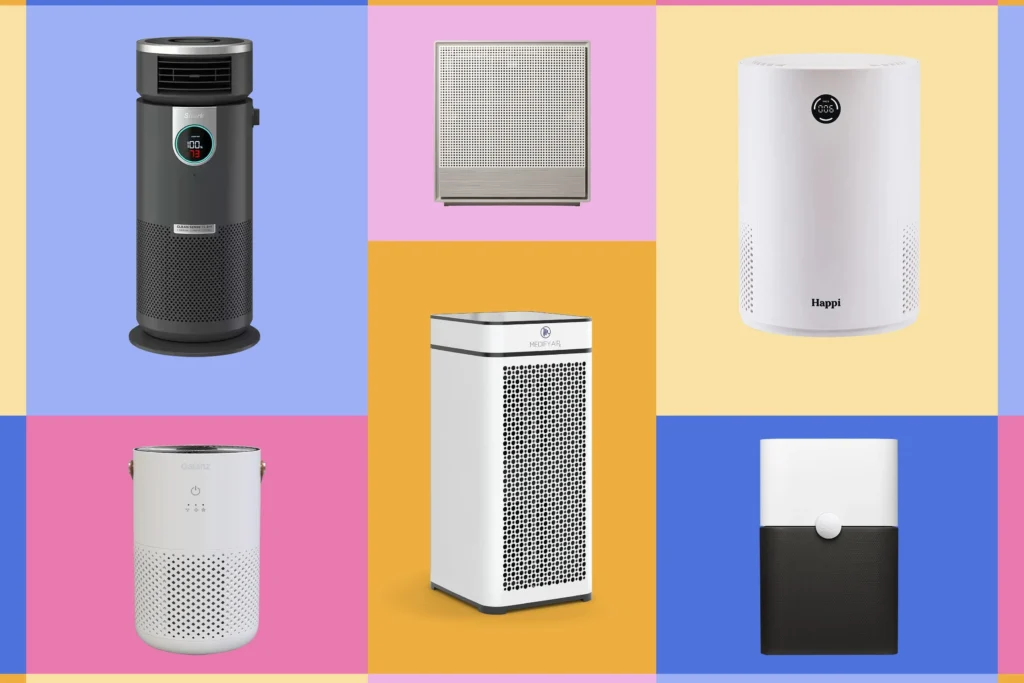
Air purifiers are essential devices that work as filters to remove harmful pollutants and particles from the air in an indoor environment. To minimize domestic pollution, it is crucial to limit the use of furniture components that emit formaldehyde and VOCs, restrict the use of chemical detergents, and install a suitable air purifier.
Why Install an Air Purifier for Indoor Environments?
In some cases, indoor environments can accumulate up to five times more pollutants than outdoor air. Using an air purifier is particularly recommended for individuals with allergies and asthma. These devices are also useful for people allergic to dust and to eliminate household dust mites.
The quality of the air in a room is compromised by various factors, including:
- Fungi: mold spores can be found in damp environments, causing respiratory issues and other health problems.
- Mold: similar to fungi, mold spores can cause allergies and respiratory issues.
- Acari: dust mites are tiny insects that thrive in warm, humid environments. They produce waste products that become airborne and trigger allergic reactions.
- Chemical compounds: these can come from a variety of sources, including cleaning products, paint, and personal care items.
- Pollen: tree pollen, grass pollen, and other types of pollen can cause allergies and respiratory issues.
- Germs and viruses: these can be spread through the air, causing illnesses like the common cold and flu.
- Dust: composed of tiny particles that can become airborne and trigger allergic reactions.
In Italy, around 40% of the population suffers from allergies, asthma, or bronchopneumopathy. Air purifiers are effective because studies conducted in various workplaces have shown that where air purifiers were installed, employees experienced significantly fewer respiratory problems and allergies.
However, it’s also true that not all air purifiers for indoor environments work well. Some devices based on ozone can damage the environment if used incorrectly.
Choosing the Right Air Purifier
When purchasing an air purifier, make sure to select a device from a new generation, which is silent, efficient, and safe for health. Here are some of the best air purifiers available in the market, categorized by price and technology:
AeraMax Air Purifier
The AeraMax line can remove 99.7% of particles suspended in indoor air. It’s very useful for removing odors, smoke, and other unpleasant smells.
- It uses HEPA filters and activated carbon.
- Eliminates particles as small as 0.3 microns (germs, viruses, chemicals, pollen, dust).
- Energy-efficient with a maximum consumption of 70W.
- The DX5 model is suitable for rooms up to 8 sqm.
Bielmeier 280000 Air Purifier
This device costs €235.86 and can clean the air in large spaces up to 70 sqm.
- Uses HEPA filters, which remove up to 99.9% of pollutants.
- Effective at eliminating cooking odors and other unpleasant smells.
- However, it may be too noisy for some users.
Honeywell HA120E Air Purifier
This air purifier costs €109.99 and is suitable for small rooms.
- Removes up to 99% of particles suspended in the air as small as 0.2 microns (dust, pet hair, smoke, pollen).
- The filter can be washed under running water.
- Three filtration levels and can refresh the air in a room five times an hour.
DeLonghi AC 75 Air Purifier
This device costs €102.52 and features an ionizer, making it very silent.
- Uses HEPA filters that need to be replaced every year.
- Suitable for rooms up to 160 sqm.
Philips AC4012/10 Air Purifier
This air purifier costs €291.80 and has a sleek design.
- Effective at removing smoke from cigarettes in spaces up to 160 sqm.
- Uses HEPA filters that can remove up to 99.9% of particles and bacteria.
- Energy-efficient with only 30W consumption.
Additional Considerations for Air Purifiers
When choosing an air purifier, consider the following factors:
Room Size
The size of your room is crucial in selecting an air purifier. Make sure to choose a device that can effectively clean the air in your room.
Filters and Maintenance
- Look for devices with washable or replaceable filters to reduce maintenance costs.
- Choose filters that are certified by reputable organizations, such as AHAM or CARB.
- Check if the manufacturer provides instructions on how to clean or replace the filter.
Noise Level**
If you plan to use the air purifier in a bedroom or living room, consider devices with low noise levels. Some air purifiers can be quite loud and may disturb your sleep or conversations.
Energy Consumption**
- Look for devices with energy-efficient features, such as automatic shut-off when the device is not in use.
- Choose devices with low power consumption to reduce your electricity bill.
Conclusion
Air purifiers are essential devices for improving indoor air quality. By installing one, you can significantly reduce the amount of pollutants in your home, creating a healthier environment for yourself and your family. When choosing an air purifier, look for devices from new generations that are silent, efficient, and safe for health.
Frequently Asked Questions
- What is the importance of using HEPA filters?
- HEPA filters can remove up to 99.9% of particles suspended in the air, including dust, pollen, and bacteria.
- How often should I replace the filter in my air purifier?
- Depending on the manufacturer’s recommendations and usage, you may need to replace the filter every few months or annually.
- Can I use an air purifier if I have asthma or allergies?
- Yes, air purifiers can be beneficial for individuals with asthma or allergies by removing allergens and irritants from the air.
- Are all air purifiers safe to use?
- No, some air purifiers may not be safe to use due to ozone emissions or other health risks. Look for devices that are certified by reputable organizations such as AHAM or CARB.
- Can I install an air purifier in a room with poor ventilation?
- Yes, air purifiers can still be effective even in rooms with poor ventilation. However, it’s essential to ensure proper maintenance and replacement of filters to maximize their effectiveness.
By understanding the importance of air purifiers for indoor environments, you can make informed decisions when selecting an air purifier that meets your specific needs.


