
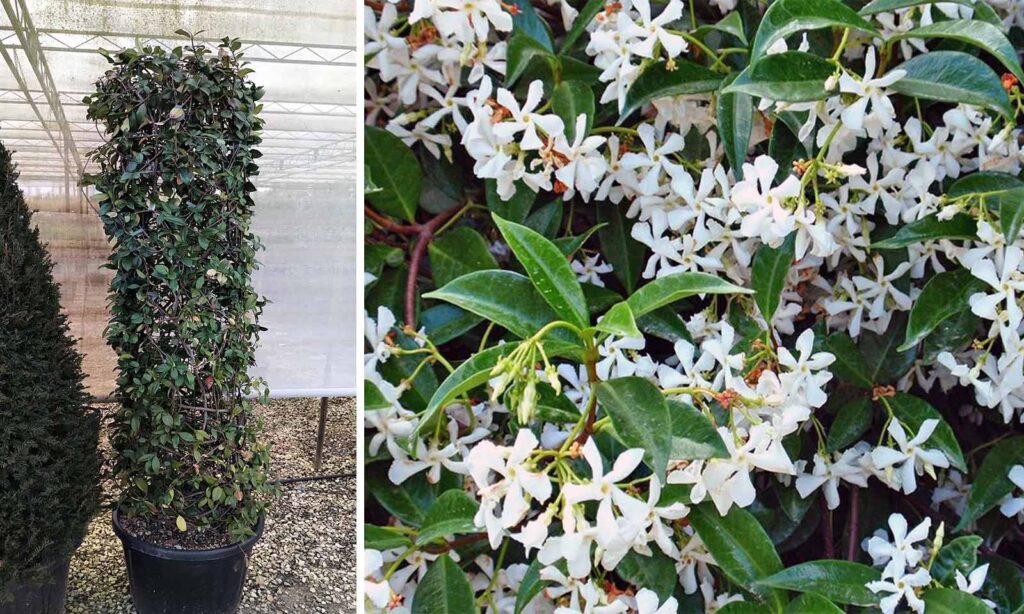
As we explore the world of plants, it’s not uncommon to come across a species that bears a striking resemblance to another. Take, for instance, the Rincospermum, also known as the “false jasmine.” This plant is often mistaken for its more famous cousin, the jasmine, but with some careful observation, you can tell them apart.
Description of Rincospermum
The Rincospermum is a climbing evergreen shrub that produces fragrant white flowers, making it a popular choice for decorating walls and trellises. Its ability to cover pergolas or create a natural screen makes it an attractive option for gardeners. Native to China, Japan, Korea, and Vietnam, this plant belongs to the Apocynaceae family.
Characteristics of Rincospermum
- Leaves: The leaves are glossy and have vibrant colors, ranging from green to orange or reddish hues.
- Flowers: White, star-shaped flowers bloom twice a year, usually in May-July, with a sweet fragrance.
- Growth Habit: Can grow up to 10-12 meters tall, with semileaning or herbaceous branches.
Growing Rincospermum
Rincospermum thrives in sunny spots, making it perfect for walls, trellises, or pergolas. Adequate watering during the summer months ensures optimal growth. In winter, avoid overwatering and ensure the soil is not too dry. Use well-draining, rich soil with organic matter.
Pruning and Propagation
Regular pruning is necessary to maintain its health and encourage new growth. Remove dead branches and lightly prune young shoots. To propagate, divide mature plants in the spring or take stem cuttings in the summer.
Diseases and Pests
Rincospermum is susceptible to diseases such as Coccinia and fungal infections like Fumaginosis. These pests can cause damage to its foliage, making it essential to monitor for signs of infestation. Regular treatment with anti-fungal products can help prevent these issues.
Toxicity
Be cautious when handling Rincospermum leaves, as they contain a toxic sap that can harm pets and humans alike.
Rincospermum vs. Jasmine
While both plants share some similarities, there are key differences:
- Scientific Classification: Rincospermum belongs to the Apocynaceae family, whereas jasmine is part of the Oleaceae family.
- Medicinal Uses: Both plants have potential health benefits, but their properties differ. Rincospermum contains compounds that can alleviate rheumatism and act as an analgesic.
Cultivation Methods
Rincospermum prefers well-draining soil to prevent root rot. Regular fertilization during the growing season will keep your plant healthy and strong. Mulching around the base of the plant helps retain moisture, suppress weeds, and regulate temperature fluctuations in extreme weather conditions.
Pest Control
To maintain a pest-free environment for Rincospermum, use organic pest control methods whenever possible. Neem oil, garlic spray, and insecticidal soap can be effective against pests such as aphids, whiteflies, and spider mites.
Common Problems
Common problems with Rincospermum include:
- Yellowing Leaves: Overwatering or underwatering the plant can cause yellowing leaves. Ensure adequate water supply during dry periods.
- Brown Tips: Brown tips on the leaves may indicate overfertilization or exposure to extreme temperatures. Adjust your fertilization schedule and maintain optimal temperature ranges.
Conclusion
In conclusion, the Rincospermum is a beautiful and versatile plant that brings joy to any garden. With its sweet fragrance and attractive flowers, it’s no wonder why it’s often mistaken for jasmine. By understanding its unique characteristics and needs, you can create a stunning and thriving garden featuring this remarkable plant.
Frequently Asked Questions
- What are the main differences between Rincospermum and Jasmine?
- How do I propagate Rincospermum?
- Can Rincospermum be used in herbal teas?
- Are there any diseases or pests that affect Rincospermum?
- Is Rincospermum toxic to pets?
- What is the recommended soil pH for growing Rincospermum?
- How often should I water my Rincospermum plant?
- Can I grow Rincospermum indoors?
These questions and answers will help you better understand this fascinating plant and ensure a healthy, thriving garden.
By following these guidelines and understanding the unique characteristics of Rincospermum, you can create a stunning and fragrant garden that brings joy to your home.


