
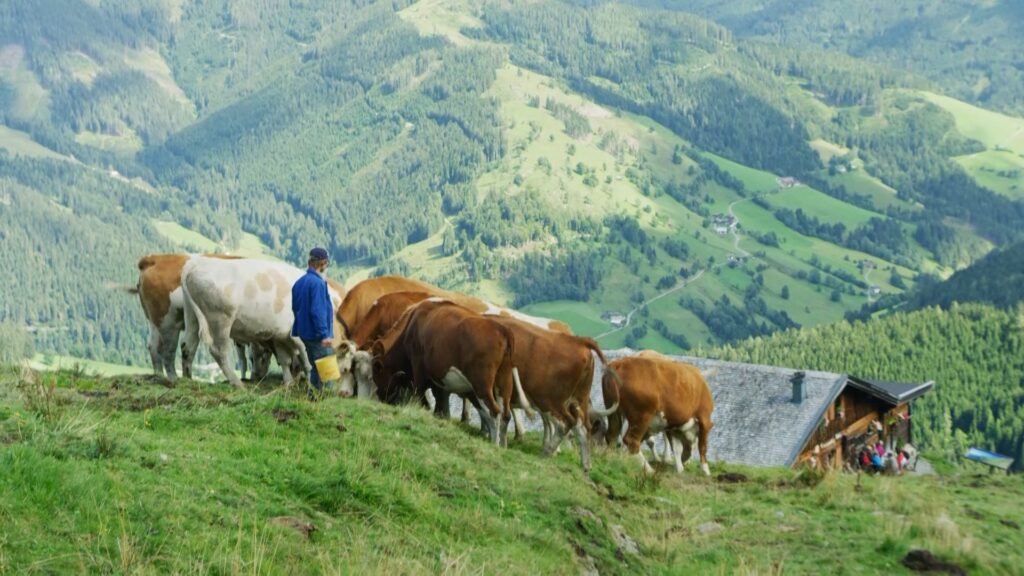
As I look at old photographs of the prealpine region I know well, dating back to the first half of the last century, one thing stands out – the vast expanses of bare land. It wasn’t a desert, by any means, but there were significantly fewer trees than today. The notion that this was due to “wildly destructive” logging is far-fetched; it’s clear that malghe and life thrived in these areas.
In those days, the mountain served as both a source of sustenance and income for locals. Alpine zootecnia was also widespread, with farmers and shepherds inhabiting high-altitude regions to utilize their resources. Alpeggi (mountain pastures) were an essential part of rural livelihoods, while malga – encompassing the activities of ‘monticazione’ (mountain grazing) – played a vital economic role.
Forests in these alpine regions were lush and healthy, providing an endless supply of renewable materials like wood. They weren’t abandoned or neglected; on the contrary, they were actively maintained. However, the abandonment of malghe has been the result of a complex interplay between social changes and external pressures.
The Rise of Urbanization and Economic Shifts
While some may attribute this decline to ‘voluntary’ social changes, there are significant obstacles at play. Bureaucratic red tape, stringent health regulations, conflicts with other land uses, market competition from other economic activities, urbanization, and the fragmentation of territory all contribute to making it difficult for individuals to rediscover and revive malghe and zootecnia alpina.
Moreover, there are dark forces at work in these markets – loss of roads and trails in high-altitude areas, the lack of suitable infrastructure that could provide operators with an adequate quality of life. It seems as though every obstacle is being erected to deter those who wish to rediscover the mountains and revive this traditional way of life.
The impact of urbanization on rural areas cannot be overstated. As people move from the countryside to cities, the economic and social fabric of these regions begins to fray. The loss of a local workforce and the decline of traditional industries like agriculture and livestock rearing leave behind a power vacuum that can be difficult to fill.
Landscape Scale Conservation: A Solution?
However, there is hope on the horizon. The publication of the ‘Guida escursionistica delle Malghe nel territorio dell’Adamello,’ a guidebook curated by the environmental organization Uomo e Territorio Pro Natura, marks an important step forward in this journey.
The approach employed by this association, based on Landscape Scale Conservation, aims to conserve ecosystems at a broader scale than traditional conservation methods. This strategy includes integrating projects focused on malghe with other initiatives aimed at promoting mountain tourism and protecting alpine biodiversity.
By taking a more holistic approach to conservation, these efforts can help to create a sustainable future for malghe and the rural communities that depend on them. By working together, it may be possible to overcome some of the obstacles that have hindered this effort so far.
Understanding the Impact of Human Activities
To truly understand why the survival of malghe matters, it’s essential to recognize the intricate relationships between human activities and environmental degradation. As we navigate these complex issues, we must acknowledge both the voluntary changes that have led to this situation and the obstacles that hinder progress.
Human activities have a profound impact on alpine ecosystems. The introduction of non-native species can disrupt delicate balances and lead to the loss of biodiversity. Climate change is also having a profound effect on these regions, altering temperature patterns and precipitation levels in ways that are both subtle and far-reaching.
Rethinking Our Approach to Alpine Ecosystems
The abandonment of malghe is not merely a matter of economic factors or social pressures; it’s also tied to our broader understanding of alpine ecosystems. By rediscovering these areas, we can learn from history and reevaluate our approach to preserving the natural world.
We must recognize that alpine ecosystems are not static entities but rather dynamic systems that have evolved over centuries. The abandonment of malghe is not simply a local issue but rather part of a broader pattern of human activity that has impacted these regions in profound ways.
Conclusion: Preserving Malghe for Future Generations
As we embark on this journey to revive malghe and zootecnia alpina, it’s crucial that we acknowledge both the challenges and opportunities ahead. Through a deeper understanding of these complex issues and by employing innovative conservation strategies like Landscape Scale Conservation, we can work towards preserving these unique ecosystems for future generations.
The survival of malghe is not just an issue of local concern but rather a global one. As our world becomes increasingly interconnected, it’s essential that we recognize the importance of preserving alpine ecosystems and the roles they play in supporting human well-being.
Case Study: The Revival of Malghe
In recent years, there have been efforts to revive malghe in various parts of Europe. For example, a project in the Dolomites aimed to restore grazing lands and create new economic opportunities for local communities.
The results of this project were nothing short of remarkable. Not only did it help to promote sustainable agriculture practices but also contributed significantly to the local economy.
Similarly, a conservation effort in the Julian Alps has focused on protecting alpine habitats and promoting eco-tourism in the region.
This case study highlights the potential for malghe to play an important role in supporting rural economies while also preserving alpine ecosystems.
The Role of Education and Community Engagement
Education and community engagement are critical components of any successful conservation effort. By raising awareness about the importance of malghe, we can help to promote a sense of ownership and stewardship among local communities.
Community-led initiatives have already shown promising results in reviving malghe in various parts of Europe. These efforts often involve working with local farmers and shepherds to create new economic opportunities while also promoting sustainable land-use practices.
Conclusion
The survival of malghe is not just a local issue but rather a global one. As our world becomes increasingly interconnected, it’s essential that we recognize the importance of preserving alpine ecosystems and the roles they play in supporting human well-being.
Through innovative conservation strategies like Landscape Scale Conservation and community-led initiatives, we can work towards preserving these unique ecosystems for future generations.
By embracing a comprehensive approach to preservation that incorporates both historical insights and modern solutions, we can contribute to the survival of malghe and the alpine ecosystems that depend on it.


