
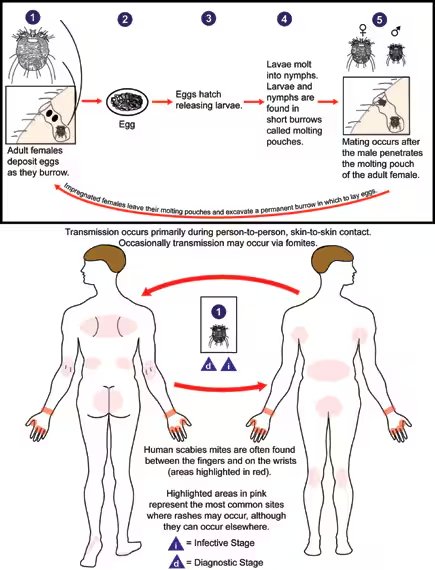
Scabies is an infectious skin condition caused by the mite Sarcoptes scabiei var. hominis. The mite burrows into the upper layer of the skin, laying eggs and causing an infestation. This condition affects people of all ages and backgrounds, regardless of their socioeconomic status or geographic location.
What Are the Symptoms of Scabies?
The most common symptoms of scabies are intense itching and a rash similar to eczema. The mite typically spreads through direct contact with a person who has scabies for an extended period. In addition to itching and rashes, other symptoms may include:
- Redness and inflammation around the affected area
- Small, red bumps or blisters
- Swelling and blistering of the skin
- Intense itching that can disrupt daily activities
How Does Scabies Spread?
Scabies can spread rapidly in crowded areas where skin-to-skin contact is frequent, such as schools, hospitals, nursing homes, and prisons. It’s not uncommon for people in these settings to have outbreaks of scabies. The mites can also be spread through:
- Direct contact with an infected person
- Sharing personal items such as towels, clothing, or bedding
- Poor hygiene practices
- Weakened immune system due to illness or other factors
Can Anyone Get Scabies?
Yes, anyone can get scabies, regardless of their race or social class. However, it’s more common among children and adolescents who are in close contact with someone who has the condition. People with weakened immune systems, such as those with HIV/AIDS or undergoing chemotherapy, are also at a higher risk of developing scabies.
How Is Scabies Diagnosed?
Diagnosing scabies typically involves examining the rash and checking for signs of mites, eggs, or feces under a microscope. A healthcare professional may use a special tool called a dermal scrape to collect skin samples from affected areas. The samples are then examined under a microscope to confirm the presence of scabies.
What Happens If I Have Scabies?
If you have scabies, your doctor will prescribe a medicated cream or lotion to treat the condition. The treatment must be applied to all affected areas and washed off after the recommended time. Treatment typically involves applying a topical cream or lotion containing ingredients such as permethrin, lindane, or crotamiton.
Can You Get Scabies from Sharing a Pool?
Many people worry about getting scabies by sharing a pool with someone who has the condition. However, it’s unlikely that you’ll get infected through contact with water in a pool. The mites are not adapted to survive in water and won’t come out of your skin if it’s wet.
How Is Scabies Treated?
Treatment for scabies typically involves applying a medicated cream or lotion to the affected areas. In addition, family members and sexual partners of someone with scabies may need treatment to prevent reinfestation. The Centers for Disease Control and Prevention (CDC) recommends treating all household members who have come into contact with an infected person.
Common Mistakes to Avoid When Treating Scabies
- Not completing the full treatment course, which can lead to reinfection
- Sharing personal items such as towels or clothing while still having scabies
- Not washing and drying clothes, bedding, and other contaminated items on high heat for at least 20 minutes
- Not thoroughly cleaning and disinfecting surfaces and objects that may have come into contact with the mites
Preventing Scabies in the First Place
While it’s impossible to completely eliminate the risk of scabies, following good hygiene practices can help reduce your chances of getting infected. Here are some tips:
- Avoid direct skin-to-skin contact with people who have scabies
- Wash and dry clothes, bedding, and other contaminated items on high heat for at least 20 minutes
- Thoroughly clean and disinfect surfaces and objects that may have come into contact with the mites
- Avoid sharing personal items such as towels or clothing with someone who has scabies
- Practice good hygiene during peak mite season (October to January)
Scabies in Children: What You Need to Know
Scabies can affect children of all ages, from infants to teenagers. Children may not be able to express the intense itching and discomfort associated with scabies, making diagnosis more challenging.
If you suspect that your child has scabies, contact a healthcare professional immediately. They will examine your child’s skin and provide guidance on treatment.
Scabies in Pregnant Women: What You Need to Know
Pregnant women are at a higher risk of developing scabies due to their weakened immune system. If you have scabies while pregnant, it’s essential to complete the full treatment course and follow proper hygiene practices to prevent reinfection.
Can I Get Scabies from Touching My Baby?
It is extremely unlikely that you’ll spread scabies to your baby by breastfeeding or simply touching them. However, if you have scabies, it’s crucial to take precautions to prevent reinfestation:
- Wash and dry clothes, bedding, and other contaminated items on high heat for at least 20 minutes
- Thoroughly clean and disinfect surfaces and objects that may have come into contact with the mites
- Avoid sharing personal items such as towels or clothing with someone who has scabies
- Practice good hygiene during peak mite season (October to January)
What Should I Do If Someone in My Household Has Scabies?
If you suspect someone in your household has scabies, take the following steps:
- Contact a healthcare professional immediately
- Keep all contaminated items away from the rest of the family until treatment is completed
- Ensure all affected individuals complete their full treatment course
- Educate the entire household about proper hygiene practices and how to prevent reinfestation
By understanding how scabies spreads, treating it properly, and taking precautions to prevent reinfection, you can help protect yourself and others from this uncomfortable skin condition.


