
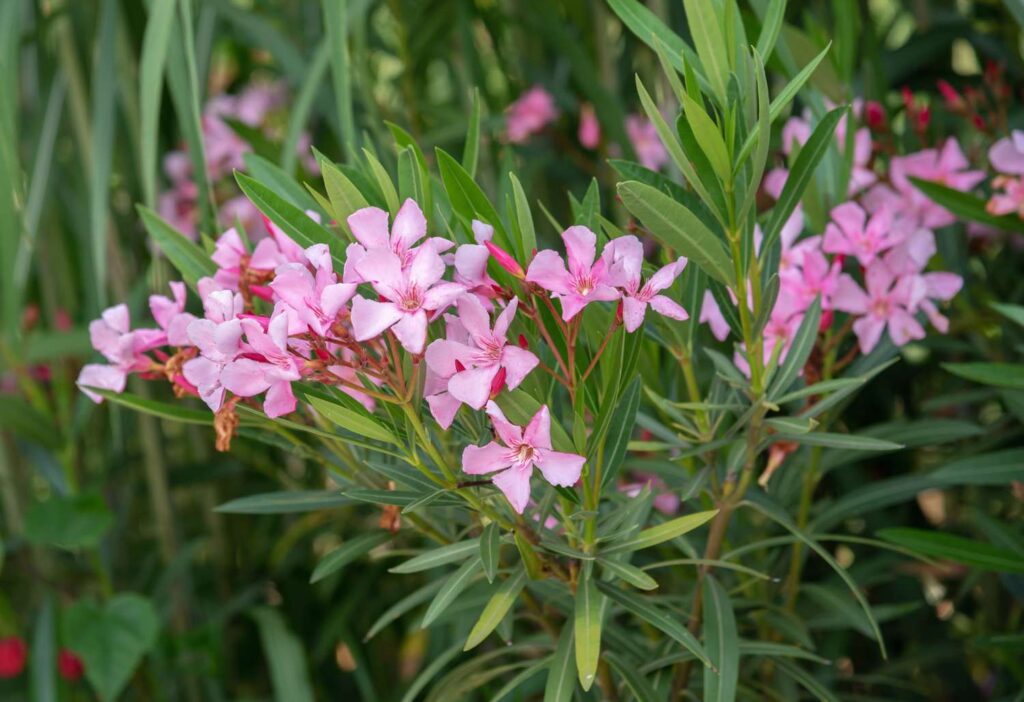
If you’re looking to cultivate oleander, this article will provide you with the necessary information on its care, pruning, exposure, and potting requirements. We’ll also cover the difference between oleander in pots and oleander toxic.
Contents
- Oleander Care and Treatment
- Growing Oleander in Pots
- Pruning Oleander
- White and Colored Oleander Flowers
- Toxic Oleander
Oleander, Care and Treatment
Oleander (Nerium oleander) is a highly resistant evergreen shrub often cultivated in urban environments. It’s drought-tolerant and easy to care for, making it a popular ornamental plant. The oleander thrives in temperate climates with full sun and protection from frost.
In terms of growth habits, oleanders are known to be robust plants that can grow up to 6 meters tall if left unpruned. However, pruning is an essential aspect of maintaining their shape and promoting healthy growth. Regular pruning also helps control the plant’s size and encourages flowering, making it a desirable choice for gardeners.
Oleander is also an excellent choice for gardeners who want a low-maintenance plant. It can thrive in a variety of conditions, including full sun to partial shade, and can tolerate some frost but should be protected from extreme cold temperatures.
Growing Oleander in Pots
When growing oleander in pots, it’s essential to consider its growth habits and requirements. Oleanders can grow up to 6 meters tall if left unpruned, so regular pruning is necessary to maintain their shape. Here are some tips for growing oleander in pots:
- Container Size: Choose a container that is at least twice as large as the plant’s root system.
- Soil Mix: Use a well-draining potting mix specifically designed for oleander.
- Watering: Water regularly, but avoid overwatering. Oleanders prefer moist soil but can tolerate some drought.
Pruning Oleander
Regular pruning is essential for maintaining the health and appearance of oleander plants. Prune your oleander after the first summer bloom to control its growth and prevent fungal infections. Cut back the stems by about 3-4 cm in early spring to encourage branching and flowering.
Here are some specific pruning tips:
- Pruning Schedule: Prune oleanders regularly, but avoid over-pruning.
- Pruning Tools: Use sharp, clean pruning tools to prevent spreading disease.
- Pruning Techniques: Cut back stems by about 3-4 cm in early spring. Remove any dead or damaged branches throughout the year.
White and Colored Oleander Flowers
Oleander flowers come in various colors, including white, pink, yellow, red, orange, and salmon. White and pale pink oleanders are the most common varieties. Make sure to choose healthy plants with no signs of disease or damage when purchasing.
Here are some specific tips for growing colored oleander:
- Flower Color: Different oleander varieties produce different flower colors.
- Soil Requirements: Oleanders require well-draining soil and full sun to partial shade.
- Watering: Water regularly, but avoid overwatering. Oleanders prefer moist soil.
Toxic Oleander
Is the oleander toxic? Yes, both its leaves and stems contain a toxic compound called oleandrin, which can affect heart function. Ingesting even small amounts of oleander can cause nausea, diarrhea, vomiting, and in severe cases, cardiac arrest.
To minimize toxicity risks, handle oleander plants with care, and keep them out of reach of children and pets. Wear protective gloves when pruning or handling the plant.
Here are some specific safety precautions to take:
- Handling: Handle oleander plants carefully to avoid touching its leaves or stems.
- Gloves: Wear protective gloves when pruning or handling the plant.
- Protection from Children and Pets: Keep oleander plants out of reach of children and pets to prevent accidental ingestion.
Growing Oleander
Growing oleander is relatively easy, as it requires minimal care. Here are some essential tips to keep in mind:
- Exposure: Choose a spot with full sun to promote abundant flowering.
- Irrigation: Water frequently and abundantly in pots, but avoid overwatering.
- Soil: Mix two parts of leaf mold or compost with one part of potting soil and another part of perlite.
- Temperature: Avoid frosty temperatures; above -5°C is ideal for growth.
- Protection from Frost: Cover the roots with cardboard, straw, or mulch to protect them from frost damage.
By following these guidelines, you can enjoy the beauty and benefits of oleander in your garden.


