
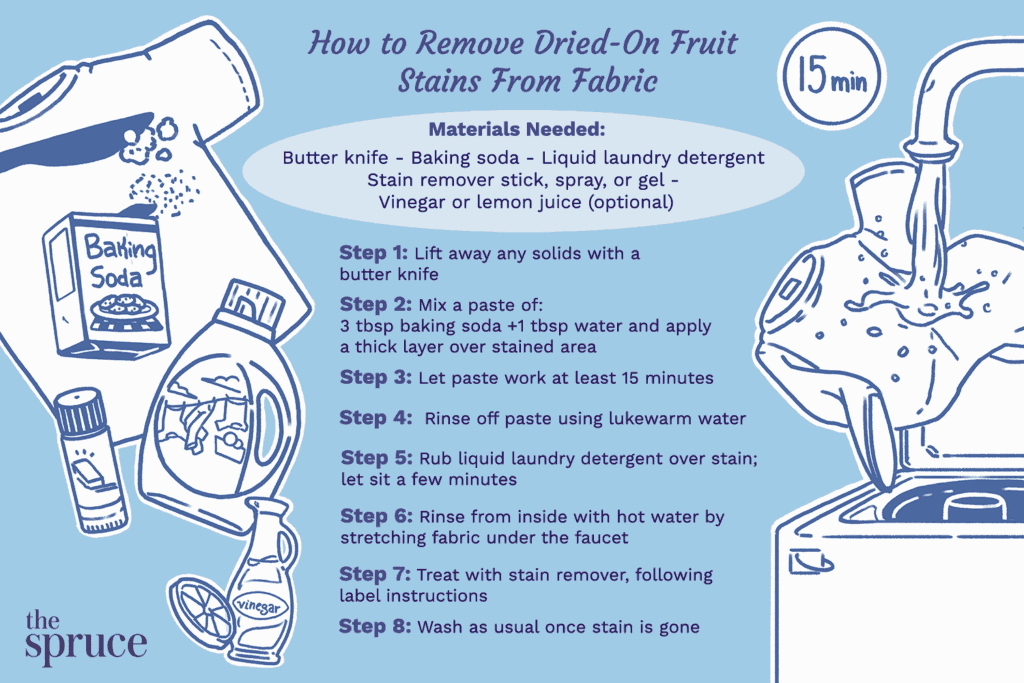
Are you tired of dealing with pesky fruit stains on your clothes? Look no further! This article will guide you through the process of removing fruit stains, providing you with the knowledge and confidence to tackle even the toughest stains.
Understanding Fruit Stains
Fruit stains can be a real nuisance, especially during the summer months when fresh fruits are in abundance. But why do they happen? It’s all about the chemistry behind fruit and fabric interactions. When you eat fruit, tiny particles of the fruit get embedded in your teeth and then onto your clothes, leaving behind unsightly stains.
The Science Behind Fruit Stains
Fruit stains occur due to the combination of three main factors:
- Tannins: These are naturally occurring compounds found in fruits like berries, grapes, and apples.
- Pectin: A type of carbohydrate that helps hold fruit together, pectin can also leave behind a sticky residue on fabrics.
- Enzymes: Certain enzymes present in fruit, such as polyphenol oxidase (PPO), can react with oxygen to form brown pigments.
Treating Fruit Stains
So, what can you do to remove those pesky fruit stains? The good news is that most stains can be treated with simple household items. In this article, we’ll walk you through the steps to remove common fruit stains from clothing.
Pre-Treatment
The first step in treating a fruit stain is to act quickly. Fruit stains can permanently bond with fabric if left untreated for too long. So, here’s what you do:
- Rinse the stained area under cold running water to flush out any loose particles.
- Gently scrape off as much of the excess fruit as possible using a dull knife or spoon.
- Apply a small amount of cold water to the stain and blot it with a clean cloth. Avoid rubbing the stain, as this can push it deeper into the fabric.
Using Smallest Possible Amounts of Detergent
Smaller quantities often make better sense when using detergents for cleaning, especially for delicate garments or items made from sensitive materials. Using too much detergent could potentially lead to damage or discoloration of your clothing.
Washing
Once you’ve treated the stain, it’s time to wash it out. Here are some tips:
- Always check the care label before washing a stained item. Some fabrics may require dry cleaning or special care.
- Choose a cold water cycle for washing. Hot water can set the stain and make it harder to remove.
- Use a mild detergent that’s specifically designed for removing fruit stains. Avoid using harsh chemicals or abrasive cleaners, as these can damage your clothing.
Stain-Removing Products
If the above steps don’t work, you may need to use specialized stain-removing products. Here are some tips:
- Look for products that contain enzymes, which break down protein-based stains like fruit.
- Always follow the instructions on the product label and test a small area of the fabric first.
Laundering
After washing, make sure to launder your clothes thoroughly to remove any remaining stain residue. Here are some tips:
- Wash your clothes in cold water to prevent shrinkage or color bleeding.
- Use a mild detergent that’s designed for removing fruit stains.
- Avoid over-drying your clothes, as this can cause the stain to set.
Additional Tips
Here are some additional tips to keep in mind when dealing with fruit stains:
- Act quickly when treating a fruit stain. The sooner you treat it, the better chance you have of removing it completely.
- Use cold water whenever possible. Hot water can set the stain and make it harder to remove.
- Avoid using harsh chemicals or abrasive cleaners, as these can damage your clothing.
Tips for Specific Fabrics
Here are some tips for specific fabrics:
- Cotton: Cotton is a common fabric that can be treated with mild detergents. However, if the stain is particularly stubborn, you may need to use specialized enzymes.
- Wool: Wool fibers can felt when exposed to heat or harsh chemicals. To remove fruit stains from wool, try using cold water and a mild detergent specifically designed for removing fruit stains.
- Silk: Silk fibers are delicate and require gentle treatment. Use cold water and a mild detergent specifically designed for removing fruit stains.
By following these steps and tips, you should be able to remove fruit stains from your clothes effectively. Remember to act quickly, use gentle cleaning methods, and avoid over-drying your clothes to prevent the stain from setting.
Frequently Asked Questions
-
How do I remove fruit stains from white clothing?
Use a mild detergent specifically designed for removing fruit stains, along with cold water and a fabric softener. Avoid using bleach or harsh chemicals, as these can damage your white clothes.
* Can I use heat to remove fruit stains?No, it’s best to avoid using heat when trying to remove fruit stains. Heat can set the stain and make it harder to remove.
* How long does it take to remove fruit stains?The time it takes to remove fruit stains can vary depending on the type of fabric and the severity of the stain. In general, acting quickly is key to removing fruit stains effectively.
Removing fruit stains from clothing doesn’t have to be a difficult or frustrating process. By following these simple steps and tips, you should be able to tackle even the toughest stains and keep your clothes looking their best.


