
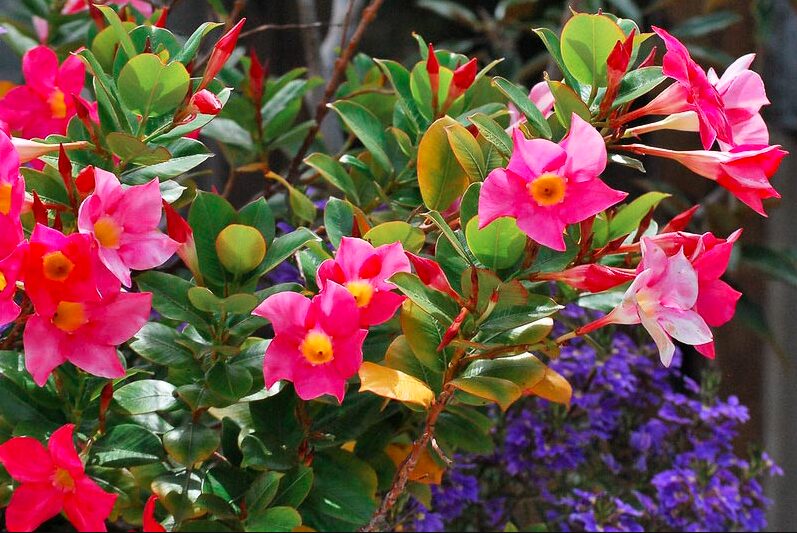
The Mandevilla Splendens is a stunning flowering plant that thrives in temperate climates, but its origins lie in Central and Southern America. This evergreen plant belongs to the Apocynaceae family and boasts unique characteristics that make it a coveted addition to any garden. However, its climbing nature requires special care and attention to flourish.
Getting to Know Mandevilla Splendens
One of the most striking features of Mandevilla is its slender stems, which can’t support themselves without some form of guidance. This characteristic has both advantages and disadvantages, as it allows for rapid growth and development but also necessitates support.
The plant’s leaves are another distinctive feature, boasting an intense green color and unique shape due to their pubescence (soft hair) on the lower part. These features make Mandevilla Splendens a standout among its peers.
Mandevilla: A Closer Look
Let’s delve deeper into the characteristics of this remarkable plant. The Mandevilla is known for its ability to thrive in partial shade, but it requires sufficient sunlight to produce its beautiful flowers. The plant’s flowering period typically spans from spring to late autumn, with a peak bloom during the warmer months.
In terms of growth, Mandevilla can reach up to 10 meters (33 feet) in length, making it an excellent choice for trellises, arbors, or pergolas. However, it can also be grown as a container plant, providing a beautiful display of flowers and foliage in small spaces.
Mandevilla’s leaves are another notable feature, with each leaf measuring around 10-15 cm (4-6 inches) in length. The leaf structure is characterized by its elliptical shape, pointed tip, and serrated edges. The upper surface of the leaves features a beautiful green color, while the lower surface has soft hair that provides additional protection against insect damage.
Cultivating Mandevilla: Tips and Tricks
When cultivating Mandevilla, one of the most critical aspects is pruning. Pruning back branches in early spring until autumn can help prevent excessive growth in the lower parts, which can lead to leaf loss and reduced flowering. Choosing a location with plenty of sunlight or partial shade is also essential, as Mandevilla requires adequate light to produce flowers.
When selecting a spot for your Mandevilla, consider the temperature during winter, as it cannot tolerate cold temperatures below 10°C (50°F). It’s best to move the plant indoors before frost sets in. Watering frequency may vary depending on climate and season, but regular watering is essential during summer months.
Soil Requirements
Mandevilla prefers well-drained soil rich in organic matter, such as compost or peat moss. Avoid using regular potting soil, as it can retain too much water and lead to root rot. If you’re planting Mandevilla outdoors, choose a location with good air circulation to prevent fungal diseases.
Fertilization
Mandevilla requires regular fertilization to promote healthy growth and flowering. Use a balanced fertilizer (10-10-10 NPK) during the growing season (spring-fall), and follow the manufacturer’s instructions for application rates. Avoid overfertilizing, as this can damage the plant and lead to reduced flowering.
Propagation
Mandevilla can be propagated using a simple method: cutting small branches from the plant and inserting them into soil. This process typically takes around a month, after which new plants can be grown as if they were fully matured.
Reproduction and Propagation Methods
There are several methods for reproducing Mandevilla, including:
- Stem Cuttings: Take 15-20 cm (6-8 inch) stem cuttings from the plant and remove lower leaves. Plant the cutting into a pot filled with well-draining soil, and keep the soil consistently moist.
- Leaf Propagation: Use healthy leaf tissue to propagate new plants. Cut off a small section of the leaf from the mother plant and plant it in soil, keeping it consistently moist until roots develop.
- Division: Divide established Mandevilla plants in early spring or fall to create new individual plants.
Diseases and Pests
Despite its beauty, Mandevilla is susceptible to diseases and pests, including acari (mites), aphids, and spider mites. Biological approaches, such as using ladybugs or organic insecticides like neem oil, can help alleviate these infestations.
Remedies for Mandevilla Acari
When dealing with Mandevilla acari, a biological approach is recommended. Ladybugs are excellent natural predators of aphids, mites, and other plant pests.
For indoor plants, an organic insecticide from its origin can be effective in eliminating mites on plants by interrupting their reproductive cycle. Neem oil can also be used as a preventative measure for acari on trees, applied two times, five days apart, lasting around 20 days.
Prevention is Key
To prevent infestations of Mandevilla pests and diseases, take the following precautions:
- Inspect Plants Regularly: Check plants regularly for signs of pests or diseases.
- Maintain Good Air Circulation: Keep plants in well-ventilated areas to prevent fungal diseases.
- Use Organic Pest Control Methods: Use biological approaches or organic insecticides whenever possible.
Conclusion
Mandevilla Splendens is a stunning flowering plant that requires special care and attention to flourish. By understanding its unique characteristics, cultivating it correctly, and using effective remedies for diseases and pests, you can enjoy the beauty of this climbing vine in your own garden.
FAQs
- Q: What type of soil does Mandevilla prefer?
A: Mandevilla prefers well-drained soil rich in organic matter. - Q: How often should I water my Mandevilla?
A: Regular watering, especially during summer months, is essential for maintaining healthy growth and flowering. - Q: Can I grow Mandevilla indoors?
A: Yes, but ensure the plant receives sufficient sunlight and maintain a comfortable temperature range. - Q: How do I propagate Mandevilla?
A: Cut small branches from the plant and insert them into soil for rapid growth and development. - Q: What are some effective remedies for diseases and pests in Mandevilla?
A: Biological approaches, such as using ladybugs or organic insecticides like neem oil, can help alleviate infestations. - Q: Can Mandevilla be grown in cold climates?
A: No, Mandevilla cannot tolerate cold temperatures below 10°C (50°F) and requires protection from frost. - Q: How often should I prune my Mandevilla?
A: Prune back branches in early spring until autumn to prevent excessive growth and promote healthy flowering. - Q: Can I use pesticides on my Mandevilla?
A: No, it’s recommended to use organic or biological approaches to control diseases and pests instead of chemical pesticides.
By following these tips and understanding the unique characteristics of Mandevilla Splendens, you can create a stunning and thriving garden filled with this beautiful climbing vine.


