
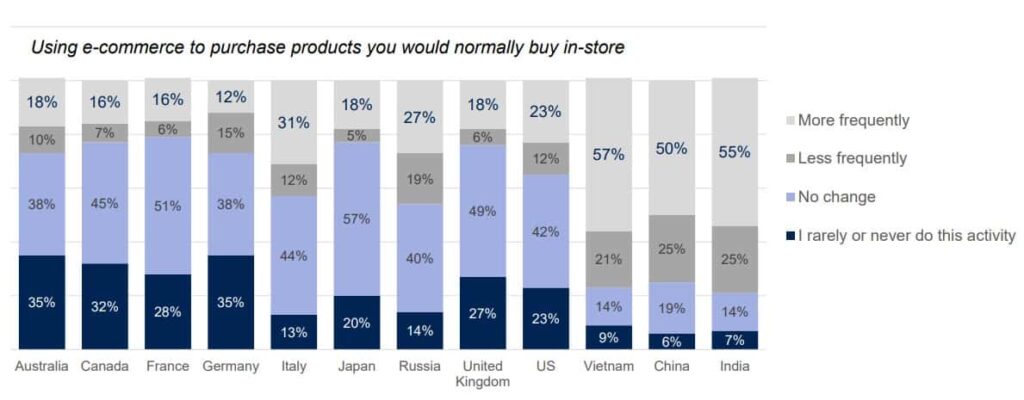
In a year marked by economic downturn, e-commerce continues to soar. Despite a general decrease in consumer spending of 2% compared to the previous year, online sales in Italy rose by an impressive 18%, approaching €11 billion. This growth is driven by three key factors: the economic crisis, the widespread adoption of smartphones, and the evolution of retail offerings.
The State of E-commerce in Italy
According to Roberto Liscia, President of Netcomm – Italian Electronic Commerce Consortium, which collaborates with Politecnico di Milano’s Observatory e-commerce B2C, this surge can be attributed to three main reasons:
- The economic crisis has prompted hesitant internet users to take action.
- The proliferation of smartphones with 30 million users has made it easier for people to access the internet and adopt online shopping as a norm.
- The evolution of clothing retailers’ sales models, coupled with heavily discounted coupon offers for local services, has given the market a significant boost.
Product vs. Service Sales: What’s Driving Growth?
When it comes to products (37% of total e-commerce sales), orders have increased by 19%, while the average transaction value is up 7%. Conversely, service sales (63% of total sales) have seen growth rates of 11% and 3%. The balance of trade remains negative in 2012 (-1.37 billion euros) with export-import values surpassing export growth (+29%) but benefitting import (+380 million vs +480 million).
The Rise of Mobile Commerce
Mobile commerce, driven by tablet or smartphone purchases, has grown triply, contributing significantly to the value of mobile site or app sales at over €170 million (2% of total e-commerce sales). Social commerce, with 90% of the first 200 merchant e-commerce present on social networks, is becoming increasingly effective in engagement activities.
Multicanal Selling: E-commerce as a Key Player
While e-commerce remains a fundamental tool for multichannel selling, more merchants are embracing diverse models and achieving positive results. This includes:
- Info-commerce: providing useful information online to support purchases
- Info-store: delivering information in-store to support online purchases
- In-store support: purchasing online with assistance or delivery at the point of sale
- Pre-booking and selection for collection (preordering online with payment at a physical store)
Italy’s E-commerce Landscape: A Comparison with Western Europe
Compared to major Western European markets, Italy’s e-commerce sector is performing well. According to Riccardo Mangiaracina, Researcher at the Observatory B2C Netcomm-Politecnico di Milano, this growth is also evident when looking at specific product categories.
Product Categories: Where Growth is Most Visible
Among products:
- Fashion: Clothing sales experienced a 33% increase, driven by strong performances from online retailers like yoox.com, fashion clubs, and new entrants (Benetton, Intimissimi, Stefanel).
- Electronics & Computing: This sector grew approximately 27% compared to 2011, primarily driven by Amazon, eBay.it, and large retailers.
- Entertainment: The entertainment sector maintained a stable growth rate of 11%, with some notable performers like Amazon and IBS.it.
Stable Performance in Entertainment
The entertainment sector maintained a stable growth rate of 11%, with some notable performers like Amazon and IBS.it. On the other hand, grocery sales experienced an interesting percentage increase (+17%).
Service Sales Growth: A Mixed Bag
Service sales continue to grow but at a median pace:
- Tourism: Increased by 14% due to airline, railway, and hotel operators (Alitalia, NTV, Trenitalia, Volagratis), as well as strong performances from hotel booking platforms (Booking.com, Venere.com) and online clubs.
- Insurance: Saw a moderate growth rate (+10%) thanks to the success of direct insurance providers (e.g. Direct Line, Genertel, Genialloyd, Linear, Quixa).
- Mobile Phone Services: Experienced an increase in sales, particularly for premium services.
Consequences and Challenges
The rise of e-commerce has brought about several consequences and challenges:
- Job displacement due to automation
- Increased competition and market saturation
- Growing concerns over online security and privacy
Opportunities for Future Growth
Despite these challenges, there are opportunities for future growth in Italy’s e-commerce landscape. These include:
- Expanding into new product categories, such as healthcare or financial services
- Developing more sophisticated data analytics tools to better understand customer behavior
- Investing in social media marketing and influencer partnerships
Conclusion
In conclusion, Italy’s e-commerce landscape is marked by significant growth rates compared to other Western European markets. With the rise of mobile commerce and social media engagement, this trend is likely to continue. However, there are still areas for improvement, such as expanding grocery sales and addressing concerns over online security and privacy.
Frequently Asked Questions (FAQs)
- What drove the growth of e-commerce in Italy?
- How does mobile commerce impact e-commerce sales?
- What role do social media platforms play in e-commerce?
- Can you explain the concept of info-commerce and its benefits?
- What is the current state of grocery sales online in Italy?
- Which product categories saw significant growth in Italy’s e-commerce market?
- How do Italian e-commerce operators compare to those in Western Europe?
- Are there any areas for improvement in Italy’s e-commerce landscape?


