
Water is one of the most precious resources for human life, and yet it’s not as pure and clean as it used to be. The waters of rivers, lakes, oceans, and seas are polluted by industrial waste, urban runoff, toxic dust, and suspended acids carried down from the rain.
The sewage in drains contains massive amounts of human waste: these should pass through treatment plants before being released into rivers unfortunately, less than half of Italy’s sewers are treated. As a result, Italy has already been ruled by the European Court of Justice. Sewage can contain microorganisms that cause diseases like cholera and salmonellosis. One person risks getting sick if they ingest these organisms and may also get infected while swimming in the river or eating contaminated mollusks.
Some types of industries, such as food processing, dump organic materials directly into rivers. Fertilizers, both chemical and natural, can pollute rivers. When rainwater or irrigation water seeps into the ground, it slowly leaves behind a part of the fertilizers used on the soil, eventually contaminating aquifers from which drinking water is drawn. As a result, it may become undrinkable due to nitrates and phosphates released by chemical fertilizers used on the land. But what makes things even more alarming are some everyday habits that inevitably contribute to polluting our water.
The Sources of Water Pollution
Water pollution comes from various sources, including:
- Industrial waste: Factories and industrial plants release toxic chemicals and pollutants into rivers and oceans.
- Urban runoff: Stormwater drains carry household chemicals, fertilizers, and other pollutants into rivers and lakes.
- Toxic dust: Particles in the air can settle on water surfaces, contaminating them with heavy metals and other pollutants.
- Suspended acids: Rainwater can carry acidic compounds from the atmosphere, which can acidify lakes and rivers.
The Consequences of Water Pollution
Water pollution has severe consequences for human health, wildlife, and the environment. Some of the effects of water pollution include:
- Diseases: Drinking contaminated water can lead to diseases like cholera, salmonellosis, and diarrhea.
- Cancer: Exposure to certain chemicals in polluted water can increase the risk of cancer.
- Neurological problems: Contaminated water can cause neurological damage, including brain development issues in children.
- Loss of biodiversity: Pollution can alter ecosystems, leading to a decline in aquatic life and loss of biodiversity.
How to Pollute Less Water?
The substances that pollute our waters include:
- Organic compounds
- Bacteria
- Synthetic detergents
- Domestic sewage
- Insecticides
- Agricultural pesticides
- Metals
- Toxic and harmful substances
- Hydrocarbons from industrial waste
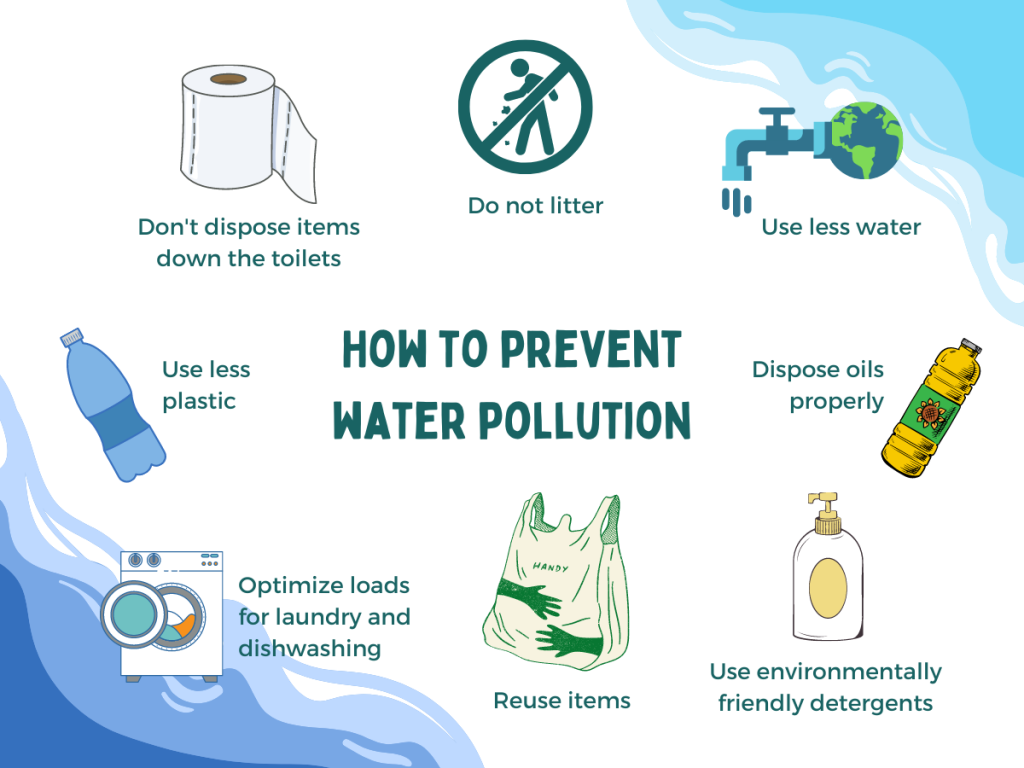
To reduce water pollution, we can make the following changes to our daily habits:
- Don’t pour cooking oils or greases down the drain or toilet.
- Use biodegradable detergents that break down naturally, keeping the dosage as low as possible.
- Avoid using toilets as trash cans, throwing solid waste or toxic substances into them.
- Connect your home’s water system to a public water source, not a private well or non-potable source.
- Make small changes to your daily habits, such as pouring cooking oils down the drain instead of the toilet.
The Importance of Government Regulation
Government regulations play a crucial role in preventing water pollution. They set standards for industrial waste disposal, sewage treatment, and fertilizer use, ensuring that businesses and individuals adhere to these standards to protect the environment.
Conclusion
Polluting less water is within our reach, and every small action counts. By making conscious choices in our daily lives, we can contribute to a cleaner and healthier environment for ourselves and future generations. Let’s take responsibility for our actions and work together to preserve the precious resource that is our water.
FAQs
Q: What are some common causes of water pollution?
A: Water pollution is caused by organic compounds, bacteria, synthetic detergents, domestic sewage, insecticides, agricultural pesticides, metals, toxic substances, and hydrocarbons from industrial waste.
Q: How can I prevent polluting my local waters with human waste?
A: You should treat your wastewater before releasing it into rivers. Less than half of Italy’s sewers are treated as a result, which is why Italy has already been ruled by the European Court of Justice. One person risks getting sick if they ingest these organisms and may also get infected while swimming in the river or eating contaminated mollusks.
Q: What can I do to stop polluting my water with chemicals?
A: Use biodegradable detergents that break down naturally, keeping the dosage as low as possible. Also, avoid using chemical fertilizers on your land and instead opt for natural methods of soil enrichment.
Q: Can public water systems be connected to private wells or non-potable sources?
A: No, it is strictly forbidden to connect your home’s water system to private wells, public or unpotable ones. This prevents backflow of water into the public network and subsequent risk of contamination.
Q: How can I help reduce waste in my local waters?
A: Make small changes to your daily habits, such as pouring cooking oils down the drain instead of the toilet and using biodegradable detergents.
Q: What are some ways to clean up polluted water?
A: Cleaning up polluted water is a complex process that requires careful planning and execution. It involves identifying the sources of pollution, treating the water to remove pollutants, and reintroducing it into the environment in a safe and controlled manner.
Q: Can individual actions really make a difference in preventing water pollution?
A: Yes, every small action counts. By making conscious choices in our daily lives, we can contribute to a cleaner and healthier environment for ourselves and future generations.
Q: What role does government regulation play in preventing water pollution?
A: Government regulations are crucial in preventing water pollution. They set standards for industrial waste disposal, sewage treatment, and fertilizer use, ensuring that businesses and individuals adhere to these standards to protect the environment.
Q: Can we rely on technology alone to clean up polluted water?
A: While technology can be an effective tool in cleaning up polluted water, it is not a substitute for individual action. We must also make changes to our daily habits and behaviors to prevent pollution from occurring in the first place.


