
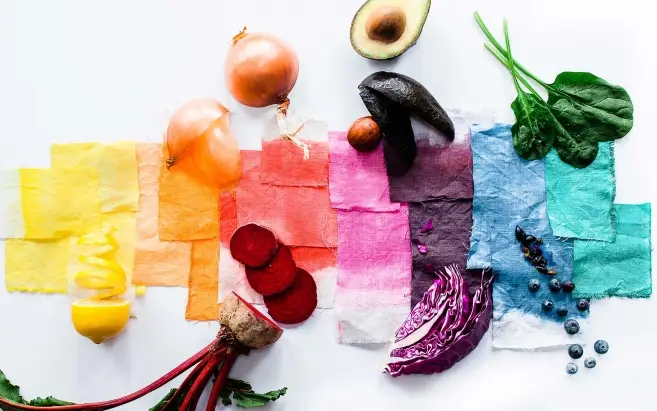
In today’s chemical industry, it’s possible to synthesize every color tone, but when that wasn’t possible, artists and craftsmen used natural dyes, directly extracted from rocks, plants, and similar materials.
A classic example is the red dye, mainly derived from the madder plant (Rubia tinctorum), a member of the Rubiaceae family, which also includes the woodland mallow. The fame of the Madder Plant dates back to ancient times: Pliny the Elder, a Latin naturalist from the 1st century AD, mentions madder cultivation for dye production and suggests combining red madder with blue dye to achieve a porphyry-like color.
Less ethical was the choice to synthesize natural dyes using animals. For centuries, the scarlet red used to dye clerical robes came from two different species of ladybugs. In textiles, these substances could only dye wool or silk that had been previously treated with alum.
The leaves of the walnut tree can produce numerous natural colorants, including beige, golden hay, ochre, and orange. When discussing natural dyes and, especially, plant-based colors, it’s essential to combine the color with a “mordant,” a substance capable of fixing the color by forming a bridge between the natural dye and the base material being painted.
Let’s not leave you with theoretical notions; we’ll provide a simple recipe for creating an intense green natural dye. This recipe is mainly used for coloring fabrics and, using the quantities listed here, will allow you to create a successful dye bath for 100 grams of wool.
Chop 400 grams of fresh walnut leaves and let them macerate for one day. Boil the infusion for three hours, then let it cool down. For coloring 100 grams of wool, separate (in little water) 3 grams of potassium bichromate and 2 grams of tartar. Soak them in the infusion and boil the wool for an hour. After this initial process, boil the wool in the color bath for another hour, then eliminate all residues, wash, and rinse.
The History of Natural Dyes
Natural dyes have been used for thousands of years, with evidence of their use dating back to ancient civilizations such as Egypt, Greece, and Rome. These early cultures relied on plants, minerals, and insects to create a wide range of colors.
One of the most significant natural dye sources was the madder plant (Rubia tinctorum), which was cultivated for its deep red color. The ancient Greeks and Romans used madder to dye fabrics, clothing, and even food.
In contrast, the use of animal-derived dyes has been viewed as less acceptable due to concerns about cruelty and the potential health risks associated with these substances. However, some traditional crafts and textile industries continue to rely on these methods, often for their unique colors and historical significance.
Natural Dye Sources
Nature provides an array of colorants that can be used to dye fabrics. Some common sources include:
- Leaves: Walnut leaves produce a range of natural dyes, including beige, golden hay, ochre, and orange.
- Flowers: Marigold petals can create a bright yellow dye.
- Roots: The root system of the indigo plant produces a deep blue dye.
These colorants can be used to create a variety of shades, from light pastels to rich jewel tones.
The Mordant Process
To achieve the desired color intensity and stability, natural dyes must be combined with a mordant. A mordant is a substance that facilitates the attachment of the dye to the fabric, allowing for a more even and consistent coloration.
Common mordants include:
- Alum (aluminum sulfate): often used in combination with plant-based dyes.
- Cream of tartar: commonly used in conjunction with potassium bichromate.
- Vinegar: used to facilitate the release of natural dyes from plants.
A Simple Recipe for Natural Dye
Let’s make a simple recipe for creating an intense green natural dye:
Ingredients:
- 400 grams of fresh walnut leaves
- Potassium bichromate (3 grams)
- Tartar (2 grams)
- Water
Instructions:
- Chop the walnut leaves and let them macerate in water for one day.
- Boil the infusion for three hours, then let it cool down.
- Soak the potassium bichromate and tartar in the cooled infusion.
- Boil the wool in the color bath for an hour, then eliminate all residues, wash, and rinse.
Case Studies of Natural Dyeing
There are many examples of successful natural dyeing projects from around the world:
- Indigo dyeing: The traditional indigo dyeing process involves steeping indigo leaves in water to create a deep blue color. This method has been used for centuries by textile artisans in India and other parts of Asia.
- Wool dyes: Wool is an excellent canvas for natural dyes, as the pigment can penetrate deeply into the fibers. Many artisans have experimented with various combinations of plant-based colors to achieve unique shades and patterns.
- Plant-based color blending: Natural dyeing offers endless possibilities for creative experimentation. By combining different plant-based colors, artists can create complex, nuanced hues that reflect their artistic vision.
Conclusion
Natural dyes offer a sustainable alternative to synthetic colors, allowing artists and craftsmen to create unique and lasting hues using natural materials. By understanding the history, sources, and mordant process, individuals can unlock the secrets of natural dyeing and explore this ancient craft in their own creative projects.


