
A solar tracker is a device that optimizes the orientation of solar panels to maximize exposure to sunlight. It’s an automatic mechanical device that follows “rout strategies” to maximize the energy output from solar cells.
Solar panels equipped with this technology are called “solar power plants.” Historically, the first solar trackers were launched into orbit to power the electrical systems of satellites. On Earth, this technology is widely used, and many commercial products have been developed that utilize solar trackers. We’ll highlight one such product: the Beghelli Solar Tracker, commercially known as “Albero D’Oro.”
How a Solar Tracker Works
A solar tracker’s functionality lies in its mechanical movements to optimize energy output with simple automation. The metal structure of the solar tracker houses a series of photovoltaic modules arranged geometrically into a single larger panel. Solar trackers are beneficial not just for solar parks but also for concentrated solar systems: they enable maintaining a constant focal point on the heat-exchange element.
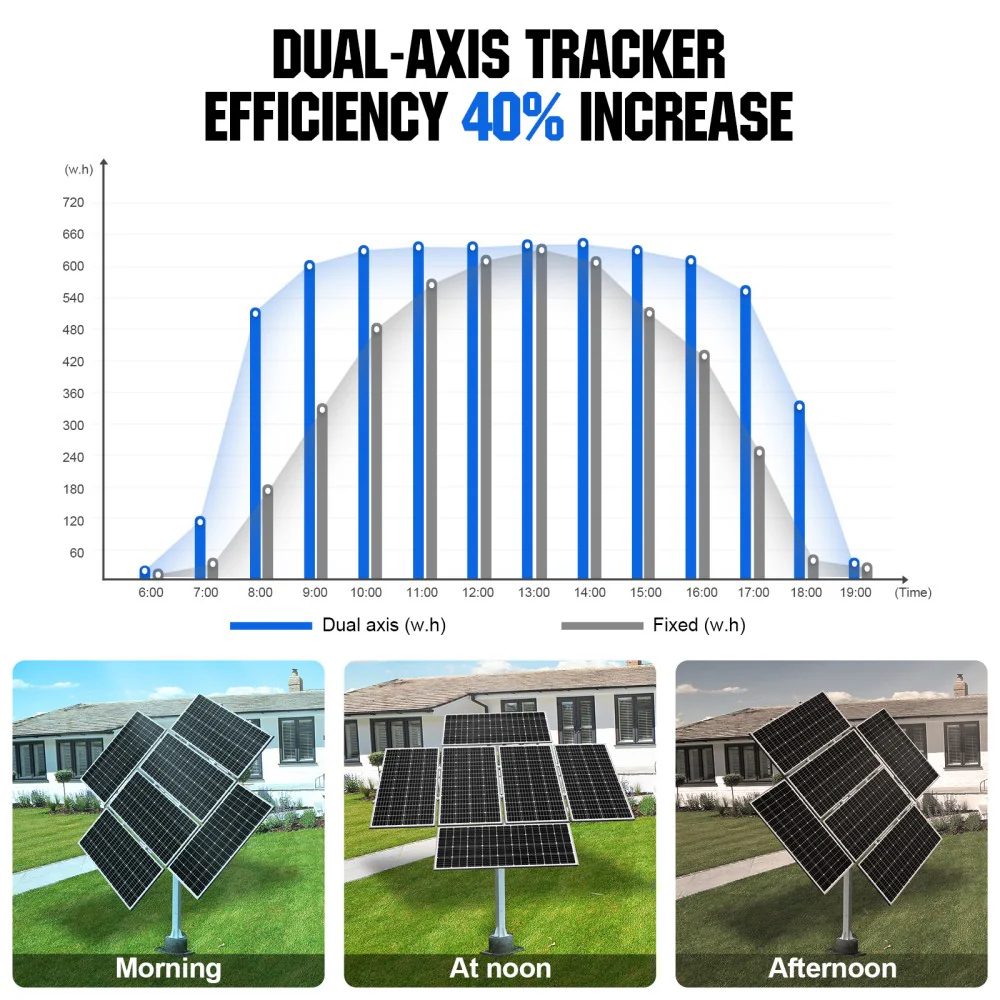
By increasing the efficiency of solar panels, a solar tracker increases economic yield; the best solar trackers efficiently align solar panels perpendicular to sunlight rays to maximize energy production. At equal surface areas, a panel with a solar tracker can produce up to 40% more electricity than one without this technology.
One of the key advantages of using a solar tracker is that it allows for real-time optimization of solar panel orientation, ensuring maximum exposure to sunlight throughout the day. This is particularly important in regions with high levels of cloud cover or where the sun’s path changes rapidly due to seasonal variations.
Types of Solar Trackers and Degrees of Freedom
The term “degrees of freedom” refers to the mapping that the solar tracker must follow. This has led to single-axis, bi-axial, or even multi-axis trackers being developed. For instance, a solar tracker can be mounted along an X, Y, Z axis or in polar alignment.
Single-axis trackers are the most common type and have only one degree of freedom. They track the sun’s movement in one plane, usually east-west or north-south. This type of tracker is suitable for installations where the sun’s path is relatively stable throughout the year.
Bi-axial trackers have two degrees of freedom and can track the sun’s movement in both planes. These trackers offer greater flexibility and are more suitable for regions with high levels of seasonal variation.
Multi-axis trackers, on the other hand, have three or four degrees of freedom and can track the sun’s movement in multiple planes simultaneously. This type of tracker is considered the most sophisticated and offers the highest level of performance. To achieve this, one approach is to integrate another solar tracker within it. This setup enables optimal tracking performance, resulting in increased production: energy output can increase by 35-40% compared to a simpler, non-tracked system.
Advantages of Multi-Axis Trackers
Multi-axis trackers offer several advantages over single-axis and bi-axial trackers. Some of the key benefits include:
- Higher energy output: By tracking the sun’s movement in multiple planes, multi-axis trackers can optimize energy production and increase overall yield.
- Improved flexibility: Multi-axis trackers can adapt to changing seasonal patterns and weather conditions, ensuring maximum exposure to sunlight throughout the year.
- Enhanced reliability: With their advanced technology and robust design, multi-axis trackers are less prone to mechanical failures and offer longer lifespans.
Real-World Applications
Solar trackers have a wide range of applications in various industries, including:
- Solar power plants: Large-scale solar power plants can benefit greatly from the use of solar trackers. These systems can be designed to maximize energy production and reduce costs.
- Concentrated solar systems: Solar trackers are essential for concentrated solar systems, which involve focusing sunlight onto a heat-exchange element to generate electricity.
- Residential installations: Individual homes can also benefit from solar trackers, which can optimize energy production and reduce reliance on traditional energy sources.
Conclusion
Solar trackers have revolutionized the field of renewable energy by maximizing exposure to sunlight and increasing efficiency. With products like Beghelli’s “Albero D’Oro,” their use has become more widespread and affordable. As technology continues to evolve, we can expect even better-performing solar trackers that unlock greater potential for sustainable energy production.
Frequently Asked Questions (FAQs)
Q: What is a solar tracker?
A: A solar tracker is a device that optimizes the orientation of solar panels to maximize exposure to sunlight, increasing efficiency and output.
Q: How does a solar tracker work?
A: Solar trackers use mechanical movements to align solar panels with sunlight rays, maximizing energy production and yield.
Q: What are the benefits of using a solar tracker?
A: By optimizing solar panel orientation, solar trackers increase energy output, reduce costs, and enhance overall efficiency.
Q: What types of solar trackers exist?
A: There are single-axis, bi-axial, and multi-axis trackers available. Multi-axis trackers offer greater flexibility and higher performance.
Q: How do multi-axis trackers work?
A: By integrating two or more trackers, these systems can track the sun’s movement in real-time, ensuring optimal energy production.
Q: Can solar trackers be used in any installation?
A: Solar trackers are suitable for various applications, including solar parks, concentrated solar systems, and individual homes.


