
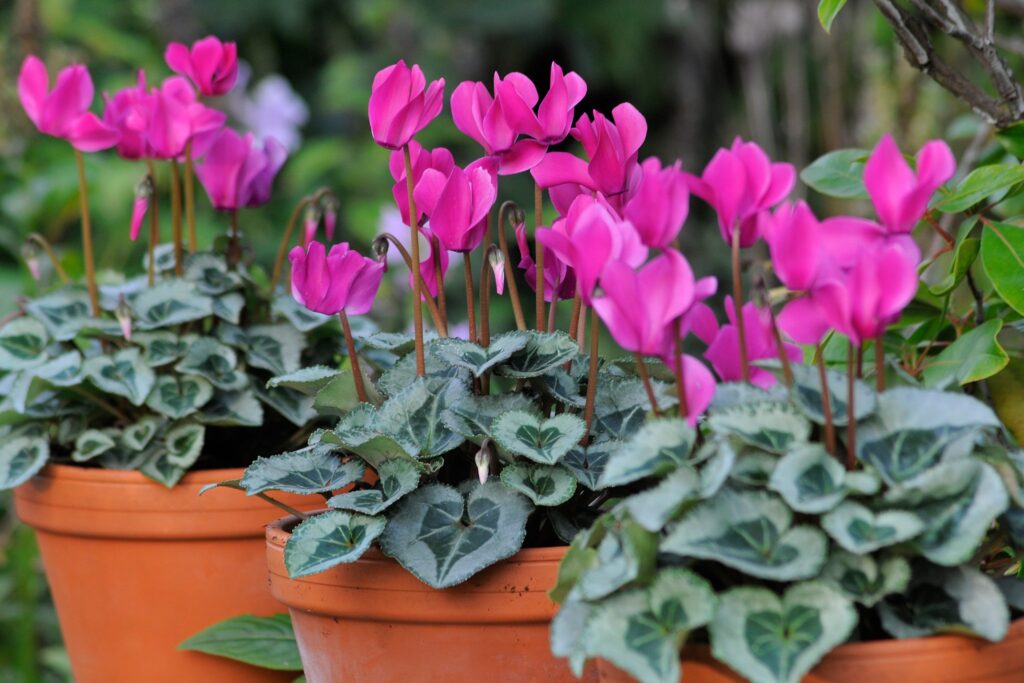
Are you a flower enthusiast who wants to enjoy blooms all year round? Look no further than cyclamen, a low-maintenance perennial plant that’s perfect for gardens. With two popular species, Cyclamen balearicum and Cyclamen persicum, offering white and pink flowers, respectively, we’ll show you how to cultivate these charming plants.
Choosing the Right Conditions
Before planting your cyclamen, it’s essential to provide them with the right environment. These plants prefer partial shade and well-draining soil to prevent root rot. If possible, choose a location that receives indirect sunlight, as direct sun can cause scorching.
In addition to providing the right amount of light, ensure that the temperature in your garden is between 40°F (4°C) and 70°F (21°C). Cyclamen thrive in cooler temperatures, but they can also tolerate some warmth. Avoid placing them in areas with extreme temperatures or drafts, as this can cause stress and lead to disease.
Preparing the Soil
To ensure healthy growth, prepare your potting mix by incorporating compost or a well-rotted manure. This will help retain moisture and provide essential nutrients for your cyclamen. A mix of peat moss, vermiculite, and perlite is an excellent starting point, as these ingredients allow for good drainage while also retaining moisture.
When preparing the soil, be sure to sterilize any tools or equipment you’ll be using to prevent the spread of disease. You can do this by soaking them in a solution of 1 part bleach to 10 parts water for 10-15 minutes before use.
Planting Cyclamen Bulbs
When planting cyclamen bulbs, follow these guidelines:
- Use pots that are not too small (around 8-15 cm between each bulb) but also not too large. This will ensure that the roots have enough room to grow without becoming waterlogged.
- Plant the bulbs at a depth of 3-5 cm, leaving enough space for growth and air circulation. The pointed end should be facing upwards, while the flat base should be facing downwards.
- Add a layer of soil to cover the base of the pot, making sure it’s not too compact. This will help prevent water from accumulating at the roots.
Watering and Humidity
Maintaining the right level of moisture is crucial for cyclamen. Water your plant when the top inch of soil feels dry to the touch, but avoid overwatering, which can lead to root rot. Cyclamen are susceptible to fungal diseases, such as root rot, if the soil is too wet or waterlogged.
To ensure proper humidity, you can place a tray filled with water and pebbles near the pot. As the water evaporates, it will help maintain a humid microclimate around the plant. This is especially important during the winter months when cyclamen are dormant.
Winter Care
As winter approaches, your cyclamen needs extra care:
- Pruning: Allow flowers to drop naturally by late June. Prune back any weak or spindly growth to encourage new blooms.
- Repotting: Transplant your cyclamen into a fresh pot with well-draining soil in autumn, placing them in a bright location. This will help prevent root bound conditions and give the plant an opportunity to rejuvenate.
- Protection from Frost: If you live in an area prone to frost, bring your cyclamen indoors or provide protection using mulch or a frost blanket. Cyclamen are sensitive to extreme cold, so it’s essential to protect them during this time.
- Daily Watering: Even during winter, water your plant daily to prevent dehydration. This may seem counterintuitive, but cyclamen need consistent moisture even when they’re dormant.
Summer Care
In the warmer months:
- Fertilization: Feed your cyclamen with a balanced fertilizer once a month. During blooming periods, apply additional fertilizers every two weeks. Cyclamen are heavy feeders and require more nutrients during the growing season.
- Mulching: Mulch around the base of the plant to keep the soil cool and moist. This will help prevent scorching and promote healthy growth.
Pest Control
If you notice aphids on your cyclamen, act quickly:
- Antiparassitaries: Apply a targeted pesticide specifically designed for this type of pest. Avoid using broad-spectrum pesticides, as these can harm beneficial insects.
- Insecticidal Soap: Mix insecticidal soap with water according to the manufacturer’s instructions and spray directly on the affected areas.
Common Problems
While cyclamen are relatively low-maintenance plants, they can still experience common problems:
- Root Rot: Overwatering is a major contributor to root rot. Check the soil regularly, and avoid watering if it feels wet or waterlogged.
- Leaf Spot: Leaf spot can be caused by overwatering or poor air circulation. Treat affected leaves with fungicides specifically designed for this type of disease.
By following these guidelines and tips, you’ll be well on your way to growing healthy, thriving cyclamen plants. With their beautiful blooms and low-maintenance requirements, it’s no wonder why these plants are a favorite among flower enthusiasts.


