
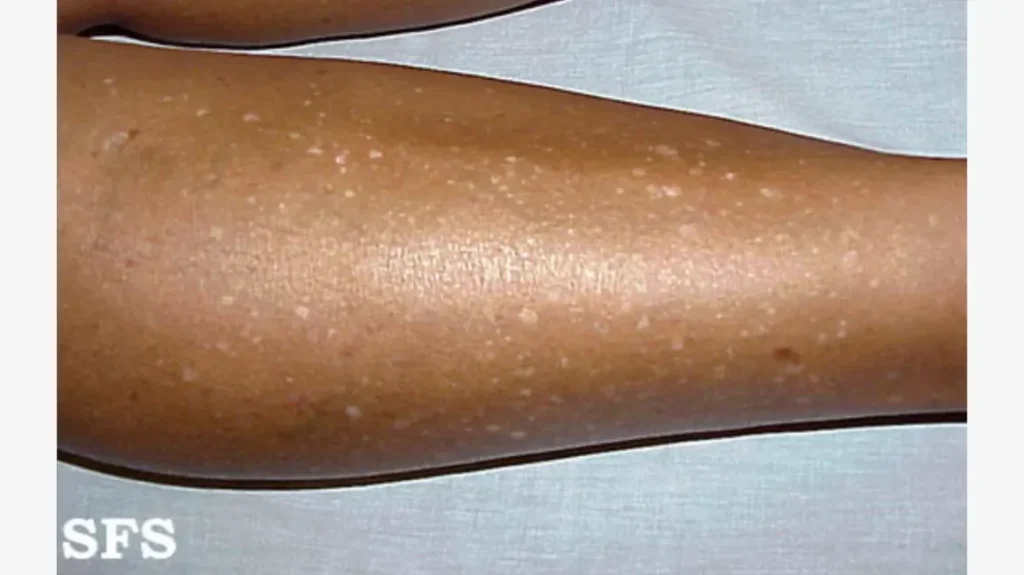
Have you ever woken up to find white spots on your skin? You’re not alone. White spots on the skin can occur due to various reasons, some of which are harmless, while others require medical attention. In this article, we’ll delve into the causes, symptoms, and treatment options for white spots on the skin.
What Causes White Spots on the Skin?
White spots on the skin can be caused by several factors, including:
- Tinea Versicolor
- Vitiligo
- Ipomelanosis Guttata Idiopatica (Leucodermia Lenticulaire)
- Ipomelanosis Post-Inflammatoria
- Pitiriasi Alba
Each of these conditions has its unique characteristics, symptoms, and treatment options. It’s essential to consult a dermatologist to determine the underlying cause of white spots on your skin.
Tinea Versicolor: A Common Cause of White Spots
Tinea versicolor is an infection caused by fungi of the genus Malassezia that normally live on human skin. These fungi can interfere with normal pigment production, leading to white spots on the skin. Factors such as exposure to sunlight, warm and humid climate, oily skin, and excessive sweating can exacerbate the condition.
Symptoms of Tinea Versicolor:
- White or light brown patches on the skin
- Itching, redness, and inflammation
- Flaking skin that may cause irritation
Treatment for Tinea Versicolor:
- Topical antifungal medications such as clotrimazole or terbinafine can be applied directly to the affected areas.
- Antifungal shampoos can help control fungal infections in oily hair and scalp conditions.
- In severe cases, oral antifungals like fluconazole may be prescribed.
Vitiligo: A Condition Causing White Spots
Vitiligo is a condition that leads to the loss of melanocytes in the skin, resulting in white spots. Treatment options for vitiligo include:
- UVB therapy and laser excimer treatments can help restore pigment production.
- Corticosteroid creams or ointments may be prescribed to reduce inflammation.
- Skin camouflage using specialized makeup.
Symptoms of Vitiligo:
- White patches on the skin, often symmetrically distributed
- Loss of pigmentation in affected areas
- Skin texture may become dry and rough
Ipomelanosis Guttata Idiopatica (Leucodermia Lenticulaire): A Rare Condition
This rare condition causes small white spots on the skin after exposure to sunlight. These spots have clear borders and are less visible during winter months when they blend in with the surrounding skin tone. This condition affects women more frequently, especially after the age of 40.
Symptoms of Ipomelanosis Guttata Idiopatica (Leucodermia Lenticulaire):
- Small white spots on the skin, often appearing as small freckles
- Spots may darken or become more noticeable in sunlight
- No other symptoms are typically associated with this condition.
Ipomelanosis Post-Inflammatoria: A Common Condition
This condition occurs when skin affected by eczema or other dermatitis is exposed to sunlight after healing. The skin may develop white spots that gradually improve over time. Women with oily skin and acne may be more prone to this condition.
Symptoms of Ipomelanosis Post-Inflammatoria:
- White spots on the skin, often appearing as patches or freckles
- Spots may darken or become more noticeable in sunlight
- Skin texture may become dry and rough
Pitiriasi Alba: A Minor Form of Dermatitis Atopica
This minor form of dermatitis atopica manifests as white, smudgey spots on the face and cheeks. With optimal hydration and sun protection, these spots can be controlled.
Symptoms of Pitiriasi Alba:
- White, smudgey patches on the skin
- Skin may become dry and rough
- No other symptoms are typically associated with this condition.
Conclusion
White spots on the skin can be caused by various factors, some of which require medical attention. It’s essential to consult a dermatologist to determine the underlying cause of white spots on your skin. By understanding the causes, symptoms, and treatment options, you can take steps towards managing these conditions and achieving healthier, more radiant-looking skin.
FAQs
- What are the common causes of white spots on the skin?
- How do I treat Tinea Versicolor?
- Can Vitiligo be reversed?
- Is Ipomelanosis Guttata Idiopatica (Leucodermia Lenticulaire) a rare condition?
- What are some common symptoms of white spots on the skin?
- How do I prevent white spots from forming on my skin?
- Can Ipomelanosis Post-Inflammatoria be treated with topical creams or ointments?
- Are Pitiriasi Alba and dermatitis atopica related conditions?


