
Introduction
The white onion, a staple in kitchens for centuries, has been a trusted companion to humans as we’ve evolved. From ancient Egypt to the present day, this versatile ingredient has been prized for its therapeutic properties, culinary uses, and medicinal benefits. Let’s delve into the world of the white onion and explore its many wonders.
The White Onion: Properties
While closely related to garlic, the white onion is often preferred for its milder flavor. This antibacterial and antifungal agent makes it an excellent remedy for common ailments such as colds, flu, and respiratory issues. Its versatility extends to other health concerns like high blood pressure, arthritis, and prostate problems.
The white onion also boasts impressive antioxidant properties, containing quercetin, a flavonoid that helps prevent digestive system cancers and lower bad cholesterol levels. Additionally, it has been shown to regulate blood sugar levels and improve bone density, particularly beneficial for postmenopausal women.
Antibacterial and Antiviral Properties
The white onion’s antibacterial and antiviral properties make it an effective natural remedy for a range of health concerns. Its active compounds have been proven to combat pathogens such as Escherichia coli (E. coli), Staphylococcus aureus, and Salmonella enterica. By incorporating white onions into your diet, you can boost your immune system and reduce the risk of infections.
Anti-Inflammatory Effects
White onions are rich in anti-inflammatory compounds that may help alleviate symptoms associated with conditions such as arthritis, gout, and asthma. The onion’s active compounds have been shown to inhibit the production of pro-inflammatory enzymes, reducing inflammation and promoting healing.
Cancer Prevention and Treatment
The antioxidants and phytochemicals present in white onions have been studied for their potential anti-cancer properties. Quercetin, a key compound found in white onions, has been shown to exhibit anti-tumor effects by inhibiting the growth of cancer cells and inducing apoptosis (cell death). While more research is needed, incorporating white onions into your diet may contribute to a reduced risk of certain types of cancer.
Digestive Health
White onions have been used traditionally to treat digestive issues such as irritable bowel syndrome (IBS), ulcers, and constipation. The onion’s antibacterial properties help reduce inflammation in the gut, while its fiber content promotes regular bowel movements.
Cardiovascular Health
The white onion’s high potassium content makes it an excellent natural remedy for cardiovascular health. Potassium helps lower blood pressure by counteracting the effects of sodium and promoting blood vessel relaxation. Regular consumption of white onions may contribute to reduced cardiovascular risk factors.
Respiratory Health
White onions have been used to alleviate symptoms associated with respiratory issues such as bronchitis, asthma, and allergies. The onion’s active compounds help reduce inflammation in the airways and promote mucus clearance.
Nutritional Breakdown
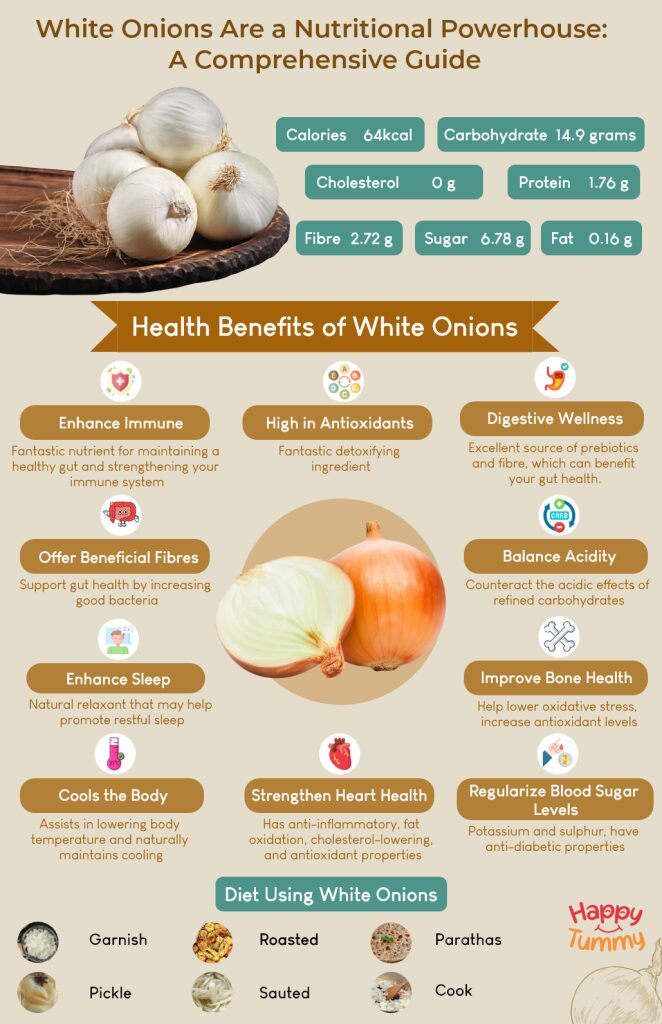
Comprising 90% water, white onions are primarily composed of carbohydrates, proteins, fiber, minerals, and vitamins. The most prominent mineral components include manganese, phosphorus, potassium, sodium, magnesium, sulfur, zinc, iron, copper, calcium, nickel, iodine, and selenium.
Other notable compounds include sugars (destrosio, fructosio, and saccharosio), amino acids like aspartic acid and glutamic acid, and vitamins B1, B2, B3, B5, B6, C, K, and J.
White Onions vs. Red Onions
While both varieties have their unique characteristics, the differences lie primarily in appearance, nutritional content, and aromatic properties. Red onions from Tropea and Borrettana are prized for their rich flavor profile but lack significant variations in terms of nutrients compared to white onions.
Red onions contain slightly more antioxidants than white onions, with a higher concentration of anthocyanins, which contribute to their distinctive red color. However, the difference in nutritional content is minimal, making both varieties suitable for cooking and health benefits.
Conclusion
The white onion is more than just a flavorful ingredient; it’s a testament to nature’s incredible diversity and versatility. With its impressive array of health benefits, culinary applications, and natural uses, this underappreciated ingredient deserves a place in your kitchen and your heart.
Frequently Asked Questions (FAQs)
Q: Can I substitute white onions for red onions in recipes?
A: While both varieties have unique characteristics, you can experiment with using white onions in place of red onions in most recipes. However, keep in mind that the flavor profile will be slightly different.
Q: How do I properly store white onions to maintain their quality and potency?
A: Store white onions in a cool, dry place or refrigerate them to prolong their shelf life. Avoid exposing them to direct sunlight or moisture.
Q: Can I use white onions as a natural remedy for digestive issues?
A: Yes, white onions have been used traditionally to alleviate symptoms of irritable bowel syndrome (IBS) and other digestive problems due to their antibacterial properties.
Q: How do I remove the onion’s sulfur compounds without irritating my eyes or skin?
A: When cutting or chopping fresh onions, try using a ventilation system, wearing protective eyewear, or applying a small amount of petroleum jelly to your hands before handling the onion.
Q: Are white onions suitable for individuals with allergies or sensitivities?
A: While rare, some people may be allergic or sensitive to onions. If you experience any adverse reactions after consuming white onions, discontinue use and consult a medical professional.
Q: Can I grow my own white onions at home?
A: Yes! White onions are relatively easy to cultivate in your garden, provided you choose the right variety and provide optimal growing conditions.
Q: Are there any specific health benefits associated with consuming white onions during pregnancy or lactation?
A: While white onions have various health benefits, pregnant or breastfeeding women should consult their healthcare provider before using them as a natural remedy due to potential interactions with medications.


