
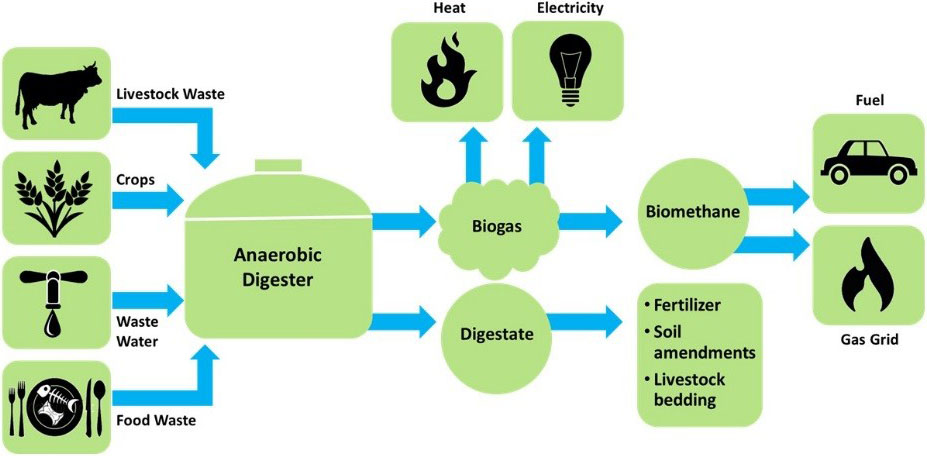
In recent years, there has been a growing interest in biogas as a sustainable alternative to traditional fossil fuels. Biogas, also known as biogenic methane, is a renewable energy source composed mainly of methane and carbon dioxide, but it’s not just about methane – other gases like hydrogen, oxygen, nitrogen, carbon monoxide, ammonia, and hydrogen sulfide can be present in varying amounts. This natural mixture makes biogas an exciting prospect for those looking to transition away from fossil fuels.
What is Biogas?
Biogas is a complex blend of gases produced through anaerobic digestion, a biological process that breaks down organic matter in the absence of oxygen. The result is a mixture of methane, carbon dioxide, and other gases like hydrogen, oxygen, nitrogen, carbon monoxide, ammonia, and hydrogen sulfide. This natural mixture makes biogas an exciting prospect for those looking to transition away from fossil fuels.
The Production Process
Biogas production involves anaerobic digestion, which is the breakdown of organic matter in the absence of oxygen. The process relies on a specific type of anaerobic microbial flora that can be obtained from nearly all organic materials, such as food waste, agricultural residues, animal manure, and more. To summarize the production process:
Organic Matter + Water + Nutrients = Microbial Flora + Residue + Biogas (methane and other gaseous byproducts)
This entire process relies on a specific type of anaerobic microbial flora that can be obtained from nearly all organic materials, such as food waste, agricultural residues, animal manure, and more. Depending on the starting material, enzymes are added to enhance the digestion process.
The Production Process Continues
To produce biogas, organic matter is collected in dedicated storage tanks known as digesters or vats. Within these containers, microorganisms ferment the organic matter, producing methane as a byproduct. With the right systems in place for aspiration and monitoring, biogas quality and quantity can be closely managed.
Biogas can be used directly to power turbines for electricity generation or stored for sale. Higher-quality materials used for gasification will result in higher-quality biogas produced. Ideal feedstocks come from lignocellulosic materials – ideally derived from forest residues or pruning waste. In reality, these feedstocks are primarily agricultural byproducts.
Biogas Quality and Quantity
Biogas quality is determined by the concentration of methane and carbon dioxide, as well as other gases like hydrogen, oxygen, nitrogen, carbon monoxide, ammonia, and hydrogen sulfide. The ideal biogas composition for electricity generation or gasification is a mixture of 50-80% methane and 10-30% carbon dioxide.
Biogas Production Systems: A Closer Look
To produce high-quality biogas, specific feedstocks are selected. Some common feedstocks include:
- Food waste
- Agricultural residues
- Animal manure
- Forestry residues
- Sewage sludge
When choosing the right starting material, quality improvements in the end-product can be expected.
Feedstock Selection and Optimization
The choice of feedstock is crucial for biogas production. Feedstocks with high moisture content or low nutrient levels may require additional treatment to enhance biogas production. In addition, certain microorganisms may prefer specific types of organic matter over others.
Bioreactors: A Key Component of Biogas Production
Bioreactors are specialized tanks designed to optimize biogas production through controlled environmental conditions. These reactors typically include:
- Digester or vat
- Aeration system
- Sludge treatment system
- Gas scrubbing system
A well-designed bioreactor can significantly improve biogas quality and quantity.
The Role of Microorganisms in Biogas Production
Microorganisms play a crucial role in biogas production, as they break down organic matter into methane and other gases. There are several types of microorganisms involved in this process, including:
- Methanogens
- Bacteria
- Archaea
These microorganisms thrive in anaerobic environments, where oxygen is absent.
Biogas Production Systems: A Review
There are various biogas production systems available, each with its own strengths and weaknesses. Some of the most common systems include:
- Anaerobic digesters (AD)
- Bioreactors
- Continuous stirred-tank reactors (CSTRs)
- Plug flow reactor (PFR)
Each system has its own advantages and disadvantages, making it essential to select the right system for a specific biogas production application.
Biogas Production Costs: A Review
The cost of producing biogas can vary significantly depending on factors like feedstock quality, equipment costs, and operating expenses. Here are some estimated costs associated with biogas production:
- Feedstock costs
- Equipment costs (bioreactor, digester, etc.)
- Operating expenses (energy, labor, etc.)
- Capital costs
These costs can be influenced by various factors, including the choice of feedstock, equipment efficiency, and operating conditions.
Biogas Quality: A Review
Biogas quality is critical for electricity generation or gasification applications. The ideal biogas composition is a mixture of 50-80% methane and 10-30% carbon dioxide.
Biogas Emissions: A Review
Biogas emissions are an essential consideration in biogas production, as they can impact local air quality and climate change. Biogas emissions typically consist of:
- Methane
- Carbon dioxide
- Hydrogen sulfide
- Ammonia
These emissions can be influenced by factors like feedstock quality, equipment efficiency, and operating conditions.
Biogas Storage: A Review
Biogas storage is an essential component of biogas production, as it enables the transportation and utilization of biogas. Biogas storage systems typically include:
- Compressed gas tanks
- Cylinders
- Gas cylinders
Biogas Use: A Review
Biogas can be used in various applications, including electricity generation, heating, cooking, and fueling vehicles. Some common uses of biogas include:
- Electricity generation
- Heating
- Cooking
- Fueling vehicles
Conclusion
As we transition towards a more sustainable energy landscape, biogas emerges as an increasingly important player. By harnessing anaerobic digestion’s potential to break down organic waste and produce renewable energy, we can create a cleaner, greener future for ourselves and our planet. Biogas production involves the breakdown of organic matter in the absence of oxygen, producing methane and other gases.
Future Directions
There are several areas where biogas research is ongoing:
- Improved feedstock selection and optimization
- Enhanced microorganism-based bioreactors
- Increased efficiency in biogas production systems
- Biogas storage and transportation innovations
By exploring these areas, we can unlock the full potential of biogas as a sustainable energy solution.


