
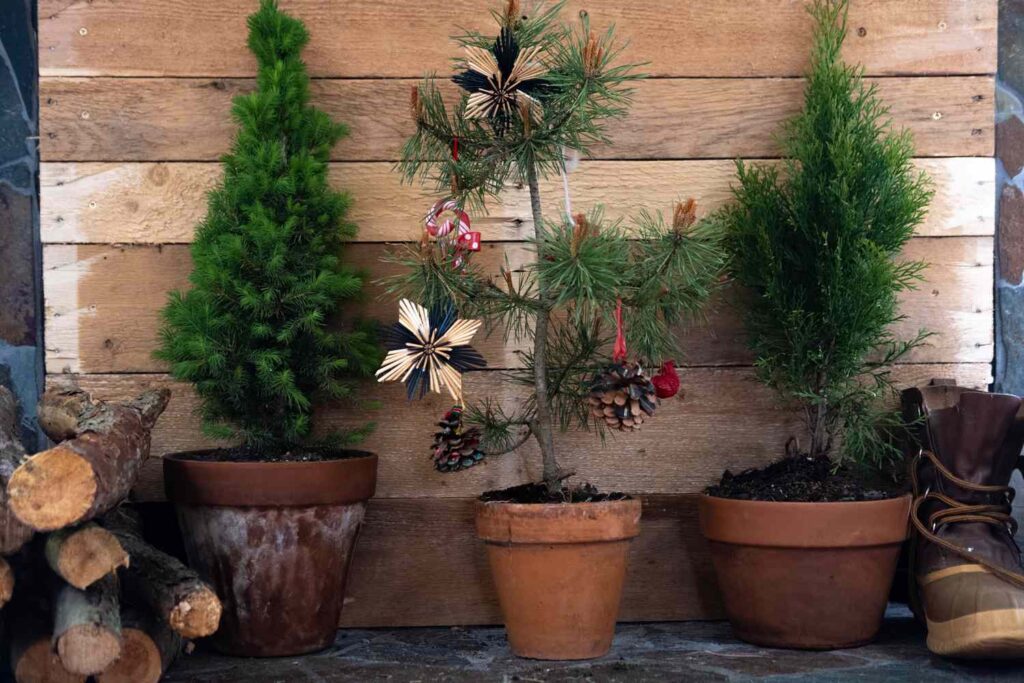
If you’ve chosen a tree from cultivation (with roots and a certification tag that ensures the preservation of our forests), you need to know how to care for it so it can thrive after the holiday season.
Who wants to care for their Christmas tree? First, let’s start with the basics. If you have a tree with roots, you’ll want to avoid decorating it with too many heavy ornaments or products that could damage its leaves (artificial snow, colored sprays, glue…). Place the tree in a cool, bright spot in your home, away from heat sources and drafty areas.
Unfortunately, Christmas trees often don’t survive the holiday season because they’re placed near radiators. To avoid this, place your tree in the coolest room in your house and remember to water its roots.
Caring for Your Christmas Tree
After the holidays are over, your tree with roots can be moved outdoors: you can plant it in your garden or even on your balcony, but keep in mind that these trees can grow up to 15-20 meters tall!
In fact, many people choose to plant their Christmas trees in their gardens after they’ve finished enjoying them. This is a great way to reduce waste and create a beautiful living tree that you can enjoy for years to come.
If you don’t want to plant your tree outdoors, there are plenty of other options available. For example, you could consider repurposing it as a garden stake or trellis for climbing plants.
Choosing the Right Alternative to the Christmas Tree
If you live in a region where the Christmas tree won’t thrive, consider getting an alternative that’s more suitable for your climate. There are many options available:
- Holly: A classic choice for indoor decoration
- Cypress: Perfect for those who want a low-maintenance option
- Boxwood: Great for small spaces and elegant designs
- Pine: A natural choice that fits perfectly into any home decor
- Spruce: A great alternative to the Christmas tree, with a unique shape and fragrance
When choosing an alternative, consider factors like climate, space, and personal style. For example, if you live in a hot and dry climate, you may want to choose a tree that’s more drought-tolerant.
Caring for Your Alternative Tree
To keep your new tree healthy and thriving:
- Place it in a spot with plenty of natural light.
- Keep the temperature between 15°C and 20°C (59°F to 68°F).
- Water it regularly, but avoid overwatering.
- Prune its branches to maintain shape and promote healthy growth.
By following these tips, you’ll be able to enjoy your tree for years to come.
Frequently Asked Questions
Here are some common questions about Christmas trees and their care:
- How often should I water my Christmas tree?
- Check the soil moisture daily by inserting a chopstick or skewer into the soil up to the first knuckle. If the wood is dry, it’s time to water.
- Can I leave my Christmas tree outside during the winter months?
- Yes, but make sure to choose a species that can tolerate cold temperatures and dryness.
- How do I care for my alternative tree when it’s indoors?
- Place it in a spot with plenty of natural light, keep the temperature between 15°C and 20°C (59°F to 68°F), water regularly, and prune its branches as needed.
By answering these questions, you’ll be able to give your tree the care it needs to thrive.
Additional Tips for Caring for Your Christmas Tree
In addition to following the basic care tips outlined above, there are a few other things you can do to help keep your tree healthy and thriving:
- Avoid using too many lights or decorations on your tree. This can cause heat buildup and damage to the branches.
- Use a tree skirt to catch any falling needles or debris.
- Keep an eye out for pests like spider mites, mealybugs, and aphids.
By following these tips, you’ll be able to enjoy your tree for years to come.
Conclusion
Caring for a Christmas tree can seem daunting, but with the right techniques and equipment, it’s easy to keep your tree healthy and thriving. Whether you choose to keep your tree indoors or plant it outdoors, remember to water regularly, prune its branches, and avoid overdecorating.
By following these tips, you’ll be able to enjoy your tree for years to come. Happy decorating!


