
As we continue to explore the boundaries of innovation in the field of photovoltaics, a recent breakthrough has shed new light on the potential of organic conductors. Among these, spider silk produced by the spider’s web stands out as a superior thermal conductor, rivaling the performance of silicon, aluminum, and pure iron.
Just recently, we discussed the latest developments in photovoltaic systems with amorphous silicon. However, a more recent study published by the University of Iowa has taken the conversation to the next level by highlighting the remarkable thermal conductivity of a “simple” organic material: spider silk.
Spider silk is an excellent thermal conductor, boasting a performance 1,000 times better than the cotton produced by silkworms and 800 times superior to other natural fibers. This groundbreaking discovery challenges our conventional understanding of biodegradable materials as poor thermal conductors, paving the way for innovative applications in thermals and energy storage.
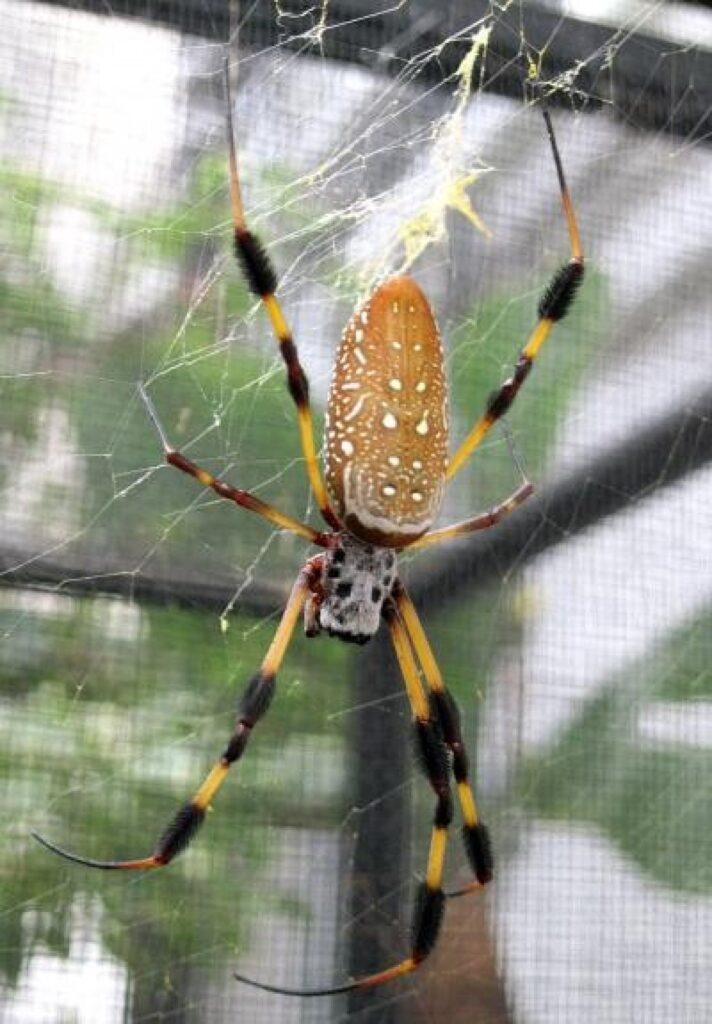
The research behind this remarkable finding is attributed to Dr. Xinwei Wang, an associate professor of mechanical engineering at the University of Iowa. Dr. Wang’s fascination with spider silk led him to bring eight Nephila Clavipes spiders into his laboratory, where they were fed a diet rich in insects and other natural food sources. As the spiders began to spin their webs, Dr. Wang initiated his studies on the thermal conductivity of these filaments.
The goal of Dr. Wang’s research was to develop organic conductors that could efficiently transfer heat. The spider silk, also known as “ragnatela,” possesses unique characteristics: it is extremely strong, resistant, and elastic, with a thickness of only four microns. For comparison, human hair has a thickness of 60 microns but lacks the elasticity of spider silk.
Dr. Wang’s research was partially supported by the Army Research Office and the National Science Foundation. According to his findings, spider silk conducts heat at an impressive rate of 416 watts per meter Kelvin, outperforming copper, which has a conductivity of approximately 401 watts per meter Kelvin.
Another crucial factor contributing to the thermal conductivity of spider silk is its elasticity. Unlike conventional materials that lose their thermal conductivity when stretched or tensed, spider silk exhibits an increase in heat transfer when it stretches and elongates by up to 20%.
So what are the potential applications for this remarkable material? In electronics, soft materials could be developed for tuning thermal conductivity, while other industries may also benefit from this discovery. Everyday objects like bandages, gloves, and clothing could all be improved with the use of spider silk.
The Potential Impact of Spider Silk on Thermal Technology
As we look to the future, it’s clear that spider silk has the potential to revolutionize our understanding of thermal conductivity in materials science. With its unique combination of strength, resistance, elasticity, and high thermal conductivity, this natural material could unlock new possibilities for thermals, energy storage, and other applications.
Moreover, the use of spider silk in various industries could lead to significant improvements in efficiency, safety, and sustainability. For instance, thermals can be designed to retain heat more effectively, reducing energy loss and increasing comfort levels. Additionally, energy storage devices such as batteries and supercapacitors may benefit from the high thermal conductivity properties of spider silk.
Potential Applications for Spider Silk
- Thermals: As mentioned earlier, spider silk has the potential to revolutionize thermals by improving heat retention and transfer.
- Energy Storage: The high thermal conductivity properties of spider silk make it an attractive material for energy storage applications such as batteries and supercapacitors.
- Biomedical Devices: Spider silk’s biocompatibility and mechanical strength make it a suitable material for biomedical devices, including tissue engineering scaffolds and implantable devices.
- Textiles and Clothing: The use of spider silk in clothing and textiles could lead to improved thermal insulation, comfort, and durability.
- Automotive and Aerospace Industries: Spider silk’s high thermal conductivity properties could be leveraged in the development of thermally efficient materials for automotive and aerospace applications.
Challenges and Limitations
While the potential of spider silk is immense, several challenges and limitations need to be addressed before it can be fully harnessed. These include:
- Scalability: Currently, it is difficult to produce spider silk on a large scale due to the complexity of the process involved in harvesting and processing the protein fibers.
- Cost: The cost of producing spider silk could be prohibitively high, making it challenging for widespread adoption.
- Biodegradability: While spider silk is biodegradable, its long-term stability and resistance to degradation are still unknown.
- Processing Methods: The development of efficient processing methods for spider silk is crucial to overcome the current limitations.
Future Research Directions
To fully realize the potential of spider silk, further research is needed in several areas:
- Large-Scale Production: Develop scalable methods for producing spider silk on a large scale.
- Materials Science: Investigate the mechanical and thermal properties of spider silk under various conditions to optimize its performance.
- Integration with Other Materials: Explore the potential of combining spider silk with other materials to create hybrid materials with enhanced properties.
Conclusion
The discovery of spider silk’s remarkable thermal conductivity has opened up new possibilities for innovative applications in thermals, energy storage, and other fields. As research continues to uncover the full potential of this natural material, we can expect significant breakthroughs in various industries. While challenges and limitations remain, the potential impact of spider silk on thermal technology is undeniable.
Frequently Asked Questions
Q: What is spider silk made of?
A: Spider silk is a protein-based material produced by spiders to spin their webs.
Q: How does spider silk compare to other materials in terms of thermal conductivity?
A: Spider silk has been shown to conduct heat 1,000 times better than cotton and 800 times better than other natural fibers.
Q: What are the potential applications for spider silk in thermals and energy storage?
A: Spider silk could be used to develop soft materials for tuning thermal conductivity, as well as improve everyday objects like bandages, gloves, and clothing.
Q: Is spider silk biodegradable?
A: Yes, spider silk is a biodegradable material that can break down naturally over time.
Q: Can spider silk be produced on a large scale?
A: Currently, it is difficult to produce spider silk on a large scale due to the complexity of the process involved in harvesting and processing the protein fibers.
Q: Are there any potential health risks associated with using spider silk?
A: At this time, there are no known health risks associated with using spider silk. However, further research is needed to fully understand its properties and potential applications.
Q: Can spider silk be used as a replacement for synthetic materials in thermals and energy storage?
A: While spider silk has impressive thermal conductivity properties, it is unlikely to replace synthetic materials entirely due to its limited availability and high production costs.
Q: Are there any ongoing research projects focused on developing spider silk-based products?
A: Yes, several organizations are actively researching the potential of spider silk for a variety of applications, including thermals, energy storage, and biomedical devices.


