
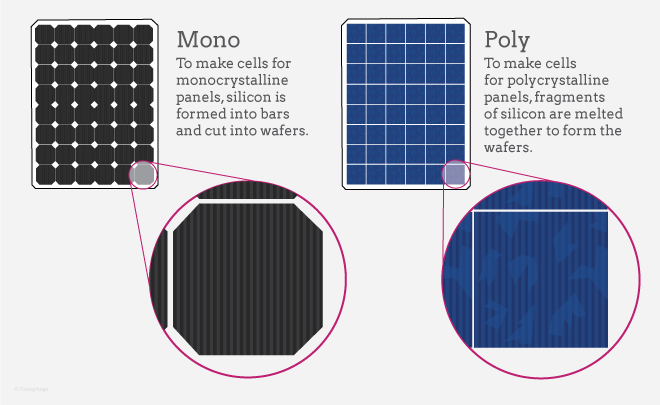
As we explore the world of solar energy, it’s essential to understand the differences between various types of photovoltaic technologies. In this article, we’ll delve into the world of solar cells made from silicon monocristalline and policrystalline materials.
What is Silicon Monocristalline?
Silicon monocristalline is a type of semiconductor material used in the production of high-performance solar cells. At its core, silicon atoms are perfectly aligned, resulting in maximum conductivity. This structure allows for efficient energy conversion, with a typical efficiency of around 15-21%.
The unique properties of monocristalline silicon make it an ideal choice for solar panels that require high efficiency and reliability. Monocristalline solar cells are less prone to defects and have a higher power output compared to policrystalline silicon modules.
What’s the Difference Between Monocristalline and Policrystalline Silicon?
So, what sets monocristalline and policrystalline silicon apart? Monocristalline silicon is made from a single crystal of silicon, while policrystalline silicon is composed of multiple crystals. This difference affects the efficiency of the solar cells.
Policrystalline silicon modules, also known as multicrystalline modules, consist of multiple crystals of silicon. While these modules have their advantages, they are less efficient than monocristalline modules. Policrystalline silicon modules are often used in commercial-scale solar panels due to their lower cost and higher volume production.
Efficiency Comparison
When it comes to efficiency, policrystalline silicon modules have an average rating of 16.7%, while monocristalline modules achieve efficiencies of up to 21%. However, there are exceptions, such as the high-efficiency bifacial solar cell with a rating of 25%.
Policrystalline Silicon Modules
Modules made from policrystalline silicon consist of multiple crystals of silicon. These modules have several benefits, including:
• Lower material costs
• Higher volume production
• Easier manufacturing process
However, policrystalline silicon modules also have some drawbacks, such as:
• Lower efficiency compared to monocristalline modules
• More prone to defects and degradation over time
Amorphous Silicon
Silicon in its amorphous form is used to create solar cells with a lower efficiency of around 8.5%. Amorphous silicon solar cells are often used in thin-film solar panels, which are ideal for building-integrated photovoltaics (BIPV) and other niche applications.
High-Efficiency Solar Cells
Monocristalline and policrystalline silicon modules have made significant strides in recent years, with some modules achieving efficiencies of up to 25.6% and 21%, respectively.
High-efficiency solar cells offer several benefits, including:
• Reduced material costs
• Lower installation requirements
• Increased energy production
• Smaller land area required
Bifacial Solar Cells
The bifacial solar cell is a game-changer in the world of solar energy. With an efficiency rating of over 25%, these cells can generate electricity from both the front and back sides, making them more efficient than traditional solar panels.
Bifacial solar cells have several benefits, including:
• Increased energy production
• Reduced material costs
• Simplified installation process
Benefits of High-Efficiency Solar Cells
High-efficiency solar cells offer several benefits, including:
• Reduced material costs
• Lower installation requirements
• Increased energy production
• Smaller land area required
In conclusion, understanding the differences between monocristalline and policrystalline silicon is crucial for making informed decisions about your solar panel system. By choosing high-efficiency modules, you can enjoy increased energy production, reduced material costs, and a smaller land footprint.
Frequently Asked Questions
- What’s the difference between monocristalline and policrystalline silicon?
Monocristalline silicon is made from a single crystal of silicon, while policrystalline silicon consists of multiple crystals. - How efficient are high-efficiency solar cells?
High-efficiency solar cells can achieve efficiencies of up to 25%. - What’s the benefit of bifacial solar cells?
Bifacial solar cells generate electricity from both the front and back sides, making them more efficient than traditional solar panels. - Can I use policrystalline silicon modules in my solar panel system?
While policrystalline silicon modules are less efficient than monocristalline modules, they can still be used in your solar panel system. - How much do high-efficiency solar cells cost?
The cost of high-efficiency solar cells varies depending on the manufacturer and model, but they tend to be more expensive than traditional solar panels. - Can I use bifacial solar cells in my solar panel system?
Yes, bifacial solar cells can be used in your solar panel system, but it’s essential to consult with a professional installer to ensure compatibility and optimal performance. - How long do high-efficiency solar cells last?
High-efficiency solar cells are designed to last for at least 25 years, but some manufacturers offer warranties of up to 30 years. - Can I use high-efficiency solar cells in conjunction with traditional solar panels?
Yes, you can use high-efficiency solar cells in conjunction with traditional solar panels, but it’s essential to consult with a professional installer to ensure optimal performance and compatibility.
Conclusion
In conclusion, understanding the differences between monocristalline and policrystalline silicon is crucial for making informed decisions about your solar panel system. By choosing high-efficiency modules, you can enjoy increased energy production, reduced material costs, and a smaller land footprint.
When selecting a solar panel system, it’s essential to consider factors such as efficiency, durability, and cost-effectiveness. High-efficiency solar cells are becoming increasingly popular due to their improved performance and lower installation requirements.
As the solar industry continues to evolve, we can expect to see even more innovative technologies emerge. By staying informed about the latest developments in solar energy, you can make the most of this renewable energy source and contribute to a sustainable future.
Additional Resources
If you’re interested in learning more about solar energy or want to explore other types of photovoltaic technologies, here are some additional resources:
- National Renewable Energy Laboratory (NREL): A leading research organization that focuses on renewable energy and sustainability.
- Solar Energy Industries Association (SEIA): A trade association that represents the solar industry and promotes policy support for solar energy.
- International Electrotechnical Commission (IEC): An international organization that sets standards for solar panels, inverters, and other photovoltaic devices.
Conclusion
In conclusion, understanding the differences between monocristalline and policrystalline silicon is crucial for making informed decisions about your solar panel system. By choosing high-efficiency modules, you can enjoy increased energy production, reduced material costs, and a smaller land footprint.
As the solar industry continues to evolve, we can expect to see even more innovative technologies emerge. By staying informed about the latest developments in solar energy, you can make the most of this renewable energy source and contribute to a sustainable future.


