
Understanding Nutritional Values: Calories and Macronutrients
As we enjoy our favorite foods, it’s essential to consider the nutritional values of what we eat. Just as a thoughtful gift can show appreciation for someone’s love and care, knowing the nutritional values of our food helps us appreciate the value of good health and longevity.
When we take a bite of pasta or an apple, when we choose between a sweet treat and a healthy snack, or when we decide on a vegetarian or vegan diet, what are we really deciding? To understand this, it’s crucial to know the calorie count and the macronutrient composition of our food.
Understanding Calories
Calories are a common term associated with food, but they don’t just indicate energy – they also reveal the source of that energy. While calories are essential for understanding our daily energy needs, we shouldn’t rely solely on them. A balanced diet requires more than just calorie counting.
On nutrition labels, you’ll often find the calorie count expressed in kilocalories (kcal). But did you know that 1 gram of fat provides 9 kcal, while 1 gram of carbohydrates provides around 4 kcal and 1 gram of protein provides 4 kcal? These numbers help us classify foods based on their nutritional value.
Understanding Macronutrients
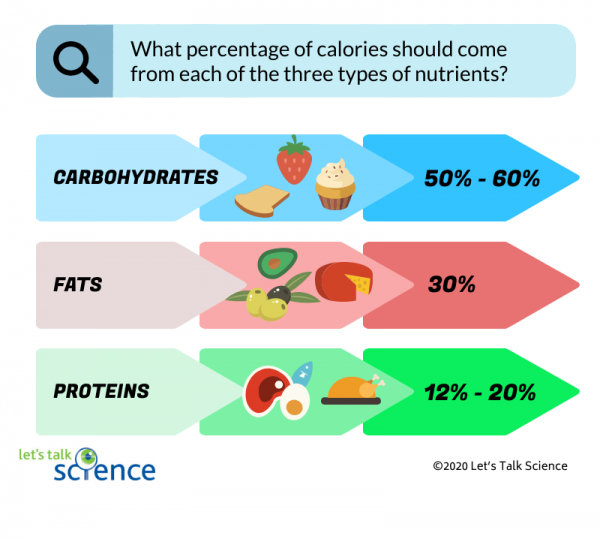
Macronutrients are the building blocks of food, providing the majority of our daily energy needs. They include:
- Carbohydrates: The primary source of energy (55-60% of our daily needs)
- Proteins: Complete proteins that provide all essential amino acids
- Fats: Essential for energy and membrane function
Each macronutrient has its unique characteristics, such as simple sugars like glucose and fructose, which should be limited, or complex carbohydrates found in whole grains and legumes. Proteins can come from animal sources (complete) or plant-based sources (incomplete). Fats are essential for energy production and membrane function.
Understanding Nutrition Labels
When we glance at nutrition labels, it’s crucial to decipher the information correctly to avoid misleading claims. The label should list the ingredients in order of concentration, starting with the most prevalent. This allows us to identify potential allergens or intolerances.
The European Union has implemented regulations that require labels to include specific information:
- Allergen warnings: Clearly indicate common allergens like peanuts, tree nuts, fish, shellfish, milk, eggs, wheat, and soya.
- Origin-specific labeling: Indicate the origin of vegetable oils (e.g., palm oil or coconut oil).
Tables should also provide nutritional values based on 100g or 100ml serving sizes. These values are expressed as a percentage of the recommended daily intake (approximately 2,000 kcal for an adult).
Key Nutritional Values to Watch
When reading nutrition labels, look out for these essential values:
- Calorie count: Helps us understand our energy needs
- Macronutrient composition: Reveals the building blocks of our food
- Ingredient list: Identifies potential allergens and intolerances
- Allergen warnings: Protects consumers with specific dietary restrictions
- Origin-specific labeling: Ensures transparency about vegetable oil sources
Frequently Asked Questions
- What is the ideal calorie intake for a healthy adult?
- The recommended daily intake is approximately 2,000 kcal.
- How do I choose between simple and complex carbohydrates?
- Simple sugars like glucose and fructose should be limited, while complex carbohydrates found in whole grains and legumes are nutritious options.
- What types of proteins are complete vs. incomplete?
- Animal-derived proteins (e.g., meat, eggs) are complete, providing all essential amino acids.
- Why are fats essential for energy production?
- Fats serve as an alternative source of energy when carbohydrates are not available.
- What should I do with nutrition labels to ensure accurate information?
- Read the ingredient list carefully, and look out for allergen warnings, origin-specific labeling, and nutritional values based on serving sizes.
Understanding Nutrition Labels: Ingredients and Allergens
When it comes to ingredients, there are several things to watch out for:
- Peanuts: One of the most common allergens, often used in baked goods, sauces, and snacks.
- Tree nuts: Commonly found in baked goods, granola, and trail mix.
- Fish and shellfish: Often used in canned seafood, soups, and stir-fries.
- Milk and dairy products: Frequently found in cheese, yogurt, and ice cream.
Understanding Nutrition Labels: Origin-Specific Labeling
Origin-specific labeling is a key aspect of nutrition labeling. It helps consumers make informed decisions about the food they eat.
- Palm oil: Derived from the palm tree, often used in packaged foods and baked goods.
- Coconut oil: Extracted from coconuts, commonly used in baking and cooking.
- Soy: A plant-based protein source, often used in processed foods and beverages.
Understanding Nutrition Labels: Nutritional Values
Nutritional values are an essential part of nutrition labeling. They provide consumers with information about the nutritional content of a food.
- Calorie count: The total number of calories in a serving size.
- Macronutrient composition: The percentage of carbohydrates, protein, and fat in a food.
- Micronutrients: Vitamins and minerals that are essential for maintaining good health.
Understanding Nutrition Labels: Serving Sizes
Serving sizes are an important aspect of nutrition labeling. They provide consumers with information about the amount of a particular food that should be consumed in one sitting.
- 100g or 100ml serving size: The standard serving size used on nutrition labels.
- Daily value (DV): A percentage-based measure of the nutritional content of a food, relative to the recommended daily intake.
By understanding these concepts and using nutrition labels effectively, consumers can make informed decisions about their diet and prioritize good health.


