
Introduction
If you’re looking for a small, white dog that’s soft and playful, the Spitz Japanese may be the perfect companion for your family. This breed is ideal for apartment living due to its gentle nature and minimal disturbance to neighbors. With its unique appearance and charming personality, it’s no wonder this breed has gained popularity in recent years.
The Spitz Japanese is a rare but beloved breed that has been cherished by dog enthusiasts for decades. Its history is shrouded in mystery, with two distinct theories surrounding its origins. In this article, we’ll delve into the history, physical characteristics, personality, health, alimentation, breeding, and care of the Spitz Japanese to provide an in-depth understanding of this beautiful breed.
Origins
There are two versions of the Spitz Japanese’s origin, both of which are widely accepted as accurate. The first theory suggests that the breed originated from a combination of Nordic breeds, specifically the Samoyed, which was adapted to create a “bonsai” version of the dog. This theory proposes that the original breeders were inspired by the majestic beauty and agility of the Samoyeds.
The second theory proposes that the Spitz Japanese was created by crossing the Spitz German with another primitive breed. According to this theory, the resulting breed was refined over time through selective breeding, ultimately leading to the creation of the purebred Spitz Japanese.
Regardless of its origins, the Spitz Japanese was officially recognized as a distinct breed in 1948. This recognition marked the beginning of a long and storied history for this beloved companion animal. Today, the breed is cherished by dog enthusiasts worldwide, and its unique characteristics have made it a sought-after companion.
Physical Characteristics
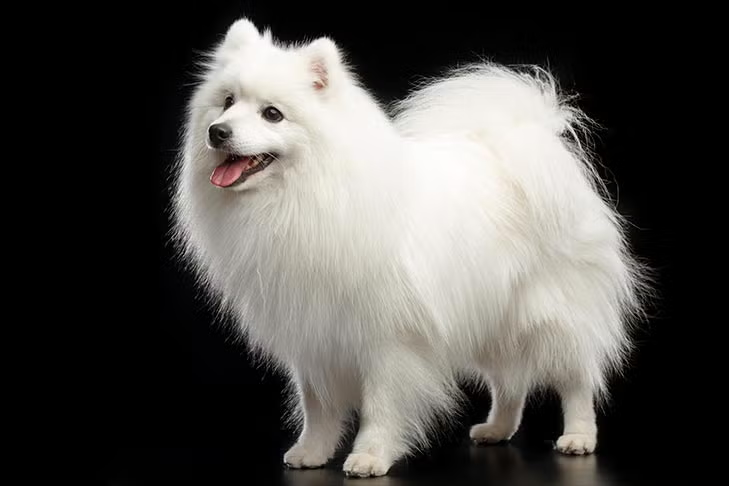
The Spitz Japanese is a small dog, with males reaching up to 38 cm (15 inches) in height at the shoulder. Females are even smaller, weighing less than their male counterparts. Despite its compact size, the breed maintains a harmonious and noble structure.
The Spitz Japanese’s skeletal system is proportionate to its body, ensuring a sense of balance and beauty. The head is proportionally small compared to the body, while the tail is long and carried high. The breed’s distinctive black nose is surrounded by large, almond-shaped eyes that are moderately sized and slightly oblique.
The Spitz Japanese comes in only one color: pure white. Its thick double coat has a fine undercoat and a longer topcoat, which provides excellent insulation against cold temperatures. However, the breed’s thin undercoat also sheds heavily, particularly during spring and fall.
Shedding
As with all breeds that shed heavily, the Spitz Japanese requires regular grooming to prevent matting and tangling of its coat. This can be achieved through brushing several times a week or more often for individuals who spend extensive time outdoors.
During shedding season, which usually occurs twice a year, the Spitz Japanese will lose most of its undercoat, leaving behind long, lan-like strands of hair. While this may seem excessive, these hairs can be repurposed into valuable yarns and textiles.
Personality
The Spitz Japanese is an intelligent, lively breed that thrives on interaction with its family members. It’s naturally alert but not aggressive towards strangers, making it a great companion for families with children. However, this breed does require regular exercise to maintain its physical health and mental well-being.
In addition to being friendly and outgoing, the Spitz Japanese is also incredibly intelligent. With proper training and socialization, it can learn quickly and adapt to new environments. The breed’s affectionate nature makes it an excellent companion for families who value loyalty and companionship.
Health
As with any breed, the Spitz Japanese is prone to certain health issues. Some of these include:
- Patellar luxation: a condition where the kneecap slips out of place
- Hip dysplasia: a genetic disorder that affects joint stability
- Progressive retinal atrophy: a degenerative eye disorder
Regular veterinary check-ups and proper care can help mitigate the risk of these issues. Additionally, responsible breeding practices have helped reduce the incidence of certain health problems in the breed.
Alimentation
The Spitz Japanese requires moderate amounts of food to maintain its health. It’s essential to provide high-quality dog food that meets the breed’s nutritional needs, particularly during growth periods. Avoid overfeeding, as this can lead to obesity and other related health problems.
In terms of feeding frequency, it’s recommended to feed your Spitz Japanese 2-3 times a day, depending on its age and activity level. Adequate hydration is also crucial for maintaining the breed’s overall health.
Breeding and Care
If you’re considering bringing a Spitz Japanese into your life, it’s essential to find a reputable breeder who prioritizes the health and well-being of their animals. The breed is relatively rare, with only two registered kennels in Italy offering purebred puppies.
In addition to finding a responsible breeder, it’s crucial to provide regular grooming and socialization for your Spitz Japanese. This will help ensure that your dog grows into a happy, healthy adult companion.
Tips for New Owners
If you’re new to the world of dog ownership, here are some tips specifically tailored for Spitz Japanese owners:
- Provide regular exercise: Aim for at least 30 minutes of daily physical activity to keep your Spitz Japanese happy and healthy.
- Brush regularly: Use a soft-bristled brush or a slicker brush to remove loose hair and prevent matting.
- Train early: Start training as soon as possible, using positive reinforcement techniques to encourage good behavior.
- Provide mental stimulation: Engage your Spitz Japanese in puzzle toys and other interactive activities to keep its mind active.
Conclusion
The Spitz Japanese is a unique and captivating breed that has captured the hearts of many dog lovers worldwide. Its delicate appearance, charming personality, and gentle nature make it an ideal companion for families who value intelligence, loyalty, and affection.
With proper care and attention, the Spitz Japanese can thrive as a beloved family pet. By understanding its history, physical characteristics, personality, health, alimentation, breeding, and care requirements, you’ll be well-equipped to provide the best possible life for your new companion.
Whether you’re an experienced dog owner or a first-time breeder, the Spitz Japanese is sure to delight with its playful spirit and loving nature.


