
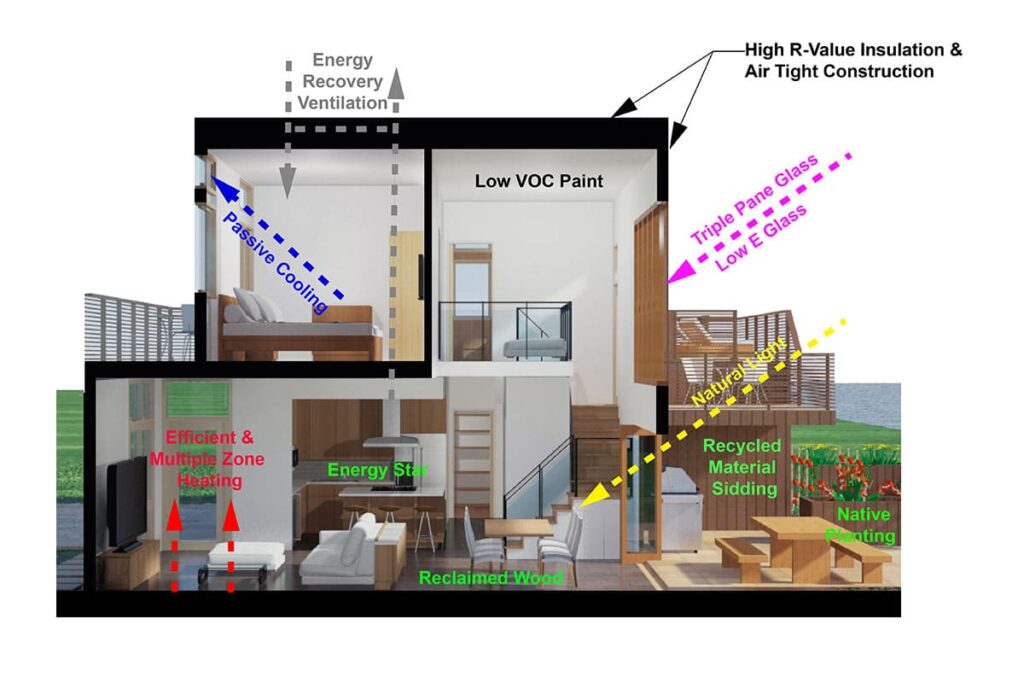
The new generation of architecture has embraced sustainability with the goal of designing buildings with greater environmental awareness and creating a healthy environment for future occupants, as well as nature. Sustainable home design requires a deeper understanding of the building’s environmental impact and creates a space that is not only eco-friendly but also comfortable and functional.
Understanding the Principles of Sustainable Home Design
To design an eco-friendly home, you need to consider basic principles that go beyond traditional architecture. One key principle is to maximize the use of natural resources while minimizing waste and reducing energy consumption. This means choosing materials and technologies that are environmentally friendly and efficient.
Sustainable home design also focuses on creating a healthy indoor environment by optimizing natural lighting, ventilation, and air quality. By incorporating these principles into your design, you can create a space that not only minimizes its impact on the environment but also promotes the well-being of its occupants.
Key Considerations for a Sustainable Home
Before starting the design process, it’s essential to keep in mind the following key considerations:
- Orientation: The home should be oriented to maximize natural lighting and ventilation. This means positioning the building to face south (in the northern hemisphere) or north (in the southern hemisphere), as this allows for maximum sunlight and heat gain during winter months and minimizes summer heat.
- Materials: Choose materials that provide good insulation, are durable, and can withstand the elements. Examples of sustainable materials include recycled glass countertops, sustainably sourced wood, and low-VOC (volatile organic compound) paints.
- Climate: Consider the local climate and its impact on energy consumption. For example, homes in hot climates may require more shading and cooling systems, while homes in cold climates may require more insulation and heating systems.
Optimizing Natural Lighting and Ventilation
To reduce energy consumption, it’s essential to optimize natural lighting and ventilation. This can be achieved by:
- Orienting the home: Position the building to face south (in the northern hemisphere) or north (in the southern hemisphere), as this allows for maximum sunlight and heat gain during winter months and minimizes summer heat.
- Using plants with evergreen leaves: Plant trees with evergreen leaves on the roof to maintain a cool temperature during summer and minimize shading during winter.
- Installing windows on opposite sides of the home: Install windows on opposite sides of the home to facilitate cross-ventilation, allowing for natural airflow and reducing the need for mechanical ventilation.
Selecting Materials with Minimal Environmental Impact
The selection of materials is crucial in sustainable home design. Consider:
- Insulation: Choose materials that provide good insulation, such as polystyrene or polyurethane foam.
- Windows: Opt for energy-efficient windows with low-E coatings and triple-glazed glass to minimize heat transfer and reduce energy consumption.
- Roofing: Select a roofing material that provides excellent insulation and durability, such as metal or clay tile.
Smart Home Technology
To further reduce energy consumption, consider incorporating smart home technology:
- HVAC systems: Install an integrated heating, ventilation, and air conditioning (HVAC) system that maximizes efficiency.
- LED lighting: Use LED lighting with automatic shut-off features to minimize energy waste.
- Solar power: Consider integrating solar panels into your home’s design to generate renewable energy.
Water Conservation Strategies
In addition to energy efficiency, sustainable home design also focuses on water conservation:
- Rainwater harvesting: Install a rainwater harvesting system that collects and filters rainwater for non-potable uses.
- Grey water systems: Implement grey water systems that reuse water from sinks, showers, and washing machines.
Sustainable Landscaping
Sustainable landscaping is an essential aspect of eco-friendly home design. This includes:
- Xeriscaping: Design a landscape that minimizes irrigation needs by using drought-tolerant plants and efficient watering systems.
- Rain gardens: Create rain gardens to capture and filter stormwater runoff, reducing the burden on local waterways.
- Wildlife-friendly habitats: Incorporate native plants and wildlife habitats into your design to support local biodiversity.
Conclusion
Sustainable architecture is not just about reducing energy consumption; it’s also about creating a healthy and comfortable living space. By understanding the principles of sustainable home design, selecting materials with minimal environmental impact, incorporating smart technology, and implementing water conservation strategies, you can create an eco-friendly home that meets your needs while minimizing its footprint on the environment.
Frequently Asked Questions
- What is the most effective way to reduce energy consumption in a home?
Answer: The most effective way to reduce energy consumption is by optimizing natural lighting and ventilation, using energy-efficient materials and technologies, and incorporating smart home systems. - How can I ensure that my home is well-insulated and comfortable?
Answer: To ensure your home is well-insulated and comfortable, choose materials with good insulation properties, install energy-efficient windows, and consider incorporating a radiant floor heating system. - What are the benefits of using solar panels in my home’s design?
Answer: The benefits of using solar panels include reduced energy consumption, lower energy bills, and increased energy independence. - How can I reduce water consumption in my home?
Answer: To reduce water consumption, implement rainwater harvesting systems, grey water reuse systems, and low-flow fixtures throughout your home. - What are the most environmentally friendly building materials?
Answer: The most environmentally friendly building materials include recycled materials, sustainably sourced wood, and low-VOC paints.
Sustainable architecture is a rapidly evolving field that requires careful consideration of environmental impact, energy efficiency, and occupant well-being. By incorporating sustainable design principles into your home’s design, you can create a space that not only minimizes its footprint on the environment but also promotes the health and comfort of its occupants.


