
When it comes to repotting plants, many of us are unsure about the best approach. From determining when to transplant to avoiding common mistakes, there’s a lot to consider. In this article, we’ll take you through the process of repotting plants, providing expert tips and guidelines to ensure a smooth transition for your beloved green friends.
Understanding Repotting Periods
The ideal time to repot plants is a topic of much debate. While some experts recommend transplanting during specific months, others suggest that it’s best to wait until the plant has reached its full growth potential. In general, it’s recommended to repot plants between March and April, when they’re in their dormant phase. This allows them to adapt to their new environment without experiencing stress.
Why Timing Matters
Repotting a flowering plant can be particularly challenging, as it requires the plant to adjust to its new surroundings while still producing flowers. However, timing is crucial to avoid stressing the plant further. If you transplant during the blooming period, the plant may lose its flowers or even stop flowering altogether.
Identifying the Right Moment
So, how do you know when your plant needs repotting? Look for signs of root growth, such as roots circling around the inside of the pot or roots growing out of the drainage holes. This indicates that the plant has outgrown its container and requires more space to thrive.
The Lunar Cycle: A Guide to Repotting
Believe it or not, the moon plays a significant role in transplanting plants. When transplanting in soil, it’s recommended to do so during the new moon phase. During this time, the roots are believed to form quickly and adapt better to their new environment.
Repotting: A Step-by-Step Guide
So, how exactly do you repot a plant? It begins with preparing the plant for transplanting. 24 hours before moving your plant into its new home, water it abundantly to ensure that the roots are well-hydrated and ready for the change.
When the soil is easy to extract from the old pot, gently lift the plant by the terminal part of the stem (where the stem meets the soil). Approach the soil surface where the plant’s neck begins. This delicate process requires care and attention to detail to avoid damaging the roots or stem.
Preparing the Roots
If the roots are tight, you’ll need to tease them out with your hands. Be careful not to break any roots during this process, as they can be easily damaged. If you notice any rot or damaged roots, cut them off with sterile scissors to prevent further damage.
Filling in the New Container
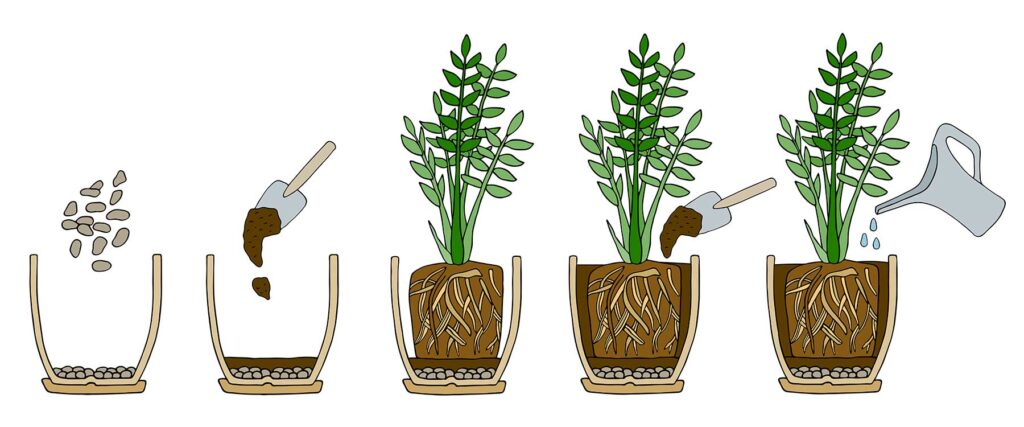
Once the roots have been prepared, it’s time to fill in the new container. Place a pot saucer with a concave surface turned downwards on the bottom of the new container. This helps prevent waterlogged soil and protects the roots from rot.
Cover the saucer with 2 cm of expanded clay (potting soil) to prevent puddling. Add some fresh potting soil to the layer of expanded clay, gently pressing the plant into place. Fill in the space between the container and the root ball with new potting soil, pressing it firmly down to ensure all spaces are filled.
Common Mistakes to Avoid
Repotting a recently purchased plant can be stressful for it. To avoid common mistakes, remember never to bury the plant’s neck! This can cause damage to the stem and roots. Also, make sure not to over-root the plant by covering too much of the lower part of the neck and beginning of the root system.
Tips and Guidelines
Repotting succulents requires some additional considerations. When transplanting a cactus, be careful not to prick yourself on the spines. Large plants present logistical challenges for pruning their leaves, so it’s necessary to cover them with tarpaulins before repotting.
It is not recommended to repot fruit-bearing plants during blooming or when they have fruits. For more information, check out our guides on how to repot succulents and how to move a plant.
Frequently Asked Questions
- When should I repot my plant?
Repot your plant when the roots are visible above the soil surface, or if the plant has outgrown its container. - How often should I water my plant after repotting?
Wait at least 48 hours before giving your plant its first irrigation. You can then add more potting soil to bring it up to level with the soil if necessary. - What is the best time to repot a flowering plant?
It’s recommended to repot flowering plants during their dormant phase, between March and April, or in autumn when they’re ready for vegetative rest. - Why does timing matter when repotting plants?
Timing matters because it allows the plant to adapt to its new environment without experiencing stress. - Can I repot a recently purchased plant right away?
It’s recommended not to repot a newly purchased plant immediately. Instead, wait until it has reached its full growth potential before transplanting. - What are some common mistakes to avoid when repotting plants?
Never bury the plant’s neck, and avoid over-rooting the plant by covering too much of the lower part of the neck and beginning of the root system. - How do I prepare my plant for repotting?
Water your plant abundantly 24 hours before moving it into its new home to ensure that the roots are well-hydrated and ready for the change. - What is the best way to fill in the new container?
Fill in the space between the container and the root ball with new potting soil, pressing it firmly down to ensure all spaces are filled.
Conclusion
Repotting plants can seem daunting, but with the right approach, you’ll be able to successfully transplant your beloved green friends into their new homes. Remember to choose the right moment, handle the roots with care, and provide a suitable environment for your plants to thrive. By following these guidelines and tips, you’ll be well on your way to becoming a master plant replanter.
Additional Tips
- Prune old roots before repotting to promote healthy growth.
- Use a root stimulator to enhance root development.
- Consider using a trellis or support system for climbing plants.
- Water thoroughly after repotting, but avoid overwatering.
- Monitor your plant’s condition closely after repotting, and adjust its care accordingly.
Common Mistakes to Avoid in Repotting Plants
- Burying the plant’s neck: This can cause damage to the stem and roots.
- Over-rooting the plant: Covering too much of the lower part of the neck and beginning of the root system can lead to root rot and other problems.
- Not preparing the roots properly: Failing to tease out tight roots or remove damaged ones can result in poor plant health.
- Using a pot that’s too small: Transplanting into a container that’s too small can cause waterlogging, root rot, and other issues.
- Not providing enough light: Insufficient light after repotting can lead to weak growth, yellowing leaves, or even death.
Common Mistakes to Avoid When Repotting Succulents
- Pricking yourself on the spines: Be careful when handling cacti and succulents to avoid getting pricked by their sharp spines.
- Overwatering: Succulents are prone to root rot, so ensure you’re not watering them too much after repotting.
- Not providing enough sunlight: Succulents need bright light to photosynthesize and grow well, so make sure they’re getting sufficient sunlight.
By following these tips and guidelines, you’ll be able to successfully repot your plants and enjoy their growth for years to come.


