
Iodine is an essential micronutrient that plays a vital role in our body’s metabolic processes. It is crucial for the synthesis of thyroid hormones, which regulate various bodily functions. In this article, we will delve into the importance of iodine, its recommended daily intake, and the best food sources to ensure adequate iodine levels.
What Does Iodine Do?
Iodine is a micro-element that cannot be synthesized by the human body. It is essential for the production of thyroid hormones, including triiodothyronine (T3) and thyroxine (T4). These hormones regulate various bodily functions, such as:
- Metabolism: Iodine plays a crucial role in regulating metabolism, which is the process by which our bodies convert food into energy.
- Growth and Development: Iodine is essential for the growth and development of children and adolescents. A deficiency in iodine can lead to stunted growth and developmental delays.
- Nervous System Function: Iodine is necessary for the proper functioning of the nervous system, which includes the brain, spinal cord, and nerves.
- Heart Rate: Iodine helps regulate heart rate and blood pressure.
A deficiency in iodine can lead to a range of health issues, including thyroid problems, fatigue, and cognitive impairment.
Recommended Daily Intake
The recommended daily intake of iodine varies based on age, sex, and other factors. Here are the recommended daily intakes for different age groups:
- Infants (0-6 months): 110 mcg
- Infants (7-12 months): 130 mcg
- Children (1-6 years): 90 mcg
- Children (7-12 years): 120 mcg
- Adolescents and adults: 150 mcg
- Pregnant women: 220 mcg
- Breastfeeding women: 290 mcg
It is essential to consult with a healthcare professional to determine the best dosage for individual needs.
Food Sources of Iodine
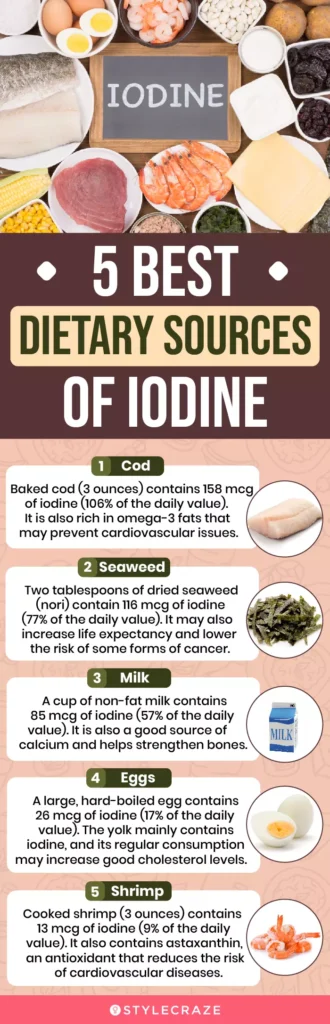
A well-balanced diet that includes a variety of iodine-rich foods can help ensure adequate iodine levels. Here are some of the richest sources of iodine:
1. Iodized Salt
Iodized salt is the most significant source of iodine in many parts of the world. It contains approximately 1900 mcg per 100 grams.
2. Marine Algae
Marine algae, such as kelp, arame, hiziki, wakame, and nori, are excellent sources of iodine. However, it is crucial to consume them in moderation due to their high iodine content.
3. Mussels
Mussels are a type of shellfish that contains about 170 mcg of iodine per 100 grams.
4. Sardines and Anchovies
These small fish contain around 30-50 mcg of iodine per 100 grams.
5. Other Seafood
Other seafood, such as cod, shrimp, and scallops, also contain significant amounts of iodine, although in smaller quantities compared to mussels and sardines.
Foods High in Iodine
Here are some foods that are high in iodine:
- Mussels (170 mcg per 100 grams)
- Sardines (30-50 mcg per 100 grams)
- Anchovies (30-50 mcg per 100 grams)
- Cod (50 mcg per 100 grams)
- Shrimp (40-60 mcg per 100 grams)
Other Sources of Iodine
Besides food, other sources of iodine include:
- Supplements: Iodine supplements are available in various forms, including tablets, capsules, and powders.
- Iodine-containing medications: Some medications, such as thyroid medications, contain iodine.
Conclusion
Iodine is a vital micronutrient that plays a crucial role in our body’s metabolic processes. A well-balanced diet that includes a variety of iodine-rich foods can help ensure adequate iodine levels. However, excessive consumption of iodine can lead to thyroid problems and other health issues.
By understanding the importance of iodine and its recommended daily intake, individuals can take steps to maintain optimal iodine levels in their bodies. Always consult with a healthcare professional for personalized advice on maintaining optimal iodine levels.
Frequently Asked Questions
Here are some frequently asked questions about iodine:
-
What is the best way to get enough iodine in my diet?
A well-balanced diet that includes a variety of iodine-rich foods can help ensure adequate iodine levels.
2. Can I get too much iodine from food?Yes, excessive consumption of iodine can lead to thyroid problems and other health issues. It is essential to consult with a healthcare professional for personalized advice on maintaining optimal iodine levels.
3. How often should I consume iodized salt?Iodized salt is the most significant source of iodine in many parts of the world. However, it is recommended to consume it in moderation due to its high iodine content.
4. What are some other sources of iodine besides food?Besides food, other sources of iodine include supplements and iodine-containing medications.
5. Can I get enough iodine from seaweed alone?While seaweed is an excellent source of iodine, it is not recommended to rely solely on seaweed for iodine intake. A well-balanced diet that includes a variety of iodine-rich foods can help ensure adequate iodine levels.
6. What happens if I have a thyroid problem and do not get enough iodine?If you have a thyroid problem and do not get enough iodine, your thyroid function may be impaired, leading to symptoms such as fatigue, weight gain, and mood changes.
7. Can I get too little iodine from food?Yes, inadequate iodine intake can lead to thyroid problems and other health issues. It is essential to consult with a healthcare professional for personalized advice on maintaining optimal iodine levels.
8. How often should I check my iodine levels?Regular blood tests can help determine your iodine levels and identify any potential deficiencies or excesses.
Prevention of Iodine Deficiency
Preventing iodine deficiency is crucial to maintain optimal thyroid function and overall health. Here are some ways to prevent iodine deficiency:
- Consume iodized salt: Using iodized salt in cooking can help ensure adequate iodine intake.
- Eat seafood regularly: Regular consumption of seafood, especially mussels, sardines, and anchovies, can provide essential iodine.
- Take supplements: If you are at risk of iodine deficiency or have a thyroid problem, consider taking an iodine supplement under the guidance of a healthcare professional.
- Check your thyroid function regularly: Regular blood tests can help determine your thyroid function and identify any potential deficiencies.
Conclusion
Iodine is a vital micronutrient that plays a crucial role in our body’s metabolic processes. A well-balanced diet that includes a variety of iodine-rich foods, combined with regular monitoring of thyroid function, can help ensure optimal iodine levels and overall health.
By understanding the importance of iodine and its recommended daily intake, individuals can take steps to maintain optimal iodine levels in their bodies. Always consult with a healthcare professional for personalized advice on maintaining optimal iodine levels.
References
- Centers for Disease Control and Prevention (CDC). (2020). Iodine: Fact Sheet.
- National Institute of Diabetes and Digestive and Kidney Diseases (NIDDK). (2020). Iodine Deficiency.
- Mayo Clinic. (2020). Iodine deficiency.
Note: The information provided in this article is for general informational purposes only and should not be considered as medical advice. Always consult with a healthcare professional for personalized advice on maintaining optimal iodine levels.


