
Introduction
The Paint Horse is an iconic equine breed that has captivated hearts and imagination worldwide. With its striking coat patterns, athletic prowess, and gentle nature, it’s no wonder why this breed has become a favorite among horse enthusiasts. In this article, we’ll delve into the history, characteristics, and unique traits of the Paint Horse, exploring what makes this breed so special.
The Origins of the Paint Horse
The Paint Horse’s ancestry is deeply rooted in American history, with its earliest origins tracing back to the Mustang horses brought by Spanish conquistadors. Over time, various Native American tribes adopted and selectively bred these horses, creating a unique strain that would eventually become the foundation for the modern-day Paint Horse. The breed gained popularity among cowboys, who valued its speed, agility, and endurance, leading to the development of the Quarter Horse.
The Birth of the Paint Horse Association
In the mid-20th century, the American Quarter Horse Association (AQHA) refused to register horses with a distinctive coat pattern, leaving them outcast. This led to the formation of the American Paint Horse Association (APHA) in 1962, which recognized and promoted these exceptional animals. Today, the Paint Horse is celebrated for its beauty, athleticism, and gentle disposition.
Characteristics of the Paint Horse
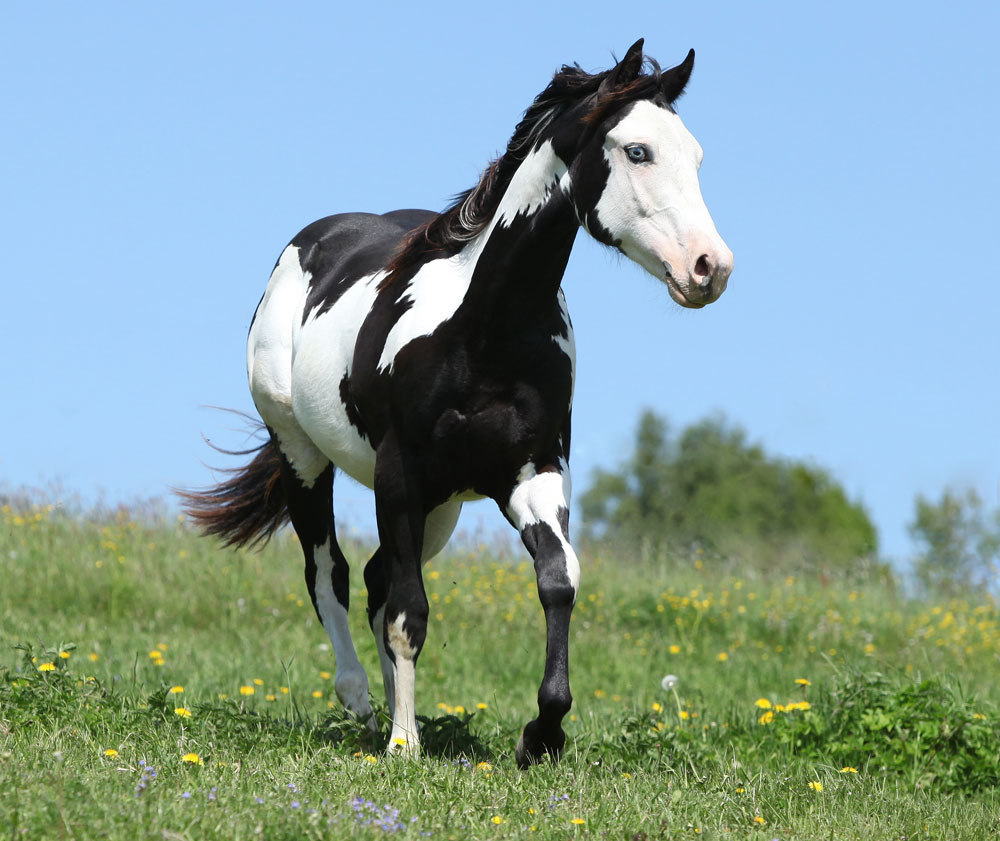
The Paint Horse’s most distinctive feature is its unique coat pattern, featuring a mix of white and colored markings. This breed is known for its exceptional speed, agility, and endurance, making it an excellent choice for various equestrian disciplines. The average height for a Paint Horse stands at around 140-165 cm, with a weight range of 500 kg.
Varieties within the Paint Horse Breed
The Paint Horse comes in three main varieties:
- Tobiano: Characterized by a distinctive “tobiano” pattern, featuring uniform white and colored patches. The head is usually monocromatic, while the legs are entirely white.
- Overo: Features a predominantly white coat with irregularly shaped patches of color on the hindquarters and face.
- Tovero: A hybrid variety between Tobiano and Overo, exhibiting characteristics from both.
The Temperament of the Paint Horse
Contrary to its rugged reputation, the Paint Horse is known for its gentle and even-tempered nature. This breed excels in disciplines that require balance, poise, and calmness, such as dressage and show jumping.
Paint Horse Allevamento (Breeding) in Italy
In the province of Vicenza, you can find a dedicated Paint Horse breeding facility, “Rodeghiero Paints,” located in Mure, Colceresa. This picturesque setting offers breathtaking views of the surrounding Venetian hills and is close to historical centers like Marostica, Bassano del Grappa, and Asolo.
Conclusion
The Paint Horse is an extraordinary breed that has captured the hearts of horse enthusiasts worldwide. With its unique coat pattern, exceptional athleticism, and gentle disposition, it’s no wonder why this breed remains a favorite among equestrians. Whether you’re a seasoned rider or just starting your equine journey, the Paint Horse is sure to impress.
Frequently Asked Questions (FAQs)
- What is the origin of the Paint Horse breed?
The Paint Horse’s ancestry dates back to the Mustang horses brought by Spanish conquistadors and selectively bred by various Native American tribes. - How does the Paint Horse’s coat pattern differ from other breeds?
The Paint Horse’s unique coat pattern features a mix of white and colored markings, making each horse distinct. - What are the three main varieties within the Paint Horse breed?
Tobiano, Overo, and Tovero are the primary varieties, each with its distinctive characteristics. - Is the Paint Horse breed known for its temperament?
Yes, the Paint Horse is renowned for its gentle and even-tempered nature, making it an excellent choice for riders of all levels. - Where can I find a Paint Horse breeding facility in Italy?
“Rodeghiero Paints” is located in Mure, Colceresa, Vicenza, Italy. - What are the average height and weight ranges for a Paint Horse?
The average height for a Paint Horse stands at around 140-165 cm, with a weight range of 500 kg. - Can I register my Paint Horse with any association?
No, the American Paint Horse Association (APHA) is the primary registration body for this breed. - Are Paint Horses suitable for beginners or experienced riders?
Both! The Paint Horse’s gentle nature and athleticism make it an excellent choice for riders of all levels.
Additional Facts and Figures
- History: The Paint Horse has been in existence for over 400 years, with the first recorded breed register dating back to 1815.
- Breeding programs: APHA-approved breeding programs are in place across North America, Europe, and Australia to promote the preservation of this magnificent breed.
- Competition success: Paint Horses have won numerous competitions worldwide, including the American Quarter Horse Association (AQHA) World Championship Show and the FEI World Equestrian Games.
- Conservation efforts: APHA and other organizations are working tirelessly to protect the Paint Horse’s genetic diversity and promote sustainable breeding practices.
Glossary of Terms
- APHA: The American Paint Horse Association, which promotes and registers Paint Horses worldwide.
- AQHA: The American Quarter Horse Association, which is also known for its strict breed standards.
- Tobiano: A type of Paint Horse with a distinctive coat pattern featuring uniform white and colored patches.
- Overo: A type of Paint Horse with a predominantly white coat and irregularly shaped patches of color on the hindquarters and face.
Breeding Considerations
When choosing a Paint Horse for breeding purposes, consider the following factors:
- Genetic diversity: Aim to breed horses from different lines or bloodlines to promote genetic diversity.
- Health testing: Regular health testing can help identify potential health issues early on.
- Temperament evaluation: Assess the temperament of each horse before breeding to ensure compatibility.
Conclusion
The Paint Horse is an extraordinary breed that has captured the hearts of horse enthusiasts worldwide. With its unique coat pattern, exceptional athleticism, and gentle disposition, it’s no wonder why this breed remains a favorite among equestrians. Whether you’re a seasoned rider or just starting your equine journey, the Paint Horse is sure to impress.
Recommended Resources
- American Paint Horse Association (APHA): www.apha.com
- Rodeghiero Paints: www.rodeghieropaints.it


