
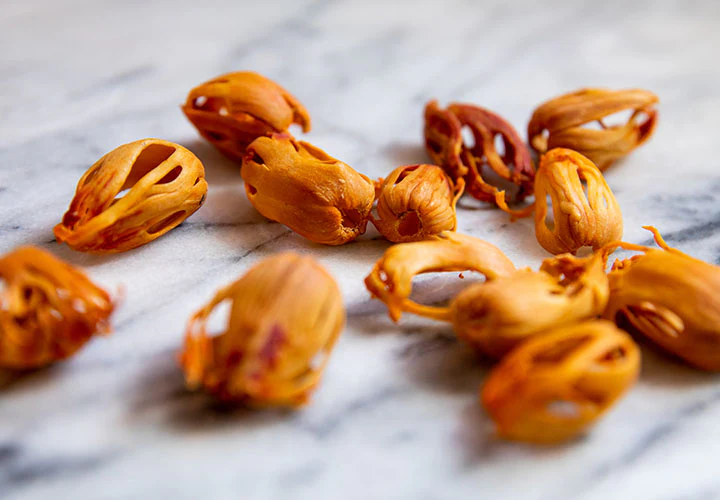
Macis, also known as mace or the seed of the nutmeg tree, is a spice originating from the islands of Moluccas in Indonesia. Despite its name, macis is not a flower. Botanically, it’s called an arillo, which is a part of the fruit that contains the seed and develops simultaneously.
In simple terms, the fruit of the nutmeg tree consists of a white pulp, called mallo, which encases the arillo, containing the seed that we commonly know as noce moscata. From this arillo, we extract another spice with a similar flavor profile, known as macis.
The Macis: A Reddish-Brown Spice
In its fresh form, macis is a vibrant reddish-brown color. When dried, it turns a golden-brown to rust-colored hue.
Macis has been used for centuries in traditional medicine and cooking, primarily due to its unique flavor profile and aroma. In Indonesian cuisine, where the nutmeg tree is native, macis is used to add a subtle aroma to sweets, desserts, and even savory dishes.
Origin and Production of Macis
Macis is produced from the plants of the genus Myristica, specifically Myristica fragrans. This spice has been cultivated for centuries, and its production is mainly limited to the Moluccas region. The nutmeg tree is a slow-growing species that thrives in tropical climates with high humidity.
The production process of macis involves several steps:
- Harvesting: Mature noce moscata fruits are harvested from the trees.
- Collection: The arillo, containing the seed, is carefully collected and dried to preserve its flavor and aroma.
- Sorting: Dried arillos are sorted according to their quality and color.
- Grading: Macis is graded based on its size, shape, and color.
The Flavor Profile of Macis
Compared to noce moscata, macis has a milder flavor profile. The latter tends to be more potent and pronounced. In Indonesian cuisine, where the nutmeg tree is native, macis is used to add a subtle aroma to sweets, desserts, and even savory dishes.
The unique flavor profile of macis can be attributed to its chemical composition, which includes volatile compounds like cinnamaldehyde and beta-pinene. These compounds contribute to the spice’s distinctive aroma and taste.
Using Macis in Cooking
In cooking, macis is used as a spice for light-colored and aromatic dishes, similar to how zafferano is used. In Indonesian cuisine, macis is combined with other spices to create unique blends. It can also be used to make flavored oils, vinegars, salt, and dried vegetables.
To explore more recipes and maceration times for macis, visit our dedicated guides on homemade oil aromatization and sugar speziated recipe.
Using Macis in Baking
Macis can replace noce moscata when adding a subtle flavor to baked goods. For example, you can use it in cakes or cookies instead of traditional spices.
In addition to baking, macis is often used in the production of liqueurs, such as nocino and ciliegia nutmeg liquor. It pairs well with other spices commonly used in vin brulé recipes.
Delicate Flavor Enhancer
Macis can add a delicate flavor boost to salsas and sauces for cheese. You can also sprinkle it on top of cheese or use it to make homemade cheese spreads.
In conclusion, macis is an excellent choice for those looking for a mild yet unique spice to elevate their dishes. It’s perfect for pairing with sweet and savory flavors alike.
Macis: A Spice with a Rich History
The history of macis dates back to ancient times, when it was used as a remedy by the French in their Pharmacopée de la Compagnie française des Indes orientales. Alongside other spices like zafferano, cinnamon, and peppercorns, it was considered a potent stimulant due to the nutmeg tree’s high demand.
In traditional medicine, macis has been used to treat various ailments, including indigestion, nausea, and respiratory issues. Its unique flavor profile and aroma have also made it a popular ingredient in perfumes and fragrances.
Properties of Macis
Macis contains various minerals such as potassium, calcium, magnesium, iron, and phosphorus, as well as vitamins A, B group, and vitamin C. It also contains beta-carotene, criptoxanthin, and omega-3 fatty acids. However, it’s essential to consume macis in moderation due to its high content of miristicin.
Miristicin is a compound found in the nutmeg tree that has been linked to various health benefits, including anti-inflammatory properties and antioxidant activity. However, excessive consumption can lead to adverse effects like skin irritation and allergic reactions.
Precautions
One crucial piece of information is that macis should be avoided during pregnancy.
Pregnant women are advised to consult their healthcare provider before consuming any new spice, including macis. While the current research suggests that macis is generally safe for consumption during pregnancy, it’s always best to err on the side of caution.
Where to Buy Macis?
Unfortunately, macis is not widely available in Italy, making online purchases the most practical option. On Amazon, you can find a 100g powdered macis at a price of €8.60.
Once opened, it’s recommended to transfer the macis to an airtight container or glass jar to minimize exposure to air.
Frequently Asked Questions
Q: What is the difference between noce moscata and macis?
A: Noce moscata has a more pronounced flavor than macis. Macis, on the other hand, has a milder taste profile.
Q: Is macis a flower?
A: No, macis is not a flower. It’s actually the arillo from the fruit of the nutmeg tree that we extract as a spice.
Q: What are the health benefits of consuming macis?
A: Macis contains various minerals and vitamins, including potassium, calcium, magnesium, iron, phosphorus, vitamins A, B group, and vitamin C. However, it’s essential to consume it in moderation due to its high content of miristicin.
Q: Can I use macis instead of noce moscata?
A: Yes, you can substitute macis for noce moscata when adding a subtle flavor to your dishes.
Q: Where can I buy macis powder?
A: On Amazon, you can find 100g powdered macis at €8.60.
Q: Is it safe to consume during pregnancy?
A: Yes, macis is generally considered safe for consumption during pregnancy. However, always consult with your doctor or healthcare provider before consuming any new spice.
Q: How do I store macis powder?
A: Once opened, transfer the macis to an airtight container or glass jar to minimize exposure to air.
Q: Can I make flavored oils and vinegars using macis?
A: Yes, you can use macis to create unique flavor profiles in your homemade oil aromatization and vinegar recipes.
Q: How do I choose the right type of macis for my needs?
A: The choice of macis depends on personal preference and intended usage. You can opt for fresh or dried macis, both of which have distinct flavor profiles.


