
The Future of Sustainability: Honda’s Groundbreaking Recycling Process for Rare Earth Elements
As the world shifts towards a more sustainable future, one industry is taking a step in the right direction. The automotive sector, led by companies like Honda, is pioneering innovative recycling techniques to minimize waste and maximize efficiency. In this article, we’ll delve into the story of Honda’s revolutionary approach to recycling rare earth elements (REEs) from spent batteries.
The Rise of Electric Vehicles
The increasing demand for electric vehicles (EVs) has sparked a surge in production, driven by governments’ efforts to reduce carbon emissions and reliance on fossil fuels. This growth has created a new challenge: the management of waste generated by EVs, particularly spent batteries containing REEs.
A New Era in Recycling
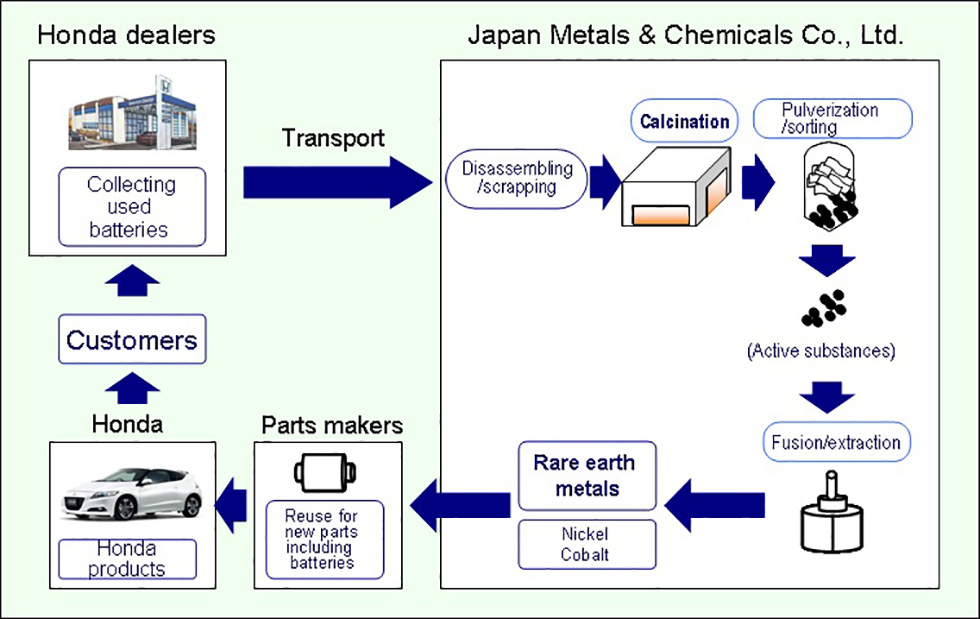
Honda has taken the lead in developing an efficient recycling process for REEs from spent batteries. This innovative approach not only reduces waste but also ensures that valuable materials are recovered and reused in the production of new batteries. The company’s commitment to sustainability is reflected in its focus on minimizing environmental impact throughout the entire lifecycle of their products.
The Challenges of Recycling Rare Earth Elements
REEs play a crucial role in the performance and longevity of EV batteries. However, the extraction process can be complex, energy-intensive, and often results in significant waste. The primary concern is the disposal of spent batteries containing REEs, which poses environmental risks if not managed properly.
Honda’s Breakthrough Recycling Process
The Honda team has developed a groundbreaking method for extracting REEs from spent batteries through a process called elettrolisis. This innovative technique involves breaking down the battery’s chemical composition and separating the valuable materials. The resulting pure REE products have a purity level of over 99%, comparable to those extracted from primary sources.
A New Standard in Recycling
Honda’s recycling method represents a significant milestone in the industry, demonstrating that it is possible to extract high-quality REEs from spent batteries. This achievement not only reduces waste but also paves the way for more efficient production of new EV batteries.
The Future of Sustainability
As companies like Honda continue to innovate and push the boundaries of sustainability, we can expect significant improvements in recycling technologies. The future of sustainable transportation relies on the ability to efficiently recover and reuse valuable materials from spent batteries. By adopting such approaches, we can create a cleaner, healthier environment for generations to come.
Key Takeaways
- Honda’s groundbreaking recycling process extracts REEs from spent batteries through elettrolisis.
- This innovative method reduces waste while ensuring that valuable materials are recovered and reused in new battery production.
- The company’s commitment to sustainability is reflected in its focus on minimizing environmental impact throughout the entire lifecycle of their products.
FAQs
- What is the significance of recycling rare earth elements?
- REEs play a crucial role in EV battery performance, but extracting them from spent batteries can be complex and energy-intensive.
- How does Honda’s recycling process work?
- The company uses elettrolisis to break down spent batteries and separate valuable materials.
- What is the purity level of recycled REEs?
- Honda’s method results in pure REE products with a purity level exceeding 99%.
- Can this recycling process be applied to other types of waste?
- While Honda’s technology is tailored for EV batteries, similar approaches can be explored for other applications.
- How will this impact the automotive industry?
- Efficient recycling of REEs will reduce waste, minimize environmental risks, and promote sustainable production practices.
- What are the potential benefits for consumers?
- By reducing waste and promoting sustainable production, consumers can contribute to a cleaner environment and lower carbon emissions.
- How can we encourage more companies to adopt this approach?
- Governments and industry leaders can work together to establish regulations and incentives that promote environmentally responsible practices.
- What are the next steps in developing this technology further?
- Continued research and development will help optimize recycling methods, reduce costs, and improve efficiency.
Conclusion
Honda’s groundbreaking recycling process for REEs from spent batteries is a significant step towards a more sustainable future. By reducing waste and promoting efficient production practices, companies like Honda are paving the way for a cleaner, healthier environment. As technology continues to evolve, we can expect even more innovative solutions to emerge, driving us closer to a world where sustainability and progress go hand in hand.
Recommendations
- Governments and industry leaders should work together to establish regulations and incentives that promote environmentally responsible practices.
- Continued research and development is necessary to optimize recycling methods, reduce costs, and improve efficiency.
- Companies like Honda can serve as models for sustainable production practices, encouraging other businesses to follow suit.
- Consumers can contribute to a cleaner environment by reducing waste and promoting sustainable production.
By working together, we can create a better future for generations to come. The future of sustainability is bright, and it’s up to us to make sure that it remains so.


