
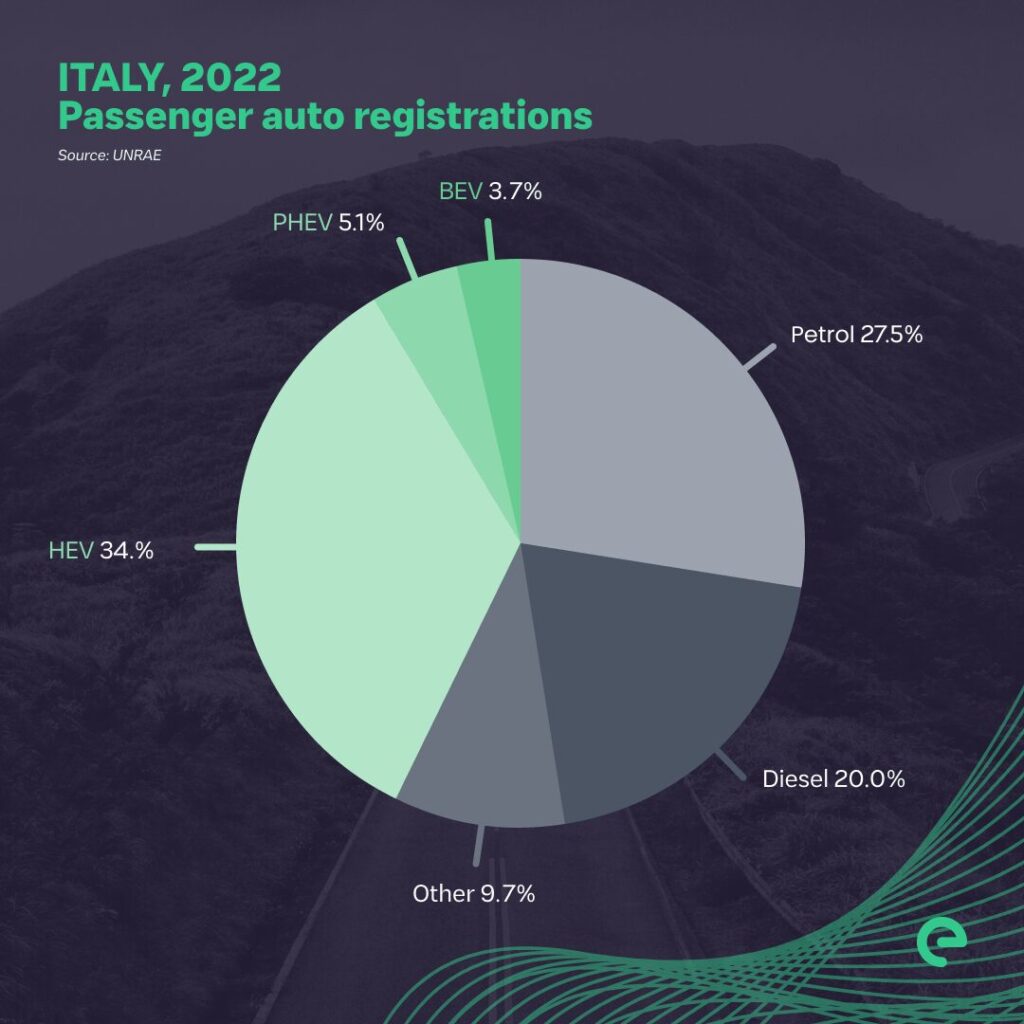
The electric vehicle market is on the rise globally, with hybrid models leading the charge. Both share similar technologies and are at the forefront of investments and innovations by automotive companies.
Today, the elettric segment dominates the European automotive sector, recording a remarkable +12.1% growth in 2022, according to ACEA (Association of European Car Manufacturers). This is significantly higher than the +9.1% in 2021 and +1.9% in 2019.
This trend is driven not only by technological advancements but also by government regulations aimed at reducing pollution, especially in urban areas. As a result, consumer behavior has shifted, with many considering eco-friendly policies when purchasing their vehicles.
Another crucial factor influencing the market is the insurance policy for new cars (RCA). Traditionally, car buyers were required to visit an insurer’s office to finalize the policy. However, with the rise of digital platforms, it’s now possible to subscribe and monitor your vehicle from any device, including smartphones, at a lower cost.
This shift towards digital insurance has paved the way for eco-friendly policies that mirror the environmentally friendly nature of electric vehicles.
Key Points
- The European Union aims to set emission-free standards for trucks and cars by 2025.
- Italy ranked last in terms of electric vehicle sales in 2022, with a -26.9% decline.
- Hybrid vehicles are popular among Italians, especially those with non-rechargeable batteries, which saw an 8.9% increase in sales.
- The number of public charging stations is still insufficient, with only 2,000 existing today.
European Union’s Emission-Free Goals
On February 14, 2023, the European Parliament adopted a new agreement paving the way for emission-free vehicles by 2035, aligning with the EU’s goal of reaching net-zero emissions by 2050. This move is expected to boost innovation and investment in electric vehicles, making them more accessible to consumers.
Italy’s Electric Vehicle Landscape
Norway leads the EU in terms of electric vehicle sales, with its citizens opting for e-vehicles when changing their cars four times in five years. The country aims to ban internal combustion engines by 2035, ten years ahead of the EU’s target.
In contrast, Italy saw a significant decline in electric vehicle sales in 2022, at -26.9%. Hybrid vehicles are more popular, especially those with non-rechargeable batteries, which experienced an 8.9% growth in sales.
Challenges Facing Electric Vehicle Adoption
Despite growing demand, the adoption of electric vehicles is hindered by various factors, including high costs and limited public charging infrastructure. While prices are expected to decrease over time, the current situation remains a significant barrier to widespread adoption.
A total of 14,000 additional public charging stations are needed in Europe to address this disparity, with only 2,000 existing today.
Investment Strategies for Electric Vehicles
Several companies have already made significant investments in electric vehicle technology and infrastructure. For instance, Tesla has committed $5 billion to the development of its Gigafactory network worldwide. This investment is expected to increase production capacity and drive economies of scale.
Another key player, Volkswagen, has also pledged significant resources towards electric vehicle development, with a planned expansion of its electrification strategy in 2023.
Benefits of Electric Vehicles
Electric vehicles offer several benefits over traditional internal combustion engine cars. They produce zero tailpipe emissions, reducing air pollution in urban areas and mitigating climate change. Additionally, they require less maintenance than their gasoline-powered counterparts, as there are fewer moving parts.
Furthermore, electric vehicles can be powered by renewable energy sources like solar and wind power, making them an attractive option for environmentally conscious consumers.
Market Size and Growth Prospects
The global electric vehicle market is expected to continue growing at a compound annual growth rate (CAGR) of 15.4% from 2023 to 2030. This growth can be attributed to increasing demand for eco-friendly vehicles, government regulations aimed at reducing emissions, and technological advancements in battery technology.
By 2050, it’s estimated that over 50 million electric vehicles will be on the road globally, with Asia-Pacific countries expected to drive this growth due to their large populations and growing economies.
Innovative Technologies
Several innovative technologies are being developed to improve the efficiency and range of electric vehicles. For instance, solid-state batteries are expected to become more widespread in the coming years, offering improved safety, longer lifespan, and higher energy density.
Another area of innovation is regenerative braking, which captures kinetic energy and converts it into electrical energy, further improving fuel efficiency.
Government Policies and Incentives
Governments around the world are implementing various policies and incentives to encourage the adoption of electric vehicles. For instance, Norway offers tax exemptions for e-vehicles and free tolls on certain roads.
In the European Union, member states are required to set a minimum fleet share of low-emission vehicles by 2035. Additionally, several countries have introduced incentives such as lower road tolls or exemptions from congestion charges for electric vehicle owners.
Consumer Awareness and Education
Education and awareness campaigns play a crucial role in driving consumer adoption of electric vehicles. By promoting the benefits and features of e-vehicles, governments and companies can increase demand and encourage more consumers to consider eco-friendly transportation options.
Public demonstrations, workshops, and online resources are all effective tools for educating consumers about electric vehicle technology and its potential impact on reducing emissions.
Conclusion
The electric vehicle market is poised for growth as governments and companies work towards reducing emissions. However, challenges such as high costs and limited infrastructure persist, highlighting the need for continued innovation and investment. As the industry moves forward, it’s clear that a sustainable future relies on the adoption of eco-friendly technologies like electric vehicles.
Frequently Asked Questions
- What is the European Union’s goal regarding emission-free vehicles?
The EU aims to set emission-free standards for trucks and cars by 2025. - How did Italy perform in terms of electric vehicle sales in 2022?
Italy saw a -26.9% decline in electric vehicle sales, ranking last among EU member states. - What type of hybrid vehicles are popular in Italy?
Hybrid vehicles with non-rechargeable batteries are preferred by Italian consumers, with an 8.9% increase in sales reported in 2022. - Why is the number of public charging stations insufficient?
There are only 2,000 public charging stations available today, far short of the needed 14,000 to address this disparity. - What is the expected outcome for electric vehicle prices over time?
Prices are expected to decrease over the next few years as technology improves and economies of scale increase.


