
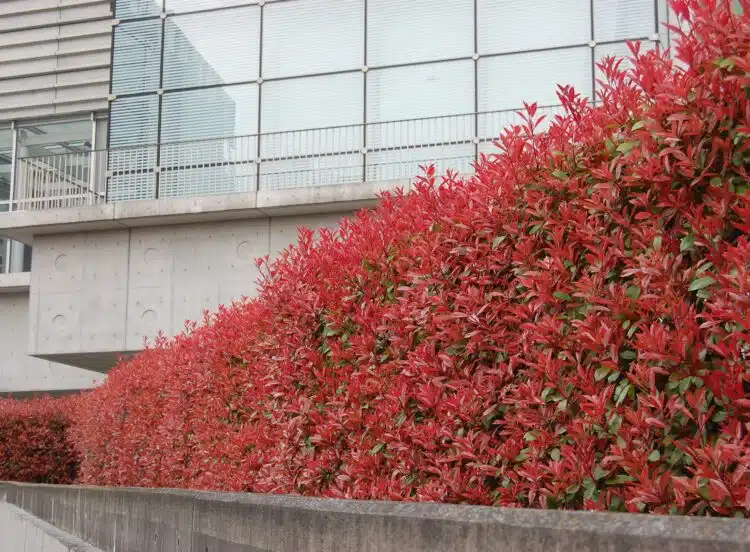
Photinia, a result of hybridization between Australia and New Zealand, is the perfect hedge plant. This evergreen shrub with dense foliage is commonly found in gardens throughout Italy. With its vibrant red color and low maintenance requirements, Photinia has become a popular choice for many homeowners looking to add a pop of color and texture to their outdoor spaces.
What Makes Photinia Unique?
Photinia’s unique characteristics make it an excellent choice for hedges. Not only does it add a touch of warmth and beauty to any garden, but its low maintenance requirements also make it a practical option for busy homeowners. The most popular variety, Photinia Red Robin, features bright red foliage that is both visually appealing and easy to care for.
One of the key benefits of Photinia is its ability to thrive in a wide range of conditions. It can grow up to 3-4 meters tall and has a spread of around 2-3 meters, making it an excellent choice for hedges. The oval or lance-shaped leaves with a reddish tint when new become dark green as they mature, providing a beautiful contrast of colors throughout the growing season.
Photinia is also a versatile plant that can be used in full sun, partial shade, or even shaded areas. This makes it an ideal choice for gardens with limited sunlight, and its ability to tolerate acidic soils also makes it a popular option for homeowners who live in areas with poor soil quality.
Characteristics of Photinia
Before we dive into the benefits and growing conditions of Photinia, let’s take a closer look at its key characteristics:
- Evergreen shrub: This means that Photinia keeps its leaves year-round, providing a constant source of color and texture to your garden.
- Dense foliage: Photinia’s dense foliage makes it an excellent choice for hedges, as it helps to block out wind, noise, and other distractions.
- Can grow up to 3-4 meters tall: This height range makes Photinia an excellent choice for hedges, as it can provide a screen or barrier that is both visually appealing and functional.
- Spread of around 2-3 meters: The spread of Photinia also means that it can help to stabilize soil, prevent erosion, and even reduce wind speeds.
Types of Photinia
There are several types of Photinia available, each with its own unique characteristics. Here are a few popular varieties:
- Photinia Red Robin: This is the most popular variety of Photinia, known for its bright red foliage.
- Photinia x fraseri: Features white flowers in clusters and can grow up to 6 meters tall.
- Photinia nana: A compact variety that grows up to 1 meter tall and has a spread of around 1 meter.
Benefits of Using Photinia as a Hedge
So why should you choose Photinia as your hedge plant? Here are just a few benefits:
- Low maintenance requirements: No pruning or care is needed beyond regular watering.
- Vigorous growth rate: Will quickly fill in gaps and create a dense hedge.
- Versatility: Can be used in full sun, partial shade, or even shaded areas.
Growing Photinia
Photinia is easy to grow and can thrive in most conditions. However, it does require:
- Well-draining soil: To prevent root rot and other problems.
- Full sun or partial shade: Depending on the type of Photinia you choose.
- Regular watering: During the first year after planting.
Pruning Photinia
Photinia requires regular pruning to maintain its shape and promote healthy growth. Prune:
- After blooming in the spring, to encourage new growth.
- In the fall, to maintain a dense hedge.
It’s also important to prune your Photinia plant regularly to prevent it from becoming leggy or overgrown. Pruning can help to maintain its shape, encourage new growth, and even promote flowering.
Common Problems with Photinia
While Photinia is generally low maintenance, it can be susceptible to:
- Pests: Aphids and spider mites can infest Photinia leaves.
- Diseases: Entomosporium maculatum can cause spotting on leaves in the spring.
To prevent these problems, make sure to water your Photinia plant regularly, inspect its leaves for pests or diseases, and prune it regularly to maintain its shape and promote healthy growth.
Photinia Varieties for Small Spaces
If you have limited space, consider using:
- Photinia nana: A compact variety that grows up to 1 meter tall and has a spread of around 1 meter.
- Photinia Beauverdiana: Features elliptical leaves with many teeth and blooms in late spring.
These varieties are perfect for small gardens or containers, and can add a touch of color and texture to even the smallest outdoor spaces.
Where to Buy Photinia
Photinia is widely available at nurseries and garden centers. You can also buy online from reputable retailers. When purchasing your Photinia plant, make sure to choose a healthy specimen with plenty of foliage and no signs of pests or diseases.
FAQs
Q: How much does it cost to buy Photinia?
A: Around €10-€20 for a small plant, depending on the size and variety.
Q: Can I use Photinia as a hedge in partial shade?
A: Yes, but keep in mind that the leaves may not be as vibrant.
Q: Is Photinia toxic to humans and animals?
A: Yes, the red berries are toxic to both humans and animals.
Q: How often should I water my Photinia?
A: During the first year after planting, water regularly, then reduce watering to once a week.
Q: Can I prune Photinia in the winter?
A: No, pruning in the winter can damage the plant. Prune in the spring instead.
Q: Is Photinia suitable for acidic soils?
A: Yes, Photinia prefers well-draining soil and can tolerate acidic conditions.
Q: Can I use Photinia as a topiary plant?
A: Yes, but it requires regular pruning to maintain its shape.
By following these tips and guidelines, you can enjoy the benefits of having a beautiful, low maintenance hedge in your garden. Whether you’re looking for a compact variety or a more vigorous grower, there’s a Photinia plant out there that’s perfect for you.


