
As a scientist, you might be surprised to learn that the term “barometer” is often considered poetic. However, it’s actually a scientifically correct definition, as barometers measure atmospheric pressure, not just air weight.
How Barometers Function
There are several types of barometers, but two of the most common ones are mercury and metal-based models. To understand how they work, let’s analyze each type individually and explore the underlying principles that drive their accuracy or lack thereof.
Mercury Barometer
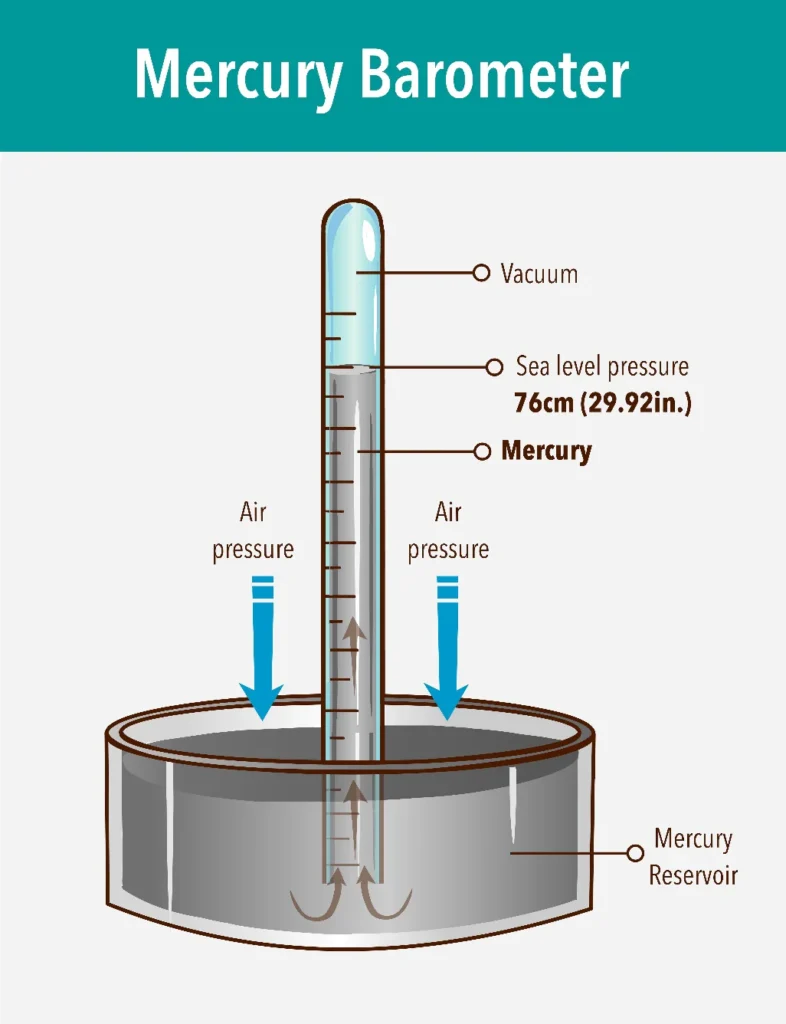
Invented by Evangelista Torricelli in 1644, this type of barometer uses mercury to measure atmospheric pressure. The setup consists of a glass tube filled with mercury, with one end sealed and the other submerged in a water-filled container also containing mercury. When atmospheric pressure pushes down on the mercury level in both containers, it causes the mercury level in the tube to rise or fall, allowing us to measure the pressure.
In simple terms, when you look at the mercury column inside the tube, if it’s higher than the level in the water container, you know there’s more air above you (i.e., lower atmospheric pressure), and vice versa. By comparing the heights of the two columns, we can assign a value to the atmospheric pressure.
The accuracy of mercury-based barometers is impressive for their time period. The invention of Torricelli marked a significant milestone in scientific understanding of weather patterns, as it allowed researchers to quantify changes in air pressure with unprecedented precision.
Metal-Based Barometer
The second type is based on metal and uses a small, flat container called a “capsule” to detect pressure changes. This capsule has thin, wavy walls that are sensitive to pressure fluctuations. When air pressure pushes against these walls, it causes them to compress or expand slightly. To amplify these tiny movements and accurately measure the pressure, an ingenious system of levers is used.
In essence, when atmospheric pressure increases or decreases, it makes the metal capsule move up or down, which is then transmitted through a series of gears and pulleys to an indicator or digital display on the barometer. This technology allows for more precise readings than traditional mercury-based instruments but may not be as accurate in extreme weather conditions.
One major advantage of metal-based barometers is their relative low cost compared to other types. Additionally, they are generally more resistant to contamination and environmental factors such as humidity and temperature fluctuations.
Aneroid Barometer
Lastly, there’s the less common aneroid barometer. Its unique shape has a wide base and corrugated walls that create large pressure variations when air pressure changes. This results in noticeable movements of the entire device when it detects changes in atmospheric pressure.
Historical records show early versions of this type were used in the late 19th century, even before World War I, where they were employed for military purposes due to their portability and reliability.
The main benefit of aneroid barometers is their unique shape, which allows them to detect subtle changes in atmospheric pressure. However, their accuracy can be affected by factors such as air temperature, humidity, and contamination.
Barometers: Prices and Features
If you’re interested in investing in a barometer that also serves as a weather station with temperature and humidity sensors, there are options available. For instance, on Amazon, you can find such devices priced at around 74 euros (or about $85 USD). These models often come equipped with additional features like wireless connectivity, allowing for real-time updates on weather conditions.
Some popular barometers that combine atmospheric pressure measurement with temperature and humidity sensors include:
- AcuRite Weather Station: This compact device offers accurate readings of atmospheric pressure, temperature, and relative humidity. It also comes with a built-in clock and alarm functionality.
- Davis Instruments Vantage Vue: This wireless weather station provides detailed measurements of atmospheric pressure, temperature, and humidity, as well as wind speed and direction data.
- WeatherLink Personal Weather Station: This device includes an integrated barometer that offers accurate readings of atmospheric pressure, along with a built-in thermometer and hygrometer.
FAQs
- What is atmospheric pressure?
- Atmospheric pressure refers to the weight of air in a given area at a specific altitude.
- How does a barometer measure temperature and humidity?
- While traditional barometers primarily focus on measuring atmospheric pressure, some newer models come equipped with integrated thermometers and hygrometers that allow for simultaneous measurement of these factors.
- Are all barometers accurate?
- Accuracy can vary greatly depending on the type of barometer and environmental conditions. For instance, mercury-based instruments tend to be less precise than digital or metal models due to their sensitivity to temperature changes.
- What is the difference between a barometer and an anemometer?
- An anemometer measures wind speed, whereas a barometer assesses atmospheric pressure.
- Can I use a barometer indoors?
- Yes, but it’s recommended to keep it away from direct sunlight, moisture, or extreme temperature fluctuations for optimal performance.
Advanced Applications of Barometers
In addition to weather forecasting and research applications, barometers have numerous practical uses in various fields, including:
- Aviation: Accurate measurements of atmospheric pressure are crucial for aircraft navigation and flight planning.
- Ship Navigation: Changes in atmospheric pressure can influence weather patterns that impact maritime travel.
- Medical Research: Barometers can help researchers study the effects of air pressure changes on human physiology.
Limitations and Future Directions
While barometers have proven themselves to be reliable tools in understanding our atmosphere, there are limitations and areas for improvement:
- Error Margins: The accuracy of barometer measurements can vary depending on environmental factors such as temperature and humidity.
- Sensor Calibration: Proper calibration is essential for ensuring the accuracy of barometer readings.
To overcome these challenges, researchers and manufacturers continue to develop new technologies that enhance the performance and reliability of barometers. Some promising future directions include:
- Digital Sensing: The integration of digital sensors with traditional barometric instruments can improve accuracy and reduce error margins.
- Machine Learning Algorithms: Applying machine learning algorithms to barometer data can help improve forecasting models and better predict weather patterns.
In conclusion, barometers serve as crucial tools in understanding our atmosphere and weather patterns. While each type has its unique strengths and weaknesses, they all contribute to the broader field of meteorology and climate science. By continuing to advance technology and application areas, we can unlock new insights into the complex dynamics of our planet’s weather systems.


