
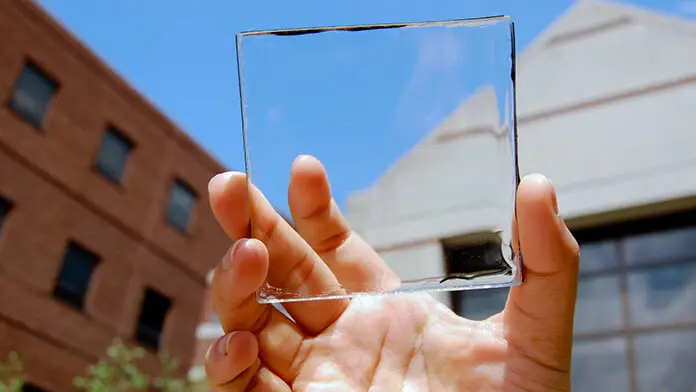
Imagine a world where solar panels can be seamlessly integrated into our daily lives, without compromising their aesthetic appeal. A world where the boundaries between technology and nature are blurred, and renewable energy becomes an integral part of our lives. Welcome to the realm of transparent solar panels, pioneered by Ubiquitous Energy Inc.
The Visionary
Ubiquitous Energy Inc., a young and innovative company, aims to revolutionize the way we harness solar energy. Their cutting-edge technology has the potential to power everything from tablets and smartphones to bio-edifices and sustainable transportation systems.
Transparent Solar Cells: A New Era in Renewable Energy
Ubiquitous Energy’s transparent solar cells are composed of multiple organic layers, stacked on top of each other, without compromising the display or functionality of devices. These cells can be applied directly onto surfaces, such as displays, windows, and even car windshields.
The Science Behind Transparency
The transparent solar cells developed by Ubiquitous Energy boast a remarkable 70% transparency rate. While there is still room for improvement, this breakthrough technology has the potential to redefine the way we approach renewable energy.
One of the key factors that contribute to the transparency of these solar cells is their spectral selectivity. This means that they can harness solar energy from a specific range of wavelengths while blocking other wavelengths that could interfere with the display or functionality of devices.
Beyond Tablets: The Endless Possibilities of Transparent Solar Panels
Imagine applying transparent solar panels to:
- Windows: Harnessing solar energy while maintaining an unobstructed view
- Car Windshields: Powering electric vehicles without compromising visibility
- Bio-Edifices: Creating sustainable, self-sustaining structures
- Public Transportation: Fueling buses, trams, and other eco-friendly vehicles
The possibilities are endless, and the implications are profound.
For instance, transparent solar panels can be integrated into building facades to generate electricity while providing a clear view of the surrounding environment. Similarly, they can be applied to car windshields to power electric vehicles without compromising visibility or reducing the driver’s field of view.
Efficiency and Innovation
While Ubiquitous Energy’s technology has shown great promise, there is still room for improvement. Researchers must strive to increase efficiency, building upon the team’s “approach spettralmente selettivo” (spectrally selective) methodology.
To achieve this, researchers are exploring various materials and designs that can enhance the spectral selectivity of transparent solar cells. For example, they are investigating the use of nanostructured surfaces that can selectively absorb or reflect certain wavelengths of light.
Applications in the Built Environment
Transparent solar panels have numerous applications in the built environment, including:
- Building Facades: Integrated into building facades to generate electricity while maintaining an unobstructed view
- Roofs: Applied to roofs to power homes and businesses while providing a clear view of the surrounding environment
- Green Roofs: Used on green roofs to create sustainable, self-sustaining structures that produce electricity while supporting plant growth
Challenges and Limitations
While transparent solar panels hold great promise, there are several challenges and limitations that need to be addressed. These include:
- Material Costs: The cost of materials used in the production of transparent solar cells is still relatively high, making them less competitive with traditional solar panels
- Efficiency: While Ubiquitous Energy’s technology has shown great promise, there is still room for improvement in terms of efficiency
- Scalability: As demand for transparent solar panels grows, it will be essential to develop scalable production methods that can meet the needs of a rapidly expanding market
Conclusion
Transparent solar panels represent a seismic shift in the way we approach renewable energy. Ubiquitous Energy Inc.’s pioneering work has opened doors to new possibilities, and we can only imagine the transformative impact this technology will have on our lives.
As researchers continue to explore the potential of transparent solar panels, it is essential to address the challenges and limitations that need to be overcome. By doing so, we can unlock the full potential of this technology and create a more sustainable future for generations to come.
FAQs
- What is transparent solar energy?
- Transparent solar energy refers to the integration of photovoltaic cells into surfaces, such as displays, windows, or car windshields, without compromising their aesthetic appeal.
- How does Ubiquitous Energy Inc.’s technology work?
- The company’s technology involves stacking multiple organic layers on top of each other, creating transparent solar cells that can harness solar energy while maintaining the surface’s original functionality.
- What are the potential applications of transparent solar panels?
- These panels can be applied to various surfaces, including windows, car windshields, bio-edifices, and public transportation systems, enabling the creation of sustainable, self-sustaining structures and eco-friendly vehicles.
- How efficient is Ubiquitous Energy Inc.’s technology?
- While the company’s technology boasts a remarkable 70% transparency rate, there is still room for improvement in terms of efficiency.
- Can transparent solar panels be used in all weather conditions?
- The effectiveness of transparent solar panels depends on various factors, including sunlight intensity and environmental conditions. However, researchers are working to develop technologies that can harness energy even in low-light environments.
The future of renewable energy is bright, and Ubiquitous Energy Inc.’s pioneering work has paved the way for a more sustainable tomorrow.


