
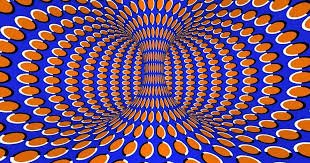
Have you ever stopped to think about how our brains are tricked into seeing things that aren’t really there? Or maybe you’ve seen a image or video that seemed so real, but upon closer inspection, it was just an illusion? Whether it’s a simple trick of the light or a complex visual deception, optical illusions have captivated us for centuries. In this article, we’ll delve into the world of optical illusions, exploring what they are, how they work, and some examples to illustrate their amazing effects.
What Are Optical Illusions?
Optical illusions are any visual perception that is different from the actual physical stimulus. Our brains interpret visual information differently depending on our past experiences, expectations, and knowledge. Optical illusions occur when our brain misinterprets visual cues, leading us to see something that isn’t there or perceive it in a distorted way.
Types of Optical Illusions
There are three main categories of optical illusions: geometric, perceptual, and cognitive.
- Geometric illusions: These occur when the geometry of an image is perceived incorrectly. For example, lines may appear to be at different angles or lengths than they actually are.
- Perceptual illusions: These happen when our brain misinterprets visual cues based on past experiences or expectations. For instance, a person might see a color that seems familiar but isn’t actually there.
- Cognitive illusions: These occur when our brain interprets visual information in a way that is not supported by the actual physical stimulus. This can happen when we are under stress, tired, or distracted.
Examples of Optical Illusions
There are many examples of optical illusions, each with its own unique characteristics and effects. Here are a few:
- The Ponzo Illusion: A classic example of a geometric illusion, where two identical lines appear to be of different lengths due to the presence of converging lines.
- The Müller-Lyer Illusion: Another geometric illusion, where adding arrows to the ends of a line can make it appear longer or shorter than it actually is.
- The Kanizsa Triangle: A perceptual illusion that appears as a triangle when surrounded by other shapes. It’s often used in advertising and marketing to create attention-grabbing visuals.
Conclusion
Optical illusions are fascinating phenomena that demonstrate the complexity and limitations of human perception. By understanding how our brains interpret visual information, we can better appreciate the power of optical illusions and their many applications in fields such as art, design, psychology, and neuroscience. Whether you’re a seasoned expert or just starting to explore the world of optical illusions, there’s always more to learn and discover.
Frequently Asked Questions
- What causes optical illusions?
Optical illusions are caused by the way our brains interpret visual information, taking into account past experiences, expectations, and knowledge. - How common are optical illusions?
Optical illusions are quite common and can occur in everyday life. They’re also a popular topic of study in psychology, neuroscience, and art. - Can optical illusions be predicted?
While some optical illusions can be predicted based on past experiences and knowledge, many others cannot be predicted with certainty. - How do optical illusions affect our perception?
Optical illusions can significantly impact our perception, leading us to see things that aren’t there or perceive them in a distorted way. - Can optical illusions be used for creative purposes?
Yes, optical illusions have been used extensively in art, design, and advertising to create attention-grabbing visuals and convey complex information in an engaging manner.
The Science Behind Optical Illusions
Optical illusions are a result of the complex interplay between our brains and visual information. Our brains process visual data constantly, using past experiences and expectations to make sense of what we see. However, this processing can sometimes lead to errors or distortions, resulting in optical illusions.
One key factor that contributes to optical illusions is the way our brains interpret depth cues. Depth cues are visual signals that help us understand the distance between objects in space. However, these cues can be misleading, especially when they conflict with each other or are ambiguous.
Another important factor is attention and perception. Our brains have a limited capacity for processing visual information, and we tend to focus on certain aspects of an image while ignoring others. This selective attention can lead to optical illusions, as our brains may misinterpret the information that is being focused on.
The Psychology of Optical Illusions
Optical illusions also have significant implications for psychology. They demonstrate how our perceptions are influenced by past experiences and expectations, and how we interpret visual information in a way that is unique to each individual.
One interesting aspect of optical illusions is the concept of apophenia. Apophenia refers to the tendency to see patterns or meaning where there isn’t any. This can lead to optical illusions, as our brains may misinterpret visual cues based on past experiences and expectations.
Another important factor in psychology is cognitive bias. Cognitive biases refer to systematic errors in thinking and decision-making that arise from limitations in information processing. Optical illusions are a classic example of cognitive bias, as they demonstrate how our perceptions can be influenced by factors such as attention, expectation, and prior knowledge.
The Art of Optical Illusions
Optical illusions have been used extensively in art and design to create attention-grabbing visuals and convey complex information in an engaging manner. One famous example is the work of M.C. Escher, who created many optical illusions that challenged our perceptions of space and geometry.
Another important artist who has worked with optical illusions is Bridget Riley. Her paintings often feature geometric patterns that create optical illusions, challenging our perceptions of color, shape, and movement.
In addition to art, optical illusions have also been used in design and advertising to create attention-grabbing visuals and convey complex information in an engaging manner. One famous example is the use of Kanizsa triangles in advertising, which creates a sense of depth and distance that grabs the viewer’s attention.
Conclusion
Optical illusions are fascinating phenomena that demonstrate the complexity and limitations of human perception. By understanding how our brains interpret visual information, we can better appreciate the power of optical illusions and their many applications in fields such as art, design, psychology, and neuroscience. Whether you’re a seasoned expert or just starting to explore the world of optical illusions, there’s always more to learn and discover.
Frequently Asked Questions
- What causes optical illusions?
Optical illusions are caused by the way our brains interpret visual information, taking into account past experiences, expectations, and knowledge. - How common are optical illusions?
Optical illusions are quite common and can occur in everyday life. They’re also a popular topic of study in psychology, neuroscience, and art. - Can optical illusions be predicted?
While some optical illusions can be predicted based on past experiences and knowledge, many others cannot be predicted with certainty. - How do optical illusions affect our perception?
Optical illusions can significantly impact our perception, leading us to see things that aren’t there or perceive them in a distorted way. - Can optical illusions be used for creative purposes?
Yes, optical illusions have been used extensively in art, design, and advertising to create attention-grabbing visuals and convey complex information in an engaging manner.
Optical Illusions in the Real World
Optical illusions are not just limited to laboratory experiments or artistic creations. They can occur in everyday life, often without us even realizing it. Here are a few examples:
- Perspective illusion: A classic example of optical illusion is the perspective illusion, where parallel lines appear to converge due to the way our brains interpret visual cues.
- Depth perception illusion: Another common optical illusion is the depth perception illusion, where our brains misinterpret visual cues based on past experiences and expectations.
- Color constancy illusion: A color constancy illusion occurs when our brains fail to update our interpretation of colors in response to changes in lighting conditions.
Conclusion
Optical illusions are fascinating phenomena that demonstrate the complexity and limitations of human perception. By understanding how our brains interpret visual information, we can better appreciate the power of optical illusions and their many applications in fields such as art, design, psychology, and neuroscience. Whether you’re a seasoned expert or just starting to explore the world of optical illusions, there’s always more to learn and discover.
Frequently Asked Questions
- What causes optical illusions?
Optical illusions are caused by the way our brains interpret visual information, taking into account past experiences, expectations, and knowledge. - How common are optical illusions?
Optical illusions are quite common and can occur in everyday life. They’re also a popular topic of study in psychology, neuroscience, and art. - Can optical illusions be predicted?
While some optical illusions can be predicted based on past experiences and knowledge, many others cannot be predicted with certainty. - How do optical illusions affect our perception?
Optical illusions can significantly impact our perception, leading us to see things that aren’t there or perceive them in a distorted way. - Can optical illusions be used for creative purposes?
Yes, optical illusions have been used extensively in art, design, and advertising to create attention-grabbing visuals and convey complex information in an engaging manner.
The Future of Optical Illusions
Optical illusions are likely to continue playing a significant role in various fields, from art and design to psychology and neuroscience. As our understanding of human perception improves, we can expect to see new and innovative applications of optical illusions in the future.
One potential area for growth is in the field of virtual reality (VR) and augmented reality (AR). Optical illusions can be used to create immersive and interactive experiences that simulate real-world environments or fantastical scenarios. This could have significant implications for fields such as entertainment, education, and healthcare.
Another area for exploration is in the development of more sophisticated optical illusions. By understanding how our brains interpret visual information, we can design new types of optical illusions that challenge our perceptions and push the boundaries of what is possible.
Conclusion
Optical illusions are fascinating phenomena that demonstrate the complexity and limitations of human perception. By understanding how our brains interpret visual information, we can better appreciate the power of optical illusions and their many applications in fields such as art, design, psychology, and neuroscience. Whether you’re a seasoned expert or just starting to explore the world of optical illusions, there’s always more to learn and discover.
Frequently Asked Questions
- What causes optical illusions?
Optical illusions are caused by the way our brains interpret visual information, taking into account past experiences, expectations, and knowledge. - How common are optical illusions?
Optical illusions are quite common and can occur in everyday life. They’re also a popular topic of study in psychology, neuroscience, and art. - Can optical illusions be predicted?
While some optical illusions can be predicted based on past experiences and knowledge, many others cannot be predicted with certainty. - How do optical illusions affect our perception?
Optical illusions can significantly impact our perception, leading us to see things that aren’t there or perceive them in a distorted way. - Can optical illusions be used for creative purposes?
Yes, optical illusions have been used extensively in art, design, and advertising to create attention-grabbing visuals and convey complex information in an engaging manner.


