
As we continue to navigate the complexities of climate change and energy sustainability, researchers are exploring innovative ways to produce traditional fuels like kerosene. In this article, we’ll delve into the fascinating world of solar-powered kerosene production and explore its potential to revolutionize our energy landscape.
What is Kerosene?
Kerosene is a refined petroleum product used primarily as a fuel. Its production involves fractional distillation of crude oil between 150°C to 280°C, resulting in carbon chains with 12-15 atoms. The content of aromatic compounds can reach up to 25% in kerosene. With a power density similar to that of diesel, kerosene’s calorific value falls within 43.1 MJ/kg (minimum) and 46.2 MJ/kg (maximum).
The Current State of Kerosene Production
Traditionally, kerosene is produced from crude oil through fractional distillation. However, this process involves large amounts of energy expenditure, making it an inefficient use of resources. Enter the hydrocracker, a machine that transforms unwanted petrochemical byproducts into usable fuels.
The Solar-JET Project: A Breakthrough in Renewable Energy
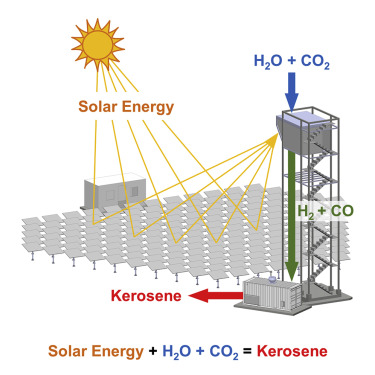
A breakthrough achievement was made by researchers at the Solar-JET project, funded by the European Union’s Seventh Framework Programme for Research and Development. They successfully produced kerosene from scratch using only solar energy, water, and carbon dioxide as inputs. The prototype reactor demonstrated a remarkable ability to produce minute amounts of kerosene.
Scaling Up: A Path to Sustainable Energy
As researchers refine their technology, the Solar-JET project aims to scale up production to meet industrial demands. With an ambitious goal of producing 20,000 liters of fuel per day, this innovation could revolutionize the energy sector. By recycling CO2 and converting it into kerosene or other fuels like diesel and gasoline, we can significantly reduce our carbon footprint.
The Benefits of Solar-Powered Kerosene
This technology offers several advantages:
- Reduced Greenhouse Gas Emissions: By harnessing solar energy, we can minimize the production of greenhouse gases.
- Increased Energy Security: With a reliable source of renewable energy, we can reduce our dependence on fossil fuels.
- Improved Energy Efficiency: Solar-powered kerosene production ensures that the fuel is generated using clean and efficient processes.
How Does it Work?
The process involves combining hydrogen (H2) from water with carbon dioxide (CO2) in a reactor at temperatures of 1292°F (700°C). This chemical reaction produces the desired hydrocarbon mixture, which can be refined into kerosene.
Comparing to Traditional Production Methods
Companies like Shell utilize similar technologies to produce Syngas, which involves higher temperatures than Solar-JET’s process. As the technology advances, these companies will benefit from a more sustainable approach to fuel production.
A Brighter Future for Aviation and Automotive Industries
The benefits of solar-powered kerosene extend beyond energy production. The resulting fuels are ideal for modern internal combustion engines in vehicles and aircraft, eliminating the need for modification.
In conclusion, the potential of solar-powered kerosene production is vast. By embracing this innovative technology, we can create a more sustainable future for our energy needs.
Frequently Asked Questions
Q: What is the primary source of energy used in Solar-JET’s process?
A: The primary source of energy used in Solar-JET’s process is solar energy.
Q: How does the Solar-JET project aim to scale up production?
A: The Solar-JET project aims to scale up production to meet industrial demands, with a goal of producing 20,000 liters of fuel per day.
Q: What are the benefits of recycling CO2 and converting it into kerosene or other fuels?
A: Recycling CO2 and converting it into kerosene or other fuels can significantly reduce greenhouse gas emissions and improve energy security.
Q: How does the Solar-JET project compare to traditional production methods?
A: The Solar-JET project utilizes lower temperatures than traditional production methods, reducing energy expenditure and environmental impact.
Q: What are the implications of solar-powered kerosene for aviation and automotive industries?
A: The resulting fuels produced through solar-powered kerosene are ideal for modern internal combustion engines in vehicles and aircraft, eliminating the need for modification.
Q: What is the current status of the Solar-JET project?
A: Researchers have successfully demonstrated a prototype reactor’s ability to produce minute amounts of kerosene using only solar energy, water, and carbon dioxide as inputs.
Q: How can we support the development of this technology further?
A: By investing in research and development, governments and industries can promote the widespread adoption of solar-powered kerosene production and create a more sustainable energy future.


