
In recent years, natural skincare has gained significant attention as people seek more effective and gentle ways to care for their skin. Among the many natural ingredients available, clay stands out as a game-changer. This humble substance has been used for centuries to purify, nourish, and rejuvenate our skin and hair. In this article, we’ll delve into the properties and benefits of clay, from its detoxifying effects to its ability to soothe and calm irritated skin.
What is Clay?
Clay is a natural mineral-based substance that can be found in various forms, including green clay, red clay, and white clay. Each type of clay has its unique set of properties and benefits, making it an essential ingredient in skincare routines. Clay is derived from the earth and is composed of finely ground particles of minerals such as silica, alumina, and iron oxides.
Benefits of Clay for Skin
Clay has numerous benefits for our skin, including:
- Absorbing excess oil and purifying the pores: Clay is known to absorb excess oil and impurities from the skin, leaving it looking clearer and more radiant.
- Removing impurities and toxins from the skin: Clay’s ability to draw out impurities makes it an effective tool for removing dirt, bacteria, and other toxins from the skin.
- Exfoliating the skin gently: Clay can be used as a natural exfoliant to remove dead skin cells and improve skin texture.
- Improving blood circulation: Clay is believed to improve blood circulation by stimulating the lymphatic system and promoting the removal of waste products.
- Reducing inflammation and redness: Clay’s anti-inflammatory properties make it an effective tool for reducing redness and inflammation in the skin.
- Leaving the skin looking more uniform and radiant: Clay can help to even out skin tone and leave the skin looking more radiant and healthy.
Choosing the Right Type of Clay for Your Skin
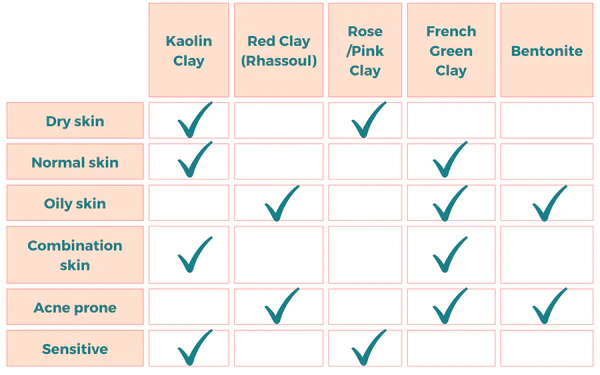
When it comes to selecting a clay type, there are three main options: green clay, red clay, and white clay. Each has its unique set of benefits:
- Green Clay (Illite): Rich in minerals such as iron oxide, magnesium, calcium, potassium, manganese, phosphorus, copper, selenium…and many others. Green clay is ideal for mixed skin types and acne-prone skin.
- Red Clay: High in iron oxide, giving it its distinctive red color. Red clay has a reduced absorbency power compared to green clay but is still beneficial for stimulating blood circulation. It can also be used as a natural exfoliant.
- White Clay (Caolino): The most delicate of the three clays, white clay is gentle enough for sensitive skin and is often used in cosmetical products. White clay is rich in calcium, silica, magnesia, and zinc.
Using Clay for Natural Skincare
Clay can be used in various ways to create natural skincare routines:
- Face Masks: Mix green clay with milled sugar and lemon juice for an invigorating mask that exfoliates and purifies the skin.
- Exfoliating Scrubs: Combine red clay with olive oil and sugar for a gentle yet effective exfoliant.
- Spot Treatment: Use white clay as a spot treatment to reduce inflammation and redness.
Using Clay for Hair Care
Clay can also be used in hair care routines:
- Hair Masks: Apply green clay mixed with coconut oil and apple cider vinegar to nourish and moisturize dry hair.
- Exfoliating Shampoos: Use red clay as a natural exfoliant to remove dead skin cells and improve blood circulation.
Precautions and Preparations
When using clay for skincare or hair care, it’s essential to follow some precautions:
- Always use distilled water when mixing clay with other ingredients.
- Avoid using metal utensils or containers that may react with the clay.
- Use a gentle touch when applying clay masks to avoid irritating your skin.
Where to Buy Clay
Clay can be found in various stores, including pharmacies, herbalist shops, and online retailers. Look for high-quality, natural clays from reputable sources.
Conclusion
Clay is an incredible natural ingredient that offers numerous benefits for our skin and hair. By understanding the properties and benefits of different clay types, we can harness their power to create effective natural skincare routines. Remember to always use distilled water and gentle techniques when working with clay to ensure a safe and beneficial experience.
FAQs
- Q: What are the differences between green clay, red clay, and white clay?
A: Green clay is rich in minerals, while red clay has a reduced absorbency power but stimulates blood circulation. White clay is delicate and gentle for sensitive skin. - Q: How do I use clay for acne-prone skin?
A: Mix green clay with milled sugar and lemon juice to create an invigorating mask that exfoliates and purifies the skin. - Q: Can I use clay on my face multiple times a day?
A: It’s recommended to limit using clay masks 1-2 times a week, as excessive use can dry out your skin. - Q: How do I mix clay with other ingredients for natural skincare routines?
A: Mix clay with distilled water and other natural ingredients like coconut oil, olive oil, or sugar for effective skincare routines. - Q: Can I use clay on my hair?
A: Yes! Clay can be used as a hair mask to nourish and moisturize dry hair or as an exfoliating shampoo to improve blood circulation. - Q: How do I store clay for future use?
A: Store clay in an airtight container, away from direct sunlight and moisture. - Q: Can I use clay on sensitive skin?
A: Yes! White clay is the most gentle option for sensitive skin. Always patch test before using any new skincare or haircare product. - Q: How often should I exfoliate with clay?
A: Exfoliate 1-2 times a week to remove dead skin cells and improve blood circulation.
By understanding the benefits and properties of clay, you can harness its power to create effective natural skincare routines that leave your skin looking healthy, radiant, and rejuvenated.


