
Introduction
As we strive to reduce waste and live more sustainably, creative recycling projects like building a vertical garden using old gutters and tubes have become increasingly popular. In this article, we’ll explore the benefits of repurposing household items, provide a step-by-step guide on how to build a hanging garden with gutters and tubes, and discuss the potential uses for such a unique project.
What is Vertical Gardening?
Vertical gardening involves growing plants upwards using a trellis, wall-mounted system, or other support structures. This method offers several advantages over traditional gardening, including increased space efficiency, improved air circulation, and reduced water consumption.
Benefits of Recycling Old Gutters and Tubes
Before we dive into the project, let’s explore why repurposing old gutters and tubes is a great idea:
- Reduces waste: By giving new life to discarded materials, we can significantly decrease the amount of waste sent to landfills.
- Saves money: Using recycled materials can help reduce costs associated with purchasing new supplies.
- Promotes creativity: Repurposing household items encourages creative thinking and problem-solving.
Materials Needed
To build a hanging garden using gutters and tubes, you’ll need the following materials:
- Old gutters and tubes (hydric derivation tubes or plastic pipes work well)
- Waterproof exterior paint
- Flat-bristled brush
- Adhesive glue
- Metal garden netting with very tight mesh
- Pruning scissors
- Soil
- Plants of your choice
- Twine
Building a Vertical Garden with Tubes
Step 1: Prepare the Gutters and Tubes
Connect hydric derivation tubes at 45° joints to create a sturdy column. If using plastic pipes, cut them in half and follow the instructions for the gutter case.
Paint the tube with a 45° elbow joint with your preferred color and let it dry.
Step 2: Assemble the Column
Coat the internal sealant with adhesive to secure the tubes better. Stack all the tubes on top of each other to create a column that will serve as the base of your hanging garden. Position the elbow joint in an appropriate way to maintain stability.
Step 3: Add Metal Mesh Netting
Cut off a section from the metal mesh netting, wrap it around itself, and insert it into the main tube of your column. The netting serves to hold back the soil added to each joint.
Step 4: Add Soil and Plants
Add soil to every joint and also on top. The soil will not escape because you’ve inserted the metal mesh netting earlier. In each joint, add plants that you want to grow in your hanging garden.
With twine from an electrician’s tool, secure your DIY hanging garden to the balcony railing or other supports.
Alternative Option: Using Gutters
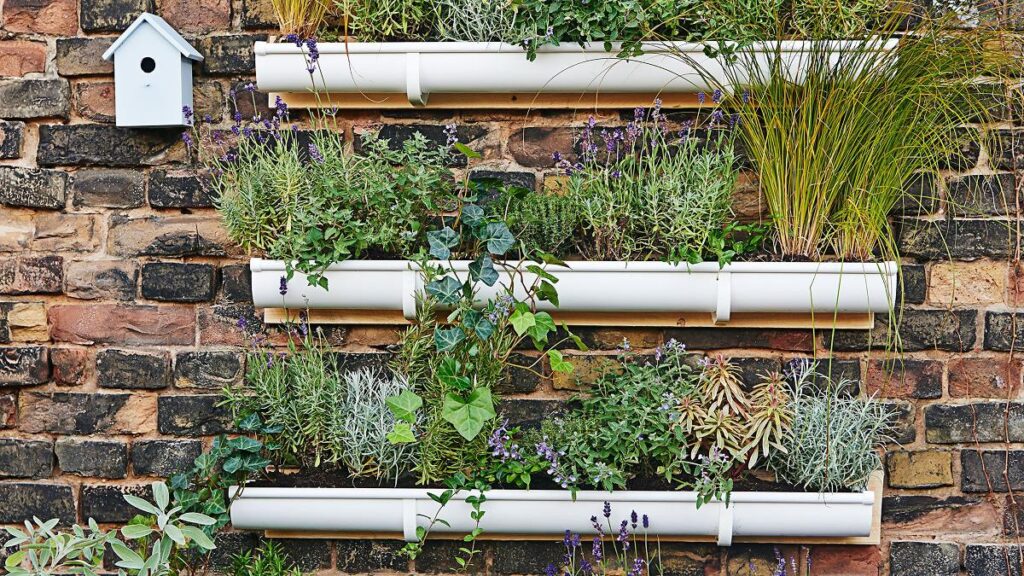
Creating a hanging garden using recycled gutters is much simpler. Fix gutters to the exterior wall of the house or on the garden wall.
Once anchored to the wall, gutters can be filled with soil but only up to half, without reaching the edge. Add a layer of universal soil and fertile organic matter or well-matured plant material and level it off with additional universal soil.
At this point, you can decide to start a hanging garden cultivation with flowering plants or vegetables. You can place pre-grown plants or begin from seeds. When choosing cultivars always take into account the size of the mature plant.
Tips and Variations
- For succulent plants or other ornamental plants that develop slowly, consider an elevated garden using PVC gutters.
- Aromatic herbs and various vegetables for cutting can thrive in a hanging garden made with recycled gutters.
Additional Tips for Hanging Garden Maintenance:
- Check the soil moisture regularly to ensure optimal growth.
- Inspect your hanging garden for signs of pests or diseases, and take action promptly if necessary.
- Prune plants regularly to maintain shape and promote healthy growth.
- Consider using a trellis or other support system to help train climbing plants.
Frequently Asked Questions (FAQs)
Q: What type of plants are suitable for a hanging garden?
A: Choose plants that thrive in vertical gardens, such as succulents, herbs, and flowering plants. Consider the mature size of the plant when selecting cultivars.
Q: How do I anchor my DIY hanging garden to the balcony railing or other supports?
A: Use twine from an electrician’s tool to secure your hanging garden. Make sure it’s sturdy enough to hold the weight of the soil and plants.
Q: Can I use plastic pipes instead of hydric derivation tubes?
A: Yes, you can use plastic pipes as a substitute for hydric derivation tubes. Follow the instructions provided for the gutter case and adapt the steps accordingly.
Q: What are some benefits of repurposing old gutters and tubes?
A: Repurposing old gutters and tubes reduces waste, saves money, and promotes creativity.
Q: How do I maintain my hanging garden?
A: Regularly inspect your hanging garden for signs of wear and tear. Prune plants as needed, and replenish soil to ensure optimal growth.
Q: Can I use a hanging basket instead of gutters and tubes?
A: Yes, you can use a hanging basket as an alternative to gutters and tubes. However, it may not offer the same level of space efficiency or durability.
Q: What are some common mistakes to avoid when building a vertical garden with gutters and tubes?
A: Common mistakes include using materials that aren’t suitable for outdoor use, failing to secure the column properly, and neglecting to prune plants regularly.


