
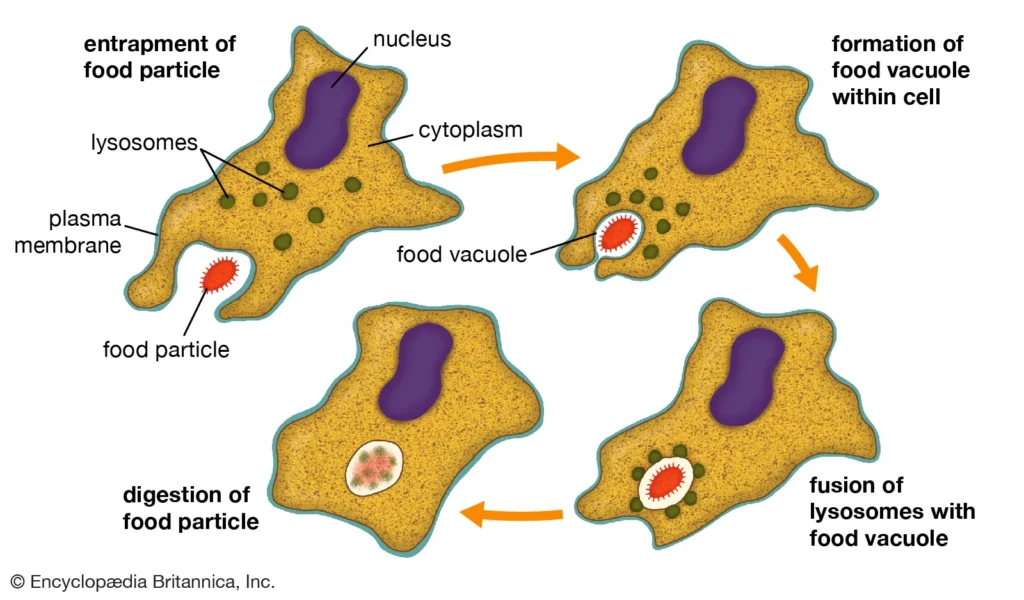
As we explore the world of cells, it’s hard not to be fascinated by their ability to engulf and digest foreign particles. This process is known as phagocytosis, a term that might sound complex, but trust us, it’s more fascinating than you think.
What is Phagocytosis?
Phagocytosis is defined as the ability of cells to ingest and destroy external materials. In science, this term refers to the capacity of cells to engulf foreign particles and eliminate them. But what does that mean exactly?
In simple terms, phagocytosis is a process where cells can swallow and digest anything from bacteria to food fragments. It’s like having a built-in vacuum cleaner inside your body!
Phagocytosis involves the formation of a cell membrane around an external particle, which then fuses with lysosomes containing digestive enzymes. The combination of these elements breaks down the foreign substance into smaller components that can be easily eliminated from the body.
Phagocytosis: Cell Types and Functions
There are two main types of phagocytic cells: professional and facultative. Professional phagocytes, such as neutrophils, eosinophils, and macrophages, play a crucial role in defending against infections. They have specialized structures that allow them to recognize and engulf pathogens.
Facultative phagocytes, on the other hand, are more versatile and can switch between different modes of phagocytosis depending on the situation. These cells include mast cells, endotheliocytes, and others that may not be as effective at phagocytosis but still contribute to immune responses.
The Phases of Phagocytosis
Phagocytosis occurs in several stages, each with its own set of functions:
- Exocytosis: The first phase involves the release of small amounts of secretion from the cell, which accumulates until a signal triggers the expulsion of the material.
- Endocytosis: Concurrently, endocytosis occurs, where the cell internalizes materials through vesicles called endosomes.
- Internalization: Materials can be internalized through two main mechanisms: specific and non-specific phagocytosis.
In non-specific phagocytosis, fluids from outside the cell are absorbed without recognition by the membrane. In contrast, specific phagocytosis involves receptors that allow cells to recognize and engulf specific molecules.
Bacterial Phagocytosis
One of the most common types of material internalized through phagocytosis is bacteria. However, it’s not just limited to bacterial pathogens; other foreign particles like food fragments can also be ingested.
Interestingly, there exists a variant of phagocytosis called autofagocytosis, where cells degrade their own organelles to recycle cellular components. This process involves lysosomes that fuse with vesicles containing damaged or dysfunctional cellular material.
Phagocytosis and the Immune System
Phagocytes play a vital role in the immune system, particularly in the clearance of pathogens. White blood cells like macrophages and neutrophils work together to defend against infections and maintain tissue health.
Moreover, phagocytosis is essential for maintaining neural health. Microglia, specialized glial cells, act as “cleaning” agents in the brain, removing dead neurons and debris that could lead to further damage.
Phagocytosis in the Brain
Recent research has shed light on the importance of phagocytosis in the brain. Studies have shown that microglia can become dysfunctional during epilepsy, leading to impaired clearance of neuronal waste products.
In individuals with epilepsy, the lack of effective phagocytosis enables pathogens and toxins to accumulate, exacerbating the condition. This discovery has opened new avenues for developing therapies targeting the immune system in neurodegenerative diseases.
The Role of Phagocytosis in Cancer
Phagocytosis plays a significant role in cancer progression, as cancer cells can evade the immune response through various mechanisms. Research suggests that targeting phagocytic pathways could lead to improved treatments for cancer patients.
Moreover, studies have shown that certain types of phagocytes, such as macrophages and dendritic cells, can be repurposed as therapeutic agents in cancer treatment. By modulating their activity, these cells may be able to stimulate an anti-tumor immune response or induce cell death in cancer cells.
Conclusion
Phagocytosis is a complex and fascinating process that underlies various cellular functions. From bacterial infections to neural health maintenance, this process plays a vital role in our overall well-being.
As we continue to explore the intricacies of phagocytosis, we may uncover new avenues for therapeutic intervention and improve our understanding of human biology.
Frequently Asked Questions (FAQs)
- What is phagocytosis?
Phagocytosis is a process where cells can engulf and digest external materials, such as bacteria or foreign particles. - What are the two main types of phagocytes?
Professional phagocytes include neutrophils, eosinophils, and macrophages, while facultative phagocytes include mast cells and endotheliocytes. - How does phagocytosis occur?
Phagocytosis occurs in several stages, including exocytosis, endocytosis, and internalization through specific and non-specific mechanisms. - What role do microglia play in the brain?
Microglia act as “cleaning” agents in the brain, removing dead neurons and debris that could lead to further damage. - Can phagocytosis be impaired in epilepsy?
Yes, research suggests that microglial dysfunction can occur during epilepsy, leading to impaired clearance of neuronal waste products. - What are some potential therapeutic applications of phagocytosis research?
New avenues for developing therapies targeting the immune system in neurodegenerative diseases, such as epilepsy and Alzheimer’s disease.
By understanding phagocytosis, we can gain insights into the intricate workings of our bodies and potentially uncover new ways to promote health and prevent disease.
Additional Resources
For further information on phagocytosis, we recommend exploring the following resources:
- National Institutes of Health (NIH) – Phagocytosis Research
- American Society for Microbiology (ASM) – Phagocytosis and the Immune System
- Cancer Research UK – The role of phagocytes in cancer progression
By delving deeper into these resources, you’ll gain a better understanding of this complex process and its many applications in medicine.


